
The Referral Machine Was Never Built for This Moment
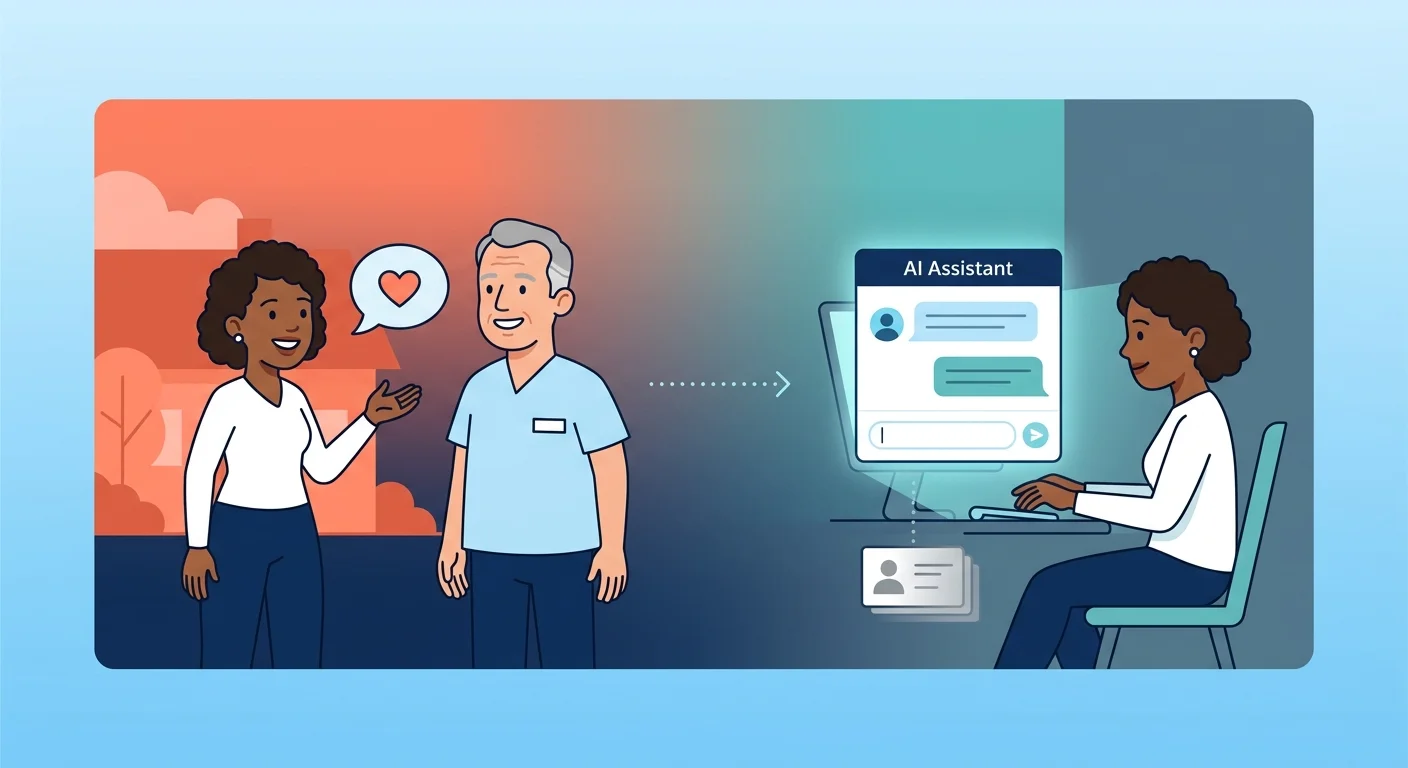
For decades, a steady stream of word-of-mouth referrals was the gold standard for a healthy clinic. It signaled trust and quality no marketing campaign could ever fake.
Here's the thing: that era is ending. Not because referrals stopped mattering to the folks who make them, but because the starting point of the patient journey has already moved somewhere referrals can't follow.
A patient used to ask a neighbor, then call the clinic directly. Now that same patient opens an AI assistant, asks for the best option nearby, and gets an answer built from data the neighbor never handed over.
So the referral machine still runs. It just stopped connecting to the moment discovery actually happens, which is part of why clinics are noticing phone calls quietly disappearing even as loyal patients keep talking.
Why Chasing Star Ratings and Directory Clicks Misses the Point
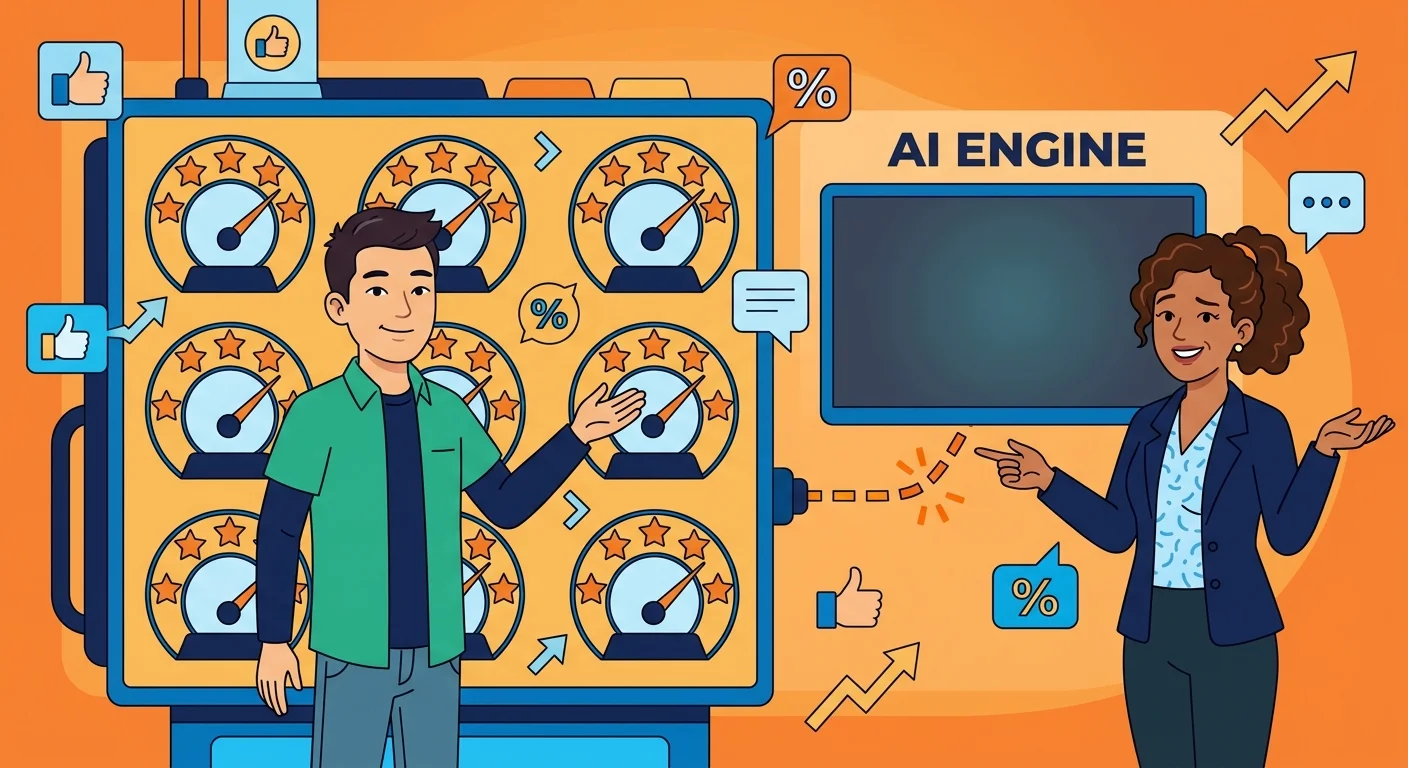
So clinics keep leaning on the same old-guard move: stack up more star ratings, land in more directories, and hope a wall of five-star reviews does the convincing.
That move made sense when a human was scrolling a ranked list of links, weighing one option against the next. It makes far less sense now.
An AI engine building an answer isn't scrolling. It's deciding, in one pass, who gets named — and a pile of scattered ratings doesn't tell it who to trust, only that some patients clicked a button once.
The Problem With Treating Every Review Site the Same Way
Here's the problem: not every review platform carries the same weight inside that decision. Clinics treat them as interchangeable, and that assumption is exactly what breaks.
A directory listing with mismatched hours or the wrong address does more damage than a missing review ever could. It tells an AI system the entity itself can't be trusted.
And that distrust compounds. Search behavior backs this up: even in a traditional search environment, a meaningful share of users never click through to a website at all, because the answer already showed up on the results page — a pattern documented in published research data on abandoned queries across PC and mobile.
If that's already true for a ranked list of links, it's even truer for a single synthesized answer. What that revenue gap actually costs gets the full treatment in a detailed breakdown of what invisible clinics forfeit, and it starts with recognizing that the new gatekeepers to patient discovery aren't search result pages at all — they're AI-generated answers, built on trust signals traditional search optimization was never designed to supply.
How AI Engines Actually Decide Who Gets Recommended
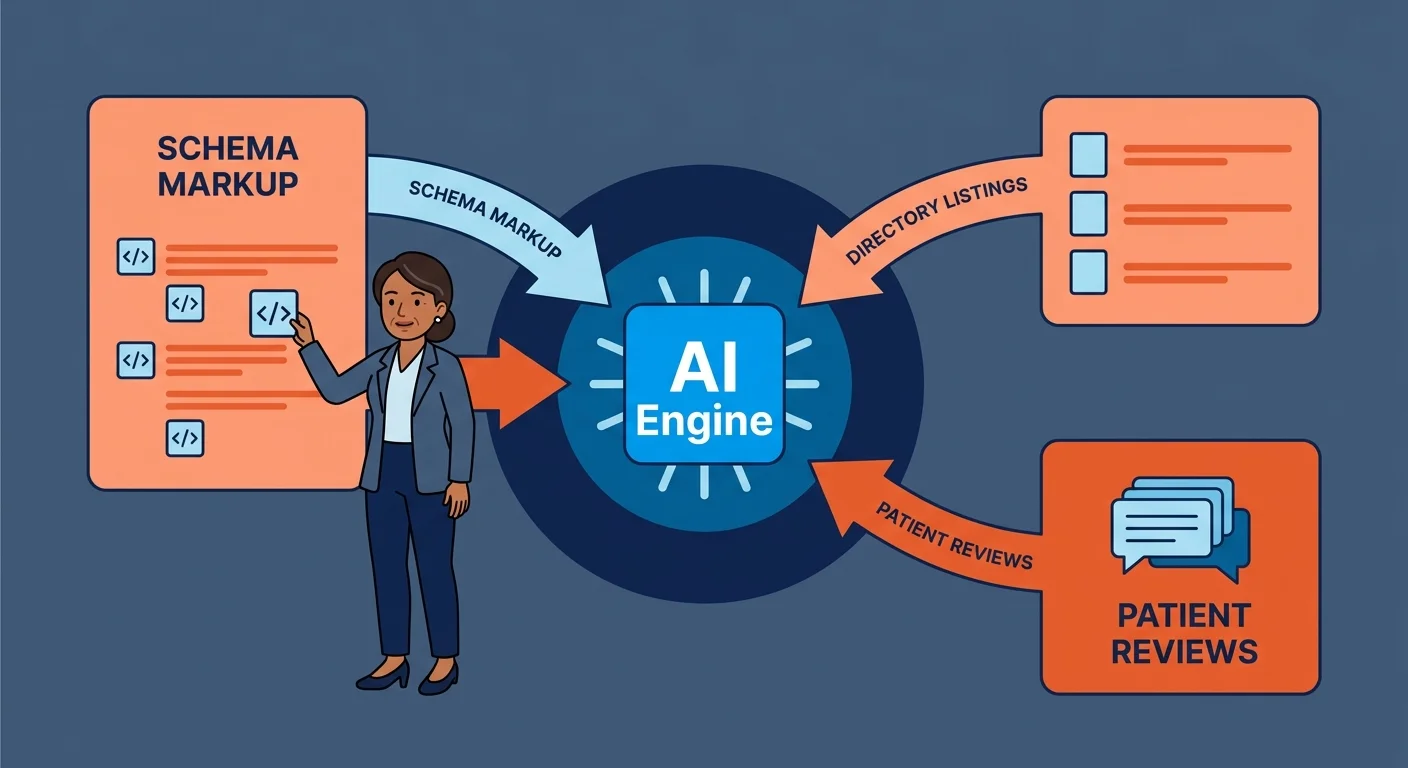
So how does an AI engine actually decide who to name? It builds a model of a clinic as an entity, not a webpage, and it pulls that model from data scattered all over the web.
Traditional search optimization was built for a different job: earning a spot among ranked links a person could click through and compare. Generative search engines don't hand back a list. They pull from multiple sources and synthesize it all into one direct answer, and that shift changes what a clinic actually has to supply.
Here's the kicker: trust in that single answer is already rivaling trust in the reviews clinics have chased for decades. 42% of consumers now trust AI platforms equally with traditional online reviews when deciding on a local business, according to published research data on consumer trust.
| Signal Type | What It Tells the AI Engine | Where It Lives |
|---|---|---|
| Structured Data | Confirms exactly what a clinic does, offers, and treats, in a format the system can parse without interpretation | Schema markup embedded in the clinic's own website code |
| Directory Consistency | Verifies that a clinic's name, address, hours, and services are the same everywhere, building confidence in the entity itself | Business listings and directories scattered across the web |
| Review Sentiment | Signals whether patient experience actually matches the services a clinic claims to provide, not just a star count | Patient reviews and comments left across multiple platforms |
| Entity Citations | Shows other trusted sources already reference this clinic as a legitimate, describable entity worth naming | Mentions and references pulled from third-party sites the AI engine already trusts |
Reading the Signals: Structured Data as a Direct Line to AI
An AI engine can't read a waiting room or sense a friendly front desk. It reads structured data instead.
Schema markup, consistent business listings, machine-readable service details — those work as a direct line into the system building the answer. This isn't decorative code sitting behind a website. It's the vocabulary an AI model uses to describe a clinic to a patient who never sees the underlying markup at all.
A clinic without that structured layer isn't penalized so much as skipped. There's nothing for the system to confidently synthesize, so it reaches for the next entity that handed it something usable. Whether an existing marketing relationship even produces that layer is exactly the gap explored in a review of what a marketing partner should already be delivering.
Consistency Across the Web: Why Scattered Listings Undermine Confidence
But structured data only works if it agrees with itself everywhere it shows up. That's where consistency across the web comes in.
A clinic's name, address, hours, and services all need to match across every directory, every listing, every mention an AI system might pull from. One mismatched phone number won't sink a clinic on its own. But mismatches rarely stay isolated, and each one chips away at the confidence an AI model needs before it'll state a clinic's details as fact.
This is the same mechanism behind generative search engines going beyond simple document retrieval in the first place. These systems synthesize across sources precisely because no single source is trusted alone, a design detail confirmed by the arXiv preprint server in its analysis of how these engines actually work. So scattered, contradictory listings don't just look sloppy. They actively undermine the one thing a clinic needs most: being confidently, consistently recognized as the same verifiable entity everywhere an AI engine looks.
Not Every Clinic Needs to Chase This — and That's Fine
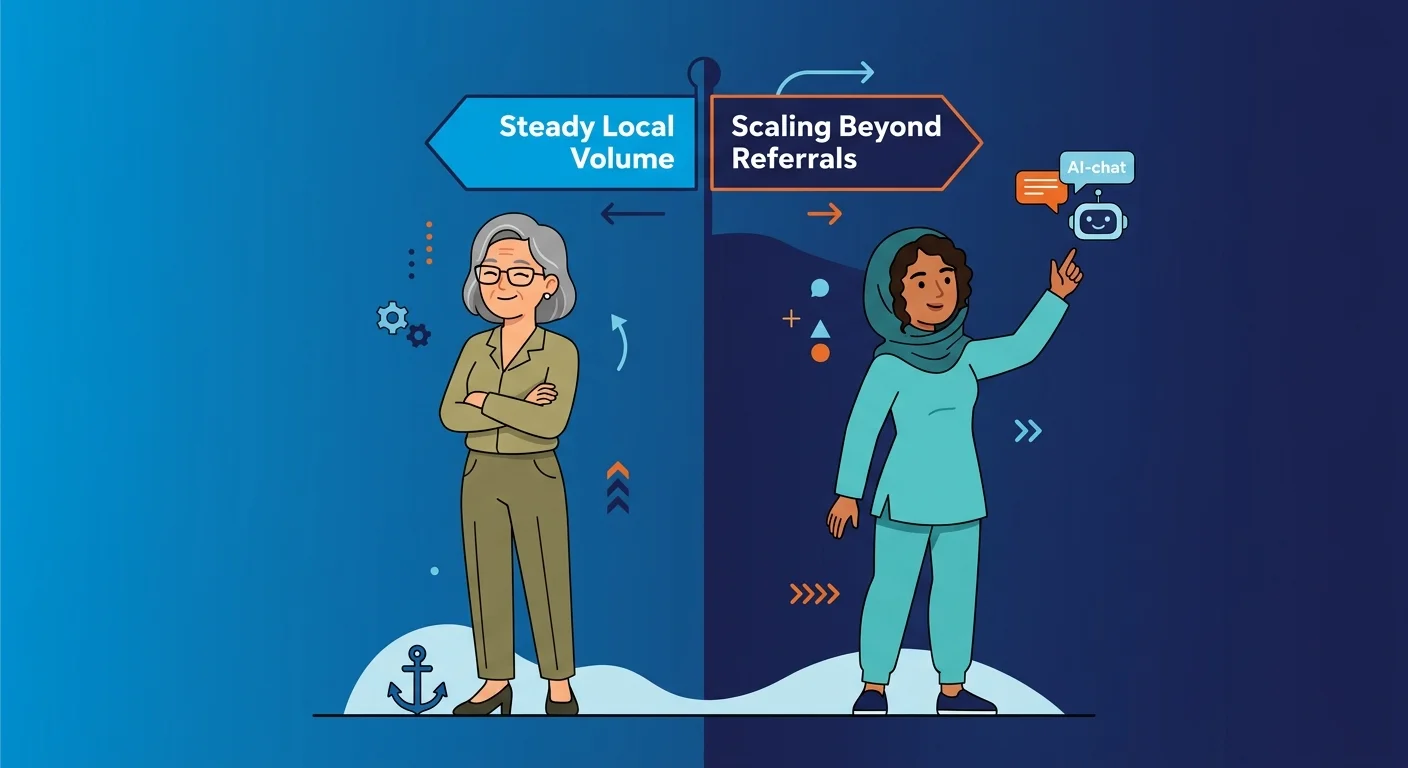
Look, none of this means every clinic should panic. A solo practice with a full schedule and zero plans to expand can let this sit for now.
But a clinic that is actively growing, opening a second location, or losing new-patient calls it cannot explain is a different case entirely. That clinic is the one already showing symptoms of the phone-book problem: beloved by existing patients, invisible to the AI engine deciding who gets named next. Figuring out whether a marketing relationship is even built to catch that gap is different from a routine check on a website, which is why comparing a standard visibility check against a deeper multi-engine assessment matters before assuming the problem doesn't apply.
So here's the honest qualifier: urgency scales with how much a clinic leans on new patients finding it cold. A referral-only practice already at capacity can wait. A clinic fighting for every new patient it can land cannot.
What Patients Actually Ask AI Before They Ever Call You
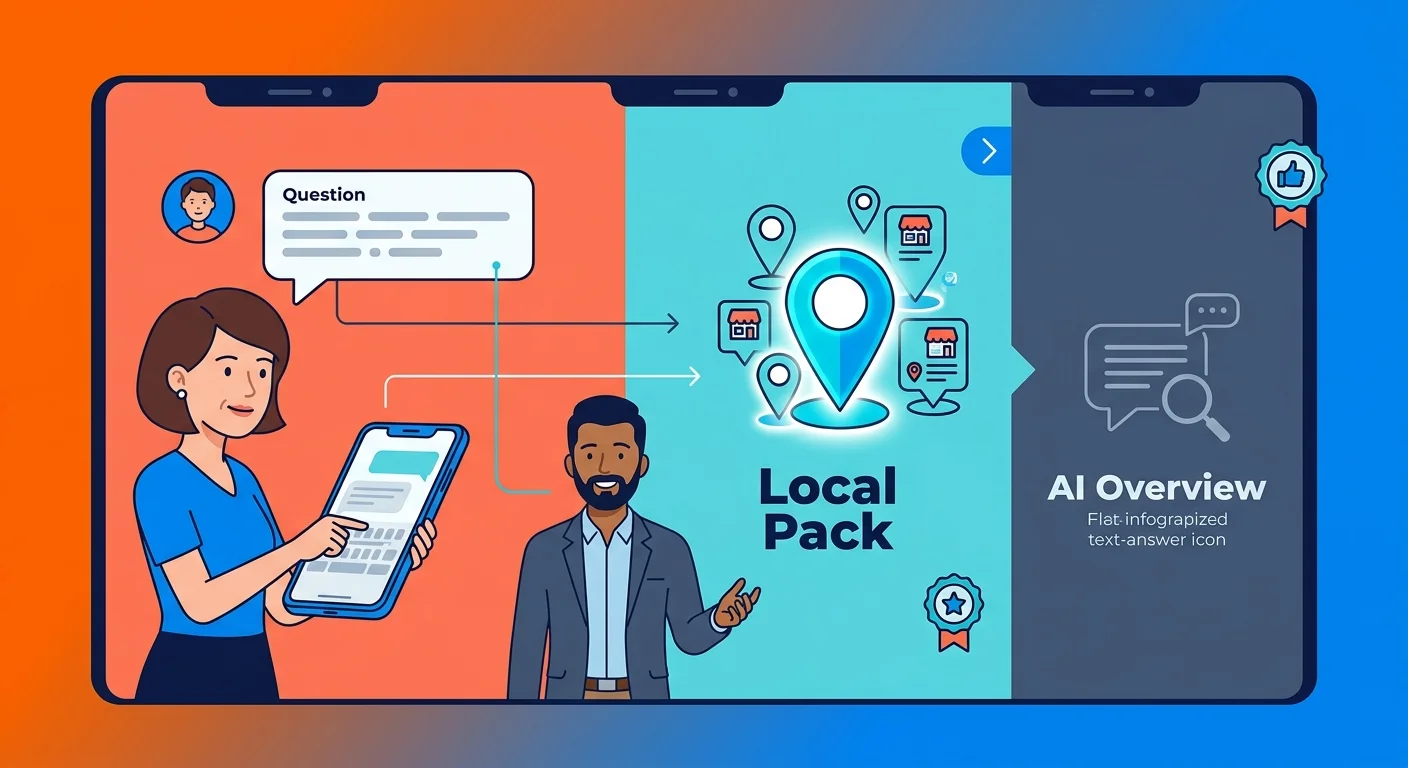
So what does a patient actually type before they ever pick up the phone? Rarely what a clinic expects.
Some queries are still plain map requests. But others already ask an AI system to compare, judge, and recommend, and that's a whole different kind of question.
That difference matters because each query type pulls from a different data source. Knowing which is which tells a clinic exactly where its structured data has to show up.
| Query Type | AI Overview Presence | Local Pack Presence |
|---|---|---|
| Traditional local-intent query (example: primary care clinic near a specific city) | 15% inroad, still limited | Dominates more than 90% of the time |
| Comparative or judgment-based query (example: which clinic has the best patient experience) | Relies on sentiment read from patient comments rather than star counts alone | Secondary, since the answer requires synthesis rather than a ranked list |
| Review Element | What NLP Extracts | Why It Matters to AI |
|---|---|---|
| Star Rating Alone | A single number with no context attached | Tells the system almost nothing about why a patient felt that way |
| Specific Symptom or Condition Mentions | Which conditions or complaints appear across many comments | Signals the clinic actually treats what a searching patient needs treated |
| Wait Time and Access Language | Sentiment tied to how quickly a patient was seen or reached | Answers the unspoken question behind most near me queries |
| Staff and Communication Tone | Sentiment around how a patient was treated by front desk or provider | Fills in the trust gap a star rating cannot supply on its own |
| Outcome and Follow-Up Comments | Whether a patient describes lasting resolution or ongoing issues | Gives an AI system a reason to describe a clinic as effective rather than just reviewed |
Where Local Queries Still Belong to Maps, and Where They Don't
A search like primary care clinic near a specific city still behaves the way it always has. Traditional local search results own that query more than 90% of the time, serving up a local pack built from maps and directory data instead of a synthesized answer.
AI Overviews have only made a 15% inroad into that same space so far. That's not nothing. But the classic local pack still holds most of this ground for now.
Here's the shift, though. The moment a query gets more specific or comparative, the answer format changes right along with it.
Turning Reviews Into Readable Signals for AI, Not Just Star Counts
A star rating tells an AI system almost nothing on its own. Five stars from one clinic and five from another look identical, even when the experience behind them wasn't.
Natural language processing changes that. It reads the actual text of a patient comment and connects specific sentiments to the specific numerical rating that comment produced.
That distinction shows up clearly in comments rated 1 through 4 out of 5, where researchers used this method to pin down exactly which sentiments and topics dragged a rating down from perfect. That kind of pattern recognition is documented in a peer-reviewed study hosted on PubMed Central, which quantified sentiment across thousands of patient comments rather than counting stars.
An AI engine building an answer is doing something similar. It isn't counting stars either. It's reading what patients actually said, and a clinic whose reviews carry specific, readable detail hands that system far more to work with than a wall of identical five-star ratings, a distinction that only grows as generative engines lean harder on published research data instead of raw ratings alone.
Frequently Asked Questions
You've made it this far and probably still have a few questions the body didn't fully close. Here are the straight answers.
If my clinic has a strong local reputation and gets plenty of word-of-mouth referrals, why do I need to worry about AI search visibility?
Word-of-mouth still matters. It just doesn't reach the patient before an AI engine does anymore. Consumers already trust AI-generated answers as much as the reviews referrals used to feed, so a beloved reputation that never became a citable digital entity never even enters that conversation.
What specific information does an AI engine look for to decide if my clinic is a trustworthy recommendation?
It looks for structured, machine-readable signals, not impressions. Schema markup, consistent business details, and the specific language inside reviews all feed the model it builds of a clinic as a verifiable entity, not a webpage.
How is being citable for an AI different from ranking number one on Google Maps?
Ranking near the top of a local pack is still a placement in a list a person has to click and compare. Being citable is different. It means an AI system trusts a clinic enough to name it directly inside one synthesized answer, with no list and no click required.
Can a bad online review or inconsistent directory listing make my clinic completely invisible to an AI-generated answer?
One inconsistent listing rarely makes a clinic totally invisible on its own. But mismatched details compound, and each one chips away at the confidence an AI engine needs before it'll state a clinic's information as fact. That's the phone-book problem in practice.
What is the first step my clinic should take to see how we appear in AI-generated local search results?
Look at what the AI engines actually say, not what you assume they say. That starts with a direct check of how a clinic really appears in AI-generated search results today.
Where This Leaves Your Clinic
So here's where this actually leaves your clinic. Word-of-mouth was never the problem. It just stopped being the whole answer the second discovery moved from a neighbor's recommendation to an AI system's synthesized reply.
The phone-book comparison isn't a metaphor anymore. A clinic can be adored by every patient it's ever treated and still not exist the instant an AI engine gets asked who to recommend. Reputation no longer buys a listing in the directory that matters now — being a citable digital entity does, and that status gets built on purpose, never assumed.
This isn't a slow-motion problem to leave for later. It's a diagnostic question with a real answer, and the only way to know where you stand is to look at what an AI engine actually sees when it goes looking. Start there, and see exactly how your clinic appears in AI-generated search results right now.