
Why Your Clinic's Online Proof Has an Expiration Date
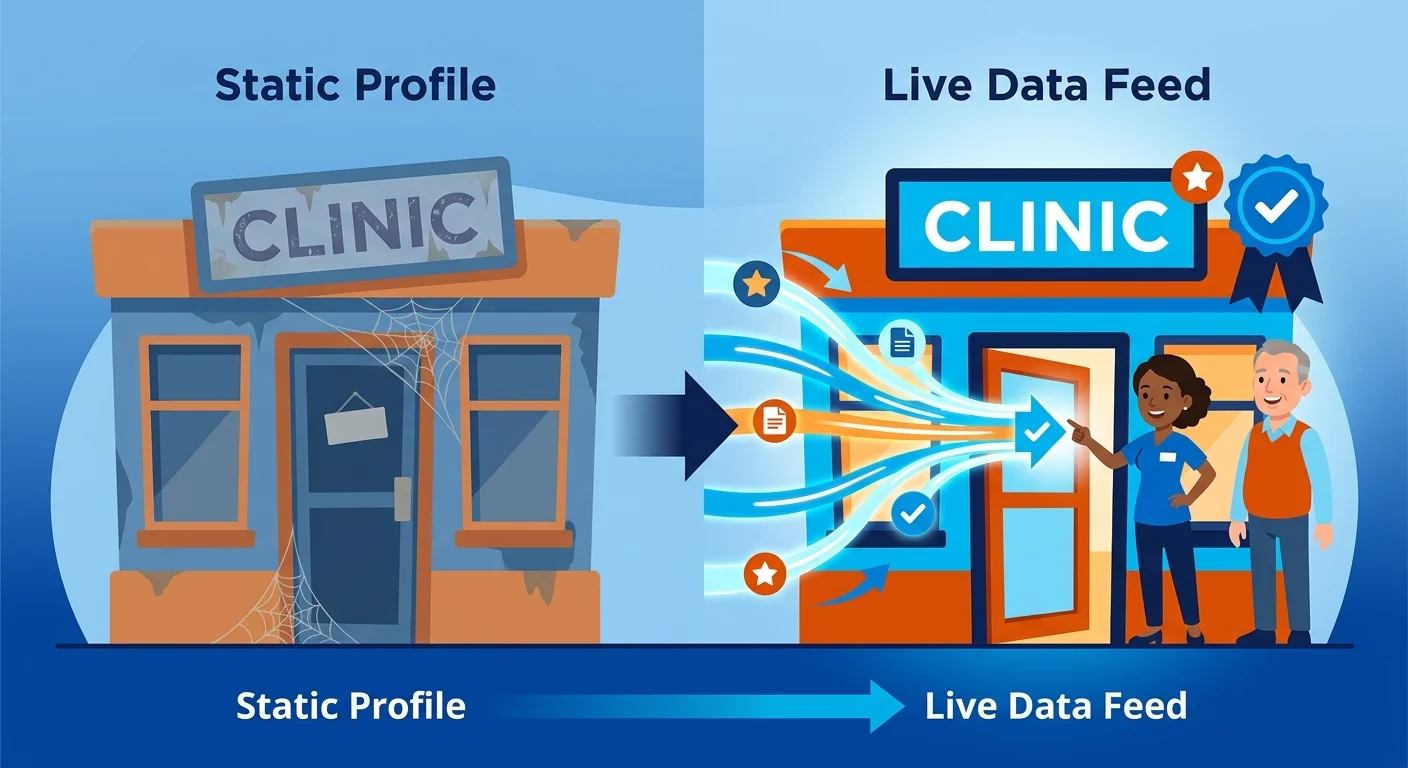
Here's the flawed assumption baked into most clinic websites: that proof is something you post once and it stays true forever. A credential badge, a service list, a few testimonials — treated like furniture instead of what they really are.
They're claims. And every claim an AI engine runs into gets a silent question stapled to it: is this still accurate right now?
A static profile can't answer that. It just sits there, aging, while the system deciding whether to recommend the clinic keeps hunting for a fresher signal.
That's the mechanism behind proof decay — the slow loss of trust and visibility that happens when a clinic's credentials, reviews, and operational data aren't continuously reaffirmed for AI engines. Nothing dramatic happens. The listing just quietly stops being the one the machine reaches for.
Why the 'Set and Forget' Profile Update Fails Modern AI Engines
Most clinics still run their online presence like a brochure. Print it, hang it in the lobby, swap it out when it gets visibly outdated.
That instinct made sense for traditional search optimization, where a page could be built once and left to quietly stack up authority over time. It makes no sense for how generative answers actually get assembled today.
So the profile update, done once a quarter or once a year, isn't maintenance anymore. It's a liability dressed up as diligence.
Look at where most local marketing budgets still land: keyword position tracking, a periodic push toward placing in the classic ten blue links, the occasional refresh of a business listing. Most local marketing still leans on outdated tactics and never touches the real shift — how AI systems verify information in real time. None of it produces the continuous, verifiable evidence stream those systems are actually checking for.
In the age of AI-driven search, a local clinic's online presence isn't a static brochure anymore. It's a live data feed. And the clinics that grasp that distinction early are the ones worth studying — which is exactly why understanding what machine-readable proof architecture actually requires matters more than another round of cosmetic profile edits.
What Counts as Machine-Readable Proof in the First Place
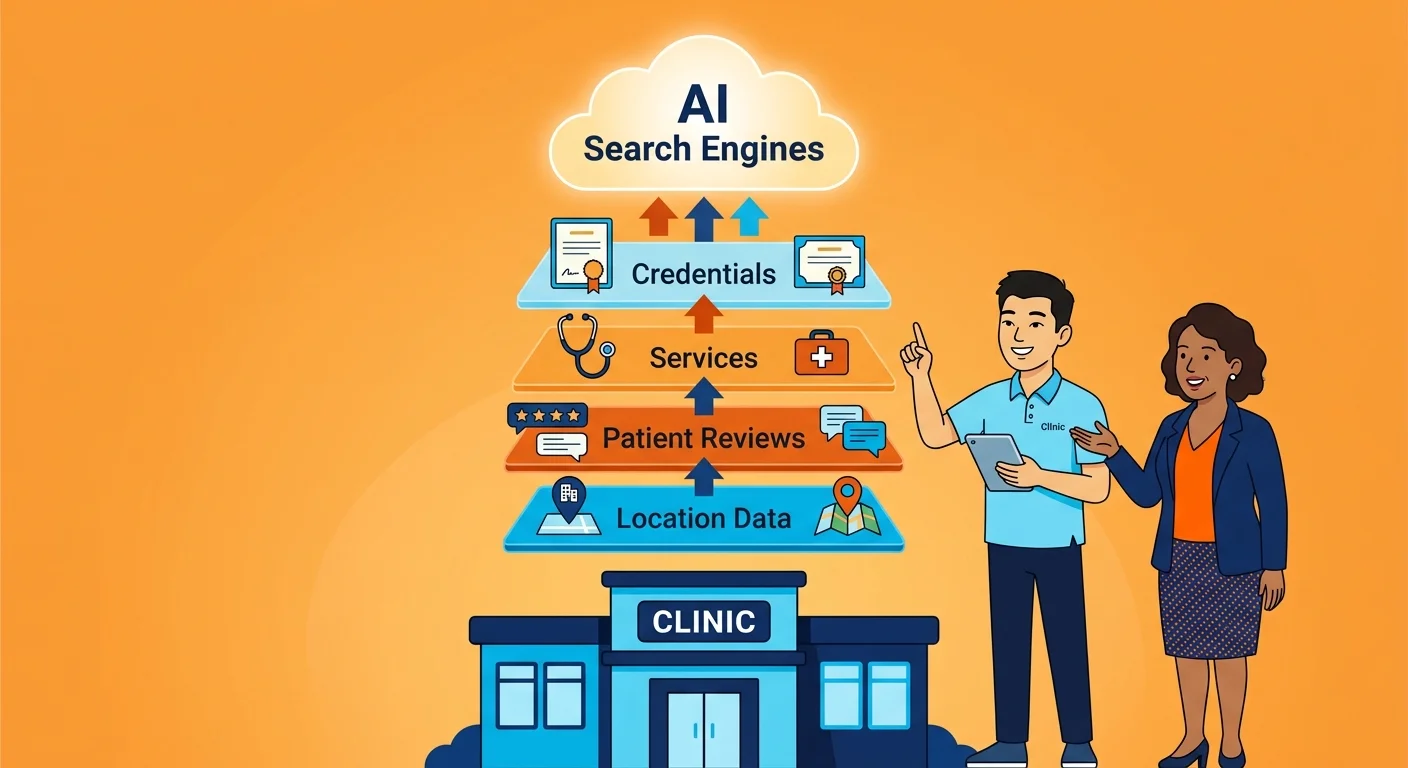
So what actually counts as proof? Not everything sitting on a clinic's website makes the cut.
Machine-readable proof is any credential, service detail, or patient signal an AI system can parse, verify, and cross-check against other sources — not just skim as text on a page.
That distinction matters, because a workflow built on the wrong raw material just cranks out more noise. The goal is to move from occasionally poking a few profiles to a systematic workflow that treats every piece of evidence about your clinic as a verifiable, machine-readable fact.
| Proof Type | Where It Lives | What It Verifies For AI | How Often It Should Refresh |
|---|---|---|---|
| Structured Data Markup | Embedded code on service pages and provider bios | Confirms named providers, credentials, and specialties as explicit facts rather than inferred text | Every time a credential, provider, or service listing changes |
| Business Profile Listings | Business Profile APIs feeding location and provider data | Confirms current hours, location accuracy, and provider affiliation across a live connection | Continuously, as alerts surface new updates or discrepancies |
| Patient Review Content | Public review platforms tied to the clinic's profile | Confirms sentiment polarity plus the specific provider or service named in the feedback | On an ongoing cadence as new reviews arrive, not in scheduled batches |
| Service and Credential Updates | Website service pages paired with structured markup | Confirms that a clinic's offered services and licensed status still match reality | Whenever a service is added, dropped, or a credential is renewed |
Structured Data That Verifies a Clinic's Credentials
Structured data is the cleanest example. It's code baked into a page that labels things flat out — this is a physician, this is a credential, this is a service — instead of leaving a machine to guess from the paragraphs around it.
A clinic's name, its licensed providers, its accepted specialties, its hours — all of it can be marked up so an AI engine reads it as a fact, not an assumption.
Here's the thing about markup, though: it has to stay attached to something that keeps moving. A credential tag on a page nobody touches is still a static claim wearing a machine-readable badge.
So the submission cadence matters every bit as much as the format. For a deeper breakdown of what keeps that cadence alive instead of stalling out, preventing that kind of stagnation before it starts is worth studying right alongside the markup itself.
Patient Feedback as a Live Verification Signal
Patient reviews are the other big category, and they get underestimated constantly. A review isn't just a star rating parked on a profile page.
It's a block of language an AI system can actually analyze. Sentiment analysis models can tell whether sentiment leans positive or negative, and they can pin down both the target of that sentiment and the person expressing it.
And this isn't hypothetical. Research collected in PubMed Central's review of sentiment analysis methods on patient experience data shows it's an active field, with studies stacking rule-based approaches alongside supervised machine learning models to pull exactly that kind of signal.
So a review naming a specific provider, a specific procedure, a specific outcome, hands the machine far more to verify than a generic five-star rating ever could. Volume alone doesn't do that work. Specificity does.
The Mechanics Behind a Continuous Submission System
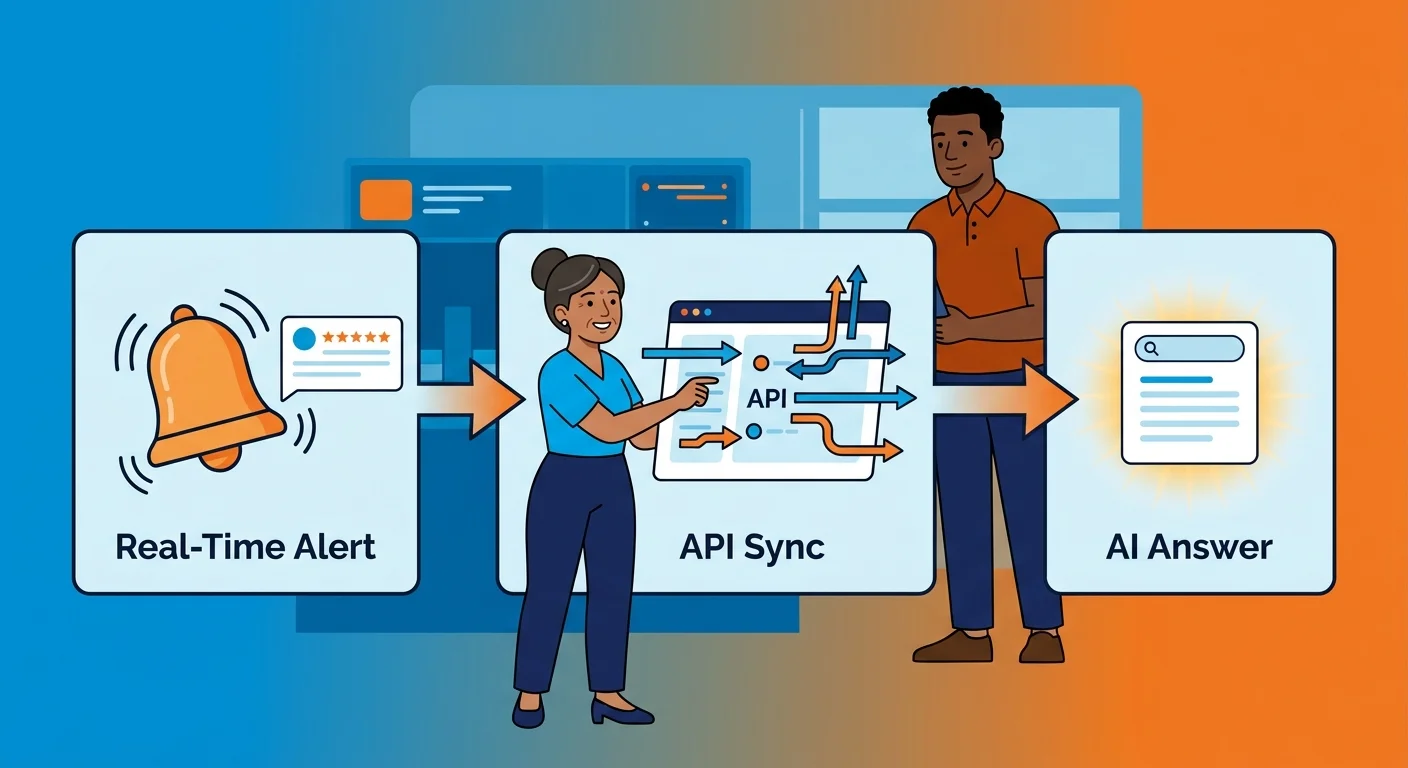
So how does proof actually travel from a clinic's records into an AI system's line of sight? Not through someone logging in to hand-edit a listing every few weeks.
It runs on plumbing that hums along in the background — application programming interfaces, structured data feeds, and submission schedules built to fire on their own.
Here's what separates a clinic that stays visible from one that quietly fades: the mechanics have to move faster than the decay does.
| Approach | Mechanism | Documented Outcome |
|---|---|---|
| Business Profile API alerts | Issues real-time notifications when a review posts or location data changes | Allows businesses to receive real-time alerts about new reviews and updates to location data across their locations and businesses |
| Recency-weighted retrieval | Adds a recency weighting method on top of semantic similarity when surfacing the newest relevant item | Score lifted from 0.00 to 0.60 in surfacing the newest relevant cybersecurity item in a diverse corpus |
| Static JSON-LD schema addition alone | Adds structured markup to a page without any continuous refresh cadence | Ahrefs tracked 1,885 pages that added JSON-LD schema between August 2025 and March 2026 against 4,000 control pages and found no statistically significant citation boost |
Real-Time Alerts and API-Driven Updates
Business Profile APIs are the clearest proof this plumbing already exists. They hand a business real-time alerts about new reviews and location changes across every location and business it runs.
So a new review, a changed hour, an updated service can register almost the moment it happens — instead of sitting unnoticed until someone remembers to check. Google's documentation spells this out directly, framing it as infrastructure for tracking updates across locations, not a one-and-done setup task.
But an alert only earns its keep if something acts on it. A notification nobody touches is just noise with a timestamp.
That's where the real design work lives — wiring a process so a new review or a location change triggers an actual submission back to the systems checking for freshness, not just a dashboard ping someone glances at. It's the same discipline covered in why static reviews stop earning trust the longer they sit unanswered, which walks through what happens when that response step gets skipped.
Where Freshness Actually Beats Structure
Now here's the part most clinics get backwards. They figure the fix for weak visibility is more structure — more schema, more markup, more boxes checked.
Structure matters, sure. But an Ahrefs study tracked 1,885 web pages that added JSON-LD schema between August 2025 and March 2026, matched them against 4,000 control pages, and found no statistically significant boost in citations across Google AI Overviews, AI Mode, and ChatGPT.
That result should flip the whole conversation. Structure alone doesn't earn a citation — freshness does the heavier lifting.
Research on recency-weighted retrieval backs this up outside the clinic world entirely. In tests surfacing the newest relevant item from a diverse corpus, semantic similarity alone scored 0.00, while adding a recency weighting method lifted that score to 0.60, a pattern documented in the arXiv preprint server. A workflow that keeps feeding fresh proof beats one that just keeps stapling tags onto stale proof.
Building the Workflow Step by Step
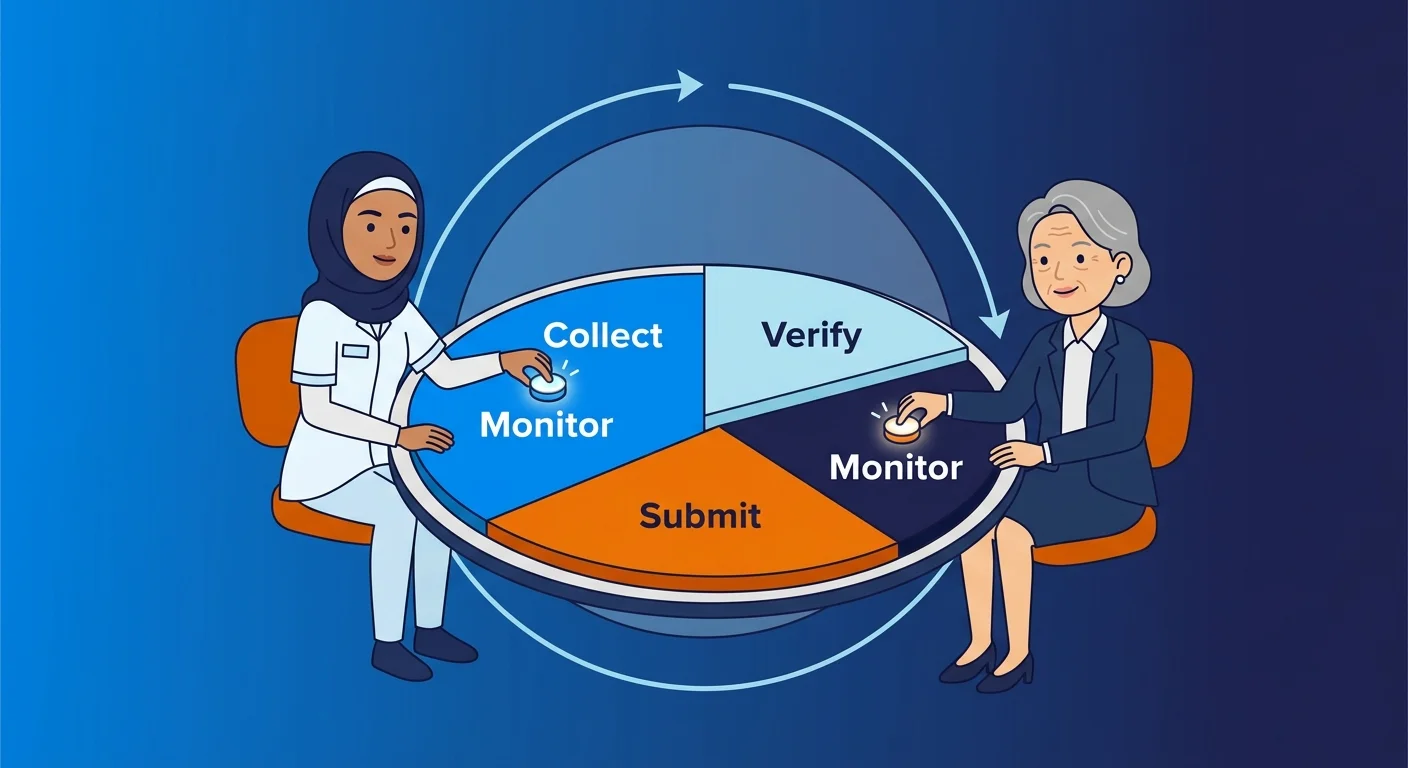
So what does this look like on an actual Monday morning — not the theory, the task list? Building the workflow means turning everything covered so far into an assigned, repeating process instead of a concept people nod along to.
That means naming who owns which piece of proof. It means deciding which credentials, reviews, or service details go out first. And it means setting a cadence that keeps the whole thing moving without anyone having to remember to restart it.
Here's the shift that has to happen first. This stops being a project with an end date. It becomes a role with a schedule attached.
| Stage | Owner | Primary Task | Cadence |
|---|---|---|---|
| Signal Capture | Front desk staff | Flag new reviews, log new credentials, note changed services as they happen | Continuous, as events occur |
| Structuring | Marketing or technical owner | Convert raw signals into machine-readable, verifiable updates | Scheduled batches, tied to signal volume |
| Submission | Marketing or technical owner | Push structured updates through profile and directory channels | Recurring, without manual restart |
| Governance Review | Clinic leadership | Confirm credential and service hierarchy stays accurate over time | Periodic, tied to priority sequencing |
Assigning Ownership Across Front Desk and Marketing
Front desk staff sit closer to the raw proof than almost anyone in the building. They see the new patient the second intake happens, catch the offhand compliment after an appointment, notice when a provider adds a credential to their file.
But those same people shouldn't be formatting structured data or babysitting submission schedules. That's a mismatch of skill to task — and it's exactly where these workflows tend to break.
The cleaner split hands front desk the job of capturing the raw signal — flagging a new review, logging a new certification, noting a changed service. Marketing, or whoever runs the technical side, turns that signal into a submitted, machine-readable update.
Now here's where a lot of clinics trip on the technical half of that split. Assembling structured data and firing off real-time submissions isn't a skillset most marketing coordinators already carry.
Choosing Which Proof Points to Prioritize First
Not every piece of proof deserves equal footing on day one. Trying to structure everything at once is how these workflows stall before they start.
Provider credentials go first. They're the claims patients and AI systems both treat as trust anchors, and they change rarely enough that structuring them right pays off for a long stretch.
Reviews come next — precisely because they never stop arriving. A steady stream of specific, recent patient language is the freshest signal a clinic can offer, and it needs a submission habit built around it from the start.
Service and specialty details round out the sequence. Getting that order right is a governance question as much as a technical one, which is why setting up the entity oversight that keeps this hierarchy from drifting belongs in the same conversation as the workflow itself.
Frequently Asked Questions
Alright, here's where the specifics get answered. These are the questions that hit the moment a clinic stops reading about this and starts building it.
How does a continuous proof workflow differ from just updating my Google Business Profile?
A profile update is one static edit that sits there until someone remembers to poke it again. The continuous workflow treats every credential, review, and service detail as an ongoing submission — not a one-time correction you file and forget.
What specific types of proof should my clinic be submitting through this workflow?
Provider credentials, service and specialty listings, location and hours, patient reviews — all of it counts. If an AI system can verify it as fact, it belongs in the feed.
Can this automated workflow respond to or manage patient reviews?
It flags a new review the second it posts and routes it into the submission process. But the workflow won't decide how you respond. That call still belongs to a person.
How quickly can we expect to see improved AI visibility after implementing this system?
There's no fixed countdown, and anyone handing you one is guessing. What we know: fresher, consistently submitted proof beats proof that sits still. So the sooner the feed starts moving, the sooner it starts working.
What technical skills are needed for my staff to manage this continuous submission process?
Front desk staff need almost none. Their job is spotting the raw signal and logging it. The assembly and submission side takes structured data and API familiarity — usually a separate role entirely.
Is there a risk of being penalized for submitting too much data to search engines?
No. There's no penalty for submitting accurate, verifiable information on a regular basis. The risk runs the other way — clinics get penalized by omission, not by submitting too much truthful proof.
Where This Leaves Your Clinic's Visibility
So here's where all of this lands. Your clinic's online presence was never meant to be a brochure sitting there looking finished. It's a feed — and a feed only works if something keeps feeding it.
Every credential, every review, every service update is a piece of that feed. Structure gives the proof a shape AI systems can parse. But structure without motion just decays quietly, and quiet decay is the most expensive kind — nobody notices until the visibility is already gone.
The clinics that keep showing up in AI-generated answers won't be the ones with the prettiest schema. They'll be the ones whose proof never stopped moving. If you're ready to see where your own feed is thinning, start with a look at your clinic's current AI visibility.