The Day The Map Pack Stopped Mattering
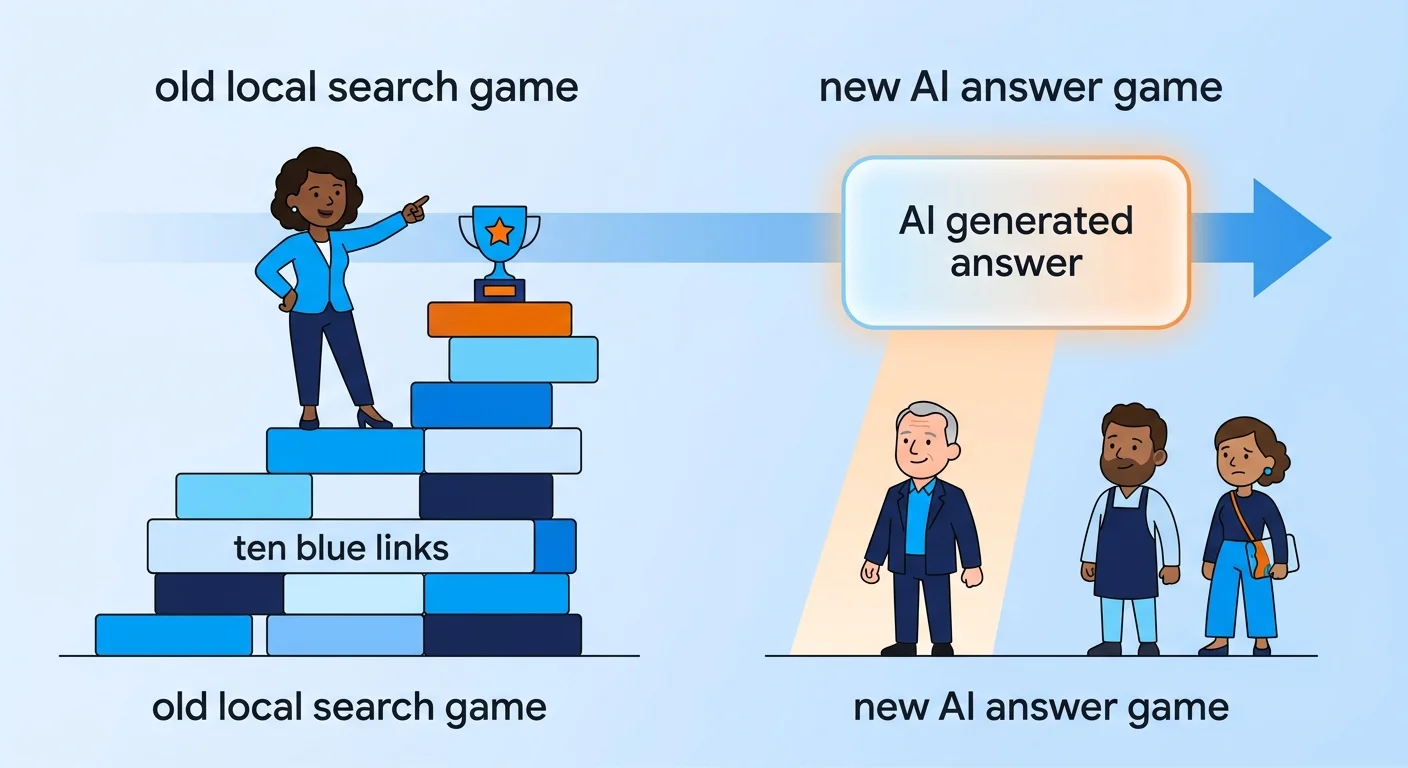
There was a moment nobody announced. The map pack quietly stopped being the finish line, and generative AI search went from listing ten competing clinics to naming exactly one.
No press release marked the shift. It landed the day a clinic asked an AI model who treats a condition nearby, and the model answered with one name instead of a ranked pile of contenders.
Here's the thing: the fight for local patients moved. It went from ranking in a list of links to becoming the single, authoritative citation in the answer itself. A clinic could own the top map pack spot for years and still never be the name the AI said out loud.
And that's the whole premise behind a defensive authority moat as a strategy. The old game rewarded height, planting your flag higher than every competitor's flag on the same hill. The new one rewards depth, a moat dug around the clinic's entity data so no competitor's answer can cross into the space where the AI decides who to cite.
Why Chasing Map Pack Placement No Longer Protects a Clinic
Traditional local search optimization tactics, focused on keywords and map pack placement, are insufficient to defend a clinic's market share against AI-driven recommendations. That is not a matter of opinion. It is a matter of what the AI is actually doing when it builds an answer.
Map pack placement got won by proximity signals, review volume, and keyword position tracking wrapped around a listing. None of that tells a generative AI system that a clinic's entity data is consistent, verified, and trustworthy across the sources it really checks.
A clinic can hold a strong spot in the classic ten blue links and still lose recommendation share completely. The AI isn't reading rank. It's cross-referencing entity data, and a fragmented footprint fails that check no matter how high the listing sits.
That's why chasing the old placement game leaves a clinic wide open. You're defending a position that no longer decides who gets recommended, while the real battleground, the AI's trust in the entity itself, sits undefended.
What an AI Actually Reads Before It Recommends a Clinic
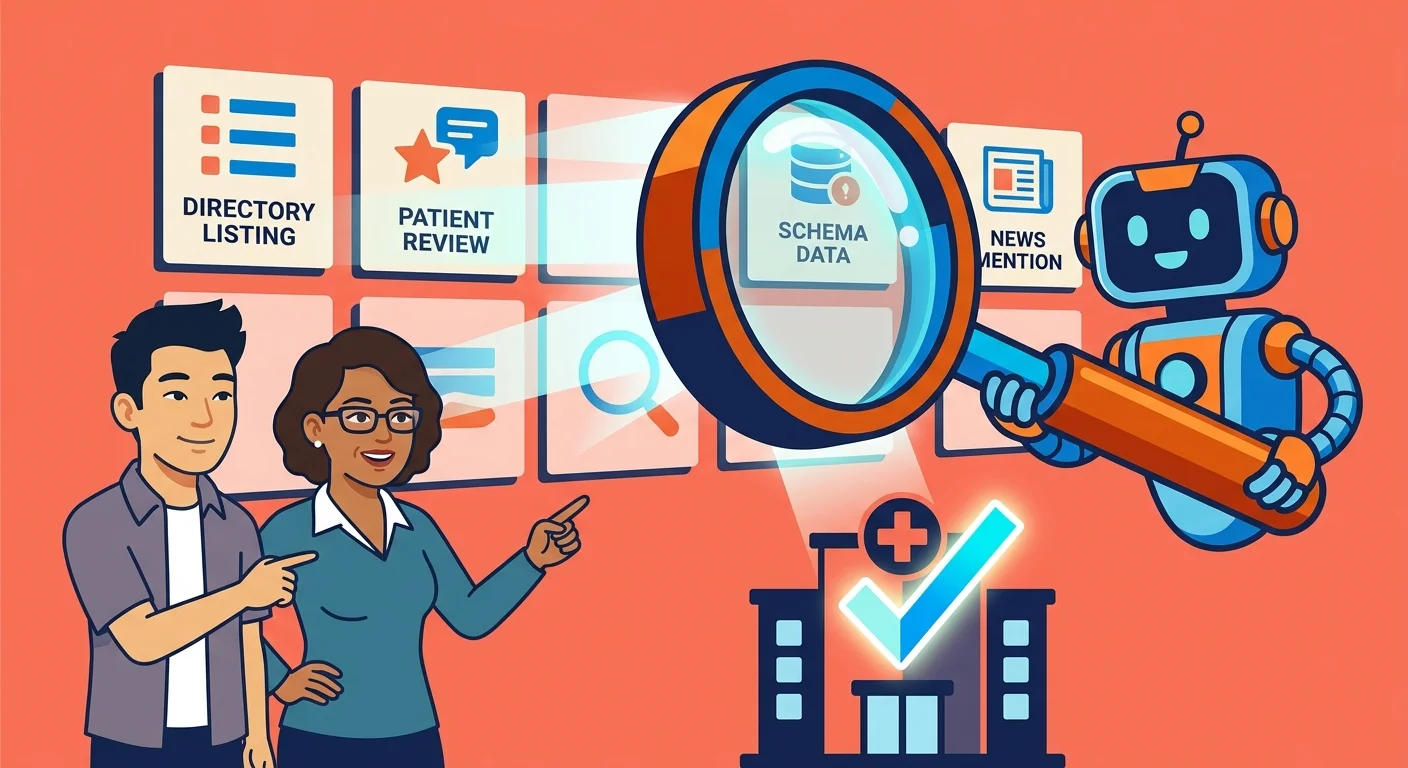
An AI model doesn't read a clinic's website and call it a day. It cross-references entity data across every source it trusts, then decides which name to say out loud.
In healthcare, the sources an AI trusts look nothing like the general directories that ran old local search. When a model answers a medical question, it weighs credibility signals a map pack never even looked at.
So here's the trap: a clinic can win every general directory and still flunk the trust check a health query triggers. The scan is narrower, and it forgives almost nothing.
| Signal Type | What It Tells The AI | Example Source |
|---|---|---|
| Directory Consistency | Whether the clinic's name, address, phone, and credentials match everywhere the AI looks | Yelp, Google Business Profile, Bing Places, Apple Maps, industry-specific health directories |
| Structured Data Signals | Whether the site itself declares what the clinic does, who it serves, and how it is credentialed in a format a model can parse directly | Schema markup on the clinic's own service pages |
| Reputation Consensus | Whether patient sentiment across platforms agrees on the clinic's reliability, rather than conflicting between sources | Review platforms and third-party patient feedback aggregators |
| Authoritative Citation | Whether independent, trusted sources reference the clinic as a legitimate provider of the service in question | Institutional directories and credentialing bodies specific to healthcare |
Directory Consistency As A Trust Signal
Directory consistency isn't a cosmetic detail. It's the first test an AI runs before it trusts an entity enough to cite it.
When your business info reads identical across all 15 platforms, Yelp, Google, Bing, Apple Maps, the industry directories, an AI reads that presence as verified and stable. Let a name, address, or phone number shift even slightly between two of them, and it reads as a fracture, not a footnote.
This is where the published industry reporting gets hard to ignore. Google pulled AI Overviews out of local healthcare provider searches entirely, from 100% coverage in December 2023 down to 0% in December 2025, a collapse specific to local and provider-intent health queries. That didn't happen because clinics stopped mattering. It happened because the bar for citing a health entity got harder to clear, and fragmented directories fail it fastest.
Where The Old Playbook Still Applies
None of this retires structured data or technical hygiene. Schema markup, accurate service pages, a clean site structure, they still tell an AI what a clinic does and who it serves.
A defensible footprint still starts on a clinic's own site, and a practice serious about its citation share can learn to build a zero-click lexical moat around its core service pages. But that groundwork only holds when it's backed by Search Engine Journal, the layer where directory drift actually gets punished.
Who This Moat Is Not Built For
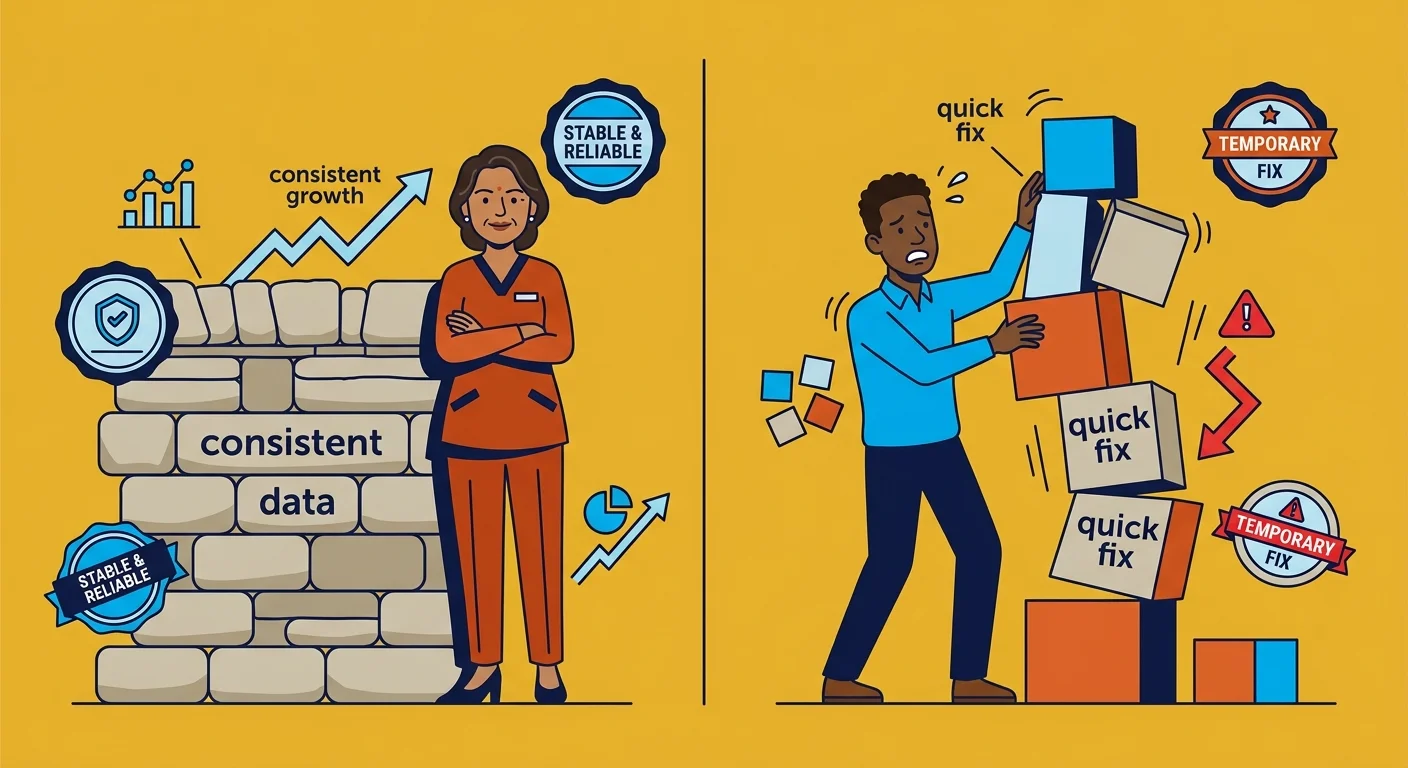
A defensive authority moat makes a local practice the undeniable, canonical answer for its core services in the eyes of an AI. Sounds like it fits every clinic reading this. It doesn't.
This work assumes a clinic's underlying information is already accurate. A moat reinforces entity data across the web. It can't invent credentials, specialties, or a service history that was never there.
It also assumes patience for structural work over quick fixes. A clinic hunting for a shortcut to placing in the classic ten blue links is chasing a different game entirely, one this strategy was never built to win.
| Profile Status | Median AI Citation Rate | What This Means |
|---|---|---|
| Consistent entity data, verified structural work | Strong citation eligibility | A clinic reinforcing accurate entity data across every platform is the exact profile a defensive authority moat is built to protect. |
| No underlying data to reinforce, credentials or specialties not yet established | Not a fit for this work | A moat reinforces entity data that already exists and cannot invent a service history or credential set from nothing. |
| Still chasing keyword position tracking and map pack placement as the primary defense | Exposed to AI-driven displacement | Clinics anchored to old placement tactics have no structural defense once an AI model chooses a competitor to cite instead. |
The Review Layer Nobody Audits
Most practices treat reviews as a vanity metric. Nobody audits them for what an AI model actually reads.
A generative AI system doesn't just count stars. It weighs review consistency, recency, and platform verification right alongside every other entity signal a clinic carries.
Treat your review layer as an afterthought and you're defending the moat with a gap already cut into the wall. That's the exact failure covered in why traditional local visibility tactics leave AI citations unprotected, and it lands right here.
The Disclosure Rules Sitting Underneath All Of This
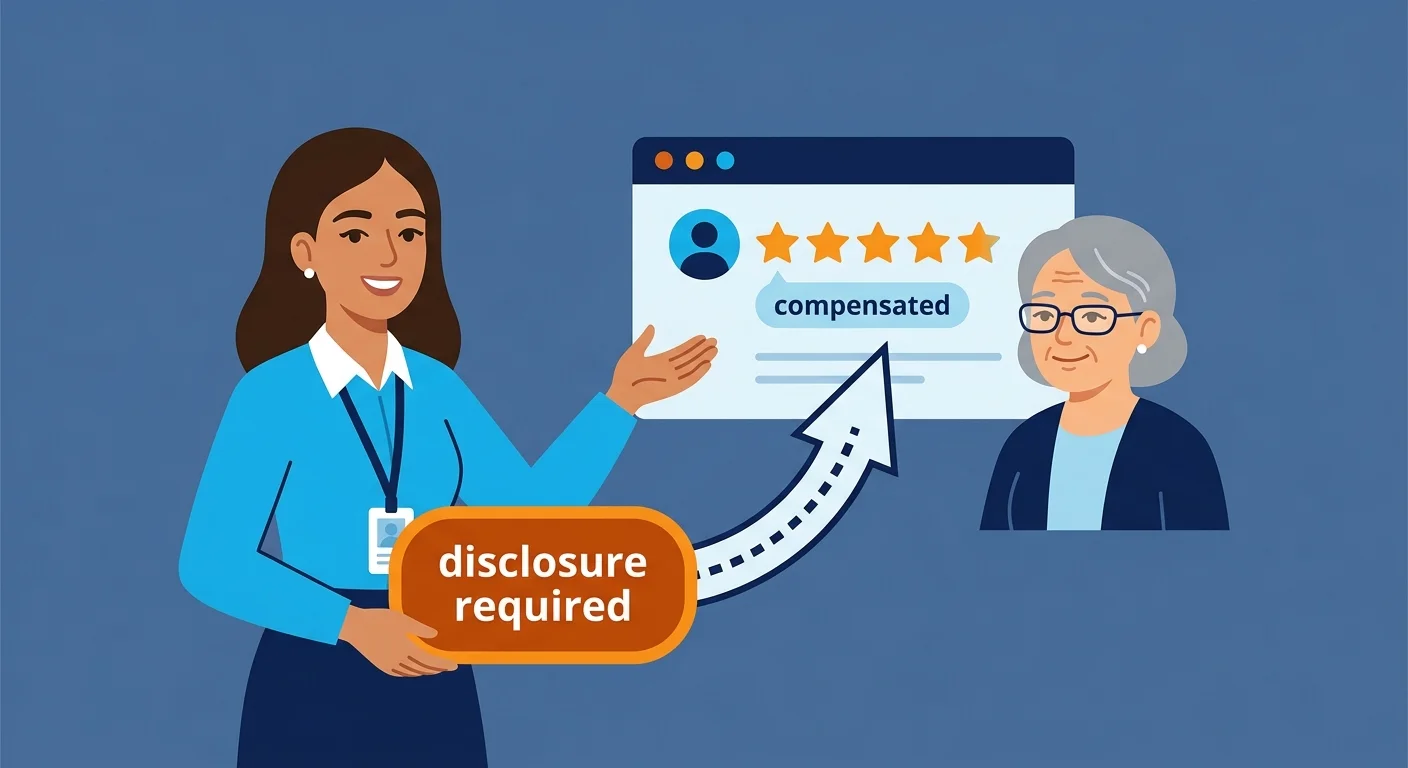
Here's the part nobody warns you about: reviews aren't just a trust signal an AI weighs. They're regulated speech. Ignore that, and you're digging your moat straight along a fault line.
The FTC rewrote its Endorsement Guides back in June 2023 to bring plain old truthful-advertising law to social media and reviews. Anyone paid to promote or review a clinic has to disclose it, and the Federal Trade Commission treats that as an extension of rules advertising always lived under, not some fresh carve-out for AI platforms.
A moat built on undisclosed incentives isn't a moat. It's a liability sitting there waiting for an audit. That's exactly why a clinic's entity data has to be verified for accuracy before a single piece of it gets reinforced, the process walked through in conducting an entity accuracy audit for AI search visibility.
Building the Moat: The Structural Components That Hold It Together
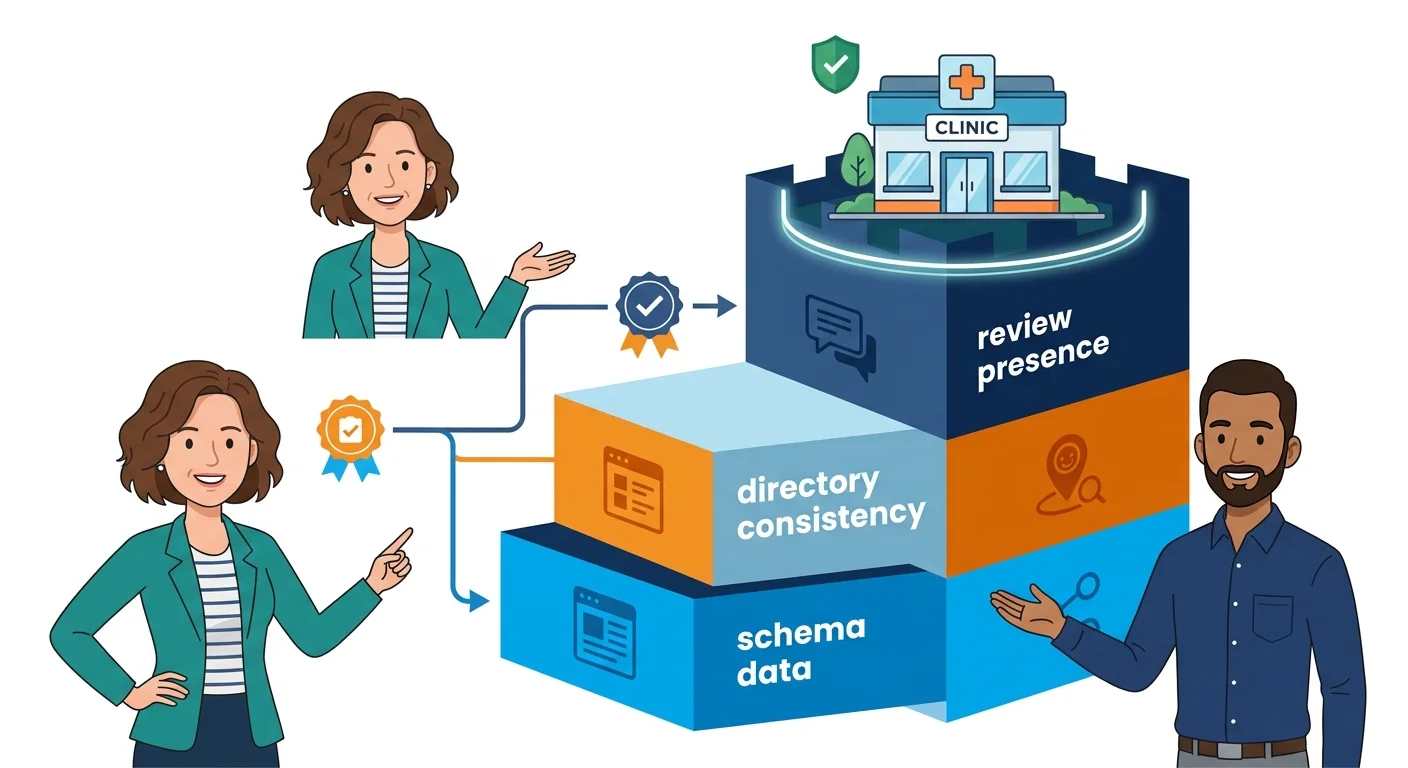
Once you start building, the moat stops being a metaphor. It's a set of structural pieces, each one bracing a different part of the clinic's entity data against drift.
Structured data tells the AI what a clinic is. Directory consistency tells it the clinic is real and stable. Reviews tell it the clinic is trusted by the people who actually walked through the door.
And none of those pieces hold on their own. A clinic with flawless schema markup and a fractured directory footprint is still building on sand, because the second an AI checks one signal against another, it catches the mismatch.
| Build Phase | Primary Task | Signal It Reinforces |
|---|---|---|
| Entity Baseline Audit | Pull every instance of the clinic's name, address, phone number, and credentials across the platforms an AI model consults, then check each entry against the others. | Verified and stable identity data |
| Structured Data Reinforcement | Convert the clinic's name, credentials, specialties, and location into schema markup the AI can parse directly, removing the need for inference. | Machine-readable authority |
| Directory Consistency Alignment | Correct any drift in name, address, or phone number across every directory the clinic appears on, closing gaps a fragmented footprint would expose. | Cross-platform trust |
| Review Layer Verification | Audit reviews for consistency, recency, and platform verification, and confirm any compensated endorsements carry proper disclosure. | Patient-validated credibility |
| Ongoing Drift Monitoring | Recheck the entity baseline on a recurring basis so a single fractured listing cannot reopen a gap already closed. | Sustained citation share |
Schema As The Load-Bearing Wall
Schema markup is the skeleton an AI reads before it reads a single word on the page. It turns a clinic's name, credentials, specialties, and location into something a machine can parse without guessing.
Skip it, and the AI is left inferring facts from loose text. Inference breeds error, and error is exactly what a defensive authority moat exists to kill.
This is load-bearing work, not decoration. Every other reinforcement gets weighed against what the schema already told the AI to expect. One mismatch there, and the whole structure starts to buckle.
The Audit Sequence Before Anything Gets Built
Nothing gets reinforced before it gets verified. Build a moat around inaccurate entity data and all you've done is protect the wrong information more effectively.
The audit starts by pulling every instance of the clinic's name, address, phone number, and credentials across the platforms an AI actually consults. Each entry gets checked against the others, not against what the clinic assumes is listed.
Only once that baseline reads accurate does reinforcement begin. Anything sooner is construction on a foundation nobody bothered to inspect.
Frequently Asked Questions
Once a clinic sees its own footprint clearly, the questions get specific. Here are the ones that come up most.
How do AI Overviews decide which specific medical clinic to recommend for a condition?
It cross-references entity data across every trusted source it consults, then weighs consistency and credibility before it picks a name. Where you land in the classic ten blue links doesn't factor into that call at all.
What types of structured data are most critical for a healthcare practice's visibility in AI search?
Schema markup covering a clinic's name, credentials, specialties, and location. It's the skeleton an AI reads before anything else on the page. Skip it, and the model's left guessing facts out of loose text.
Can a small number of negative patient reviews harm a clinic's inclusion in AI-generated answers?
Yes, but absence hurts a lot more than a handful of bad reviews. Brands with no verified active profile sit at a median AI citation rate of just 1%, while brands with even a thin Trustpilot profile of 1 to 13 reviews jump to 53.5%. A minimal verified review layer beats none every time.
How is building a defensive authority moat for generative engine optimization different from traditional local search work?
Traditional local work chases a spot in a list of links. A defensive authority moat reinforces the entity data itself, schema, directories, reviews, so the AI has no fractured signal to exploit when it decides who to recommend.
What signals does a large language model use to determine if a medical source is trustworthy enough to cite?
It weighs directory consistency, structured data accuracy, and verified review signals together, never one credential on its own. For high-stakes verticals like healthcare, the sources a model trusts look nothing like the general directories that once powered local placement.
If our clinic information is correct on our website, does it matter if it's inconsistent on third-party health directories for AI search?
Yes. An AI cross-checks a clinic's own site against every third-party directory it consults, and a mismatch reads as a fracture, not a footnote. Getting it right in one place doesn't cancel out getting it wrong somewhere else.
What is the first step a medical practice should take to audit its visibility in AI-generated search results?
Pull every instance of the clinic's name, address, phone number, and credentials across the platforms an AI actually checks. Confirm that baseline is accurate before a single piece of reinforcement work starts.
The Bottom Line
A moat doesn't hold because you dug it once. It holds because somebody keeps walking the walls.
Treat your entity data like a flag, planted once and left to fade, and you'll watch a competitor's answer stroll across the line you never defended. Treat it like a moat, reinforced on schema, verified on directories, audited on reviews, and you stay the name the AI says out loud.
That's the whole premise this case study defends, and it's the one iTech Valet builds toward for every clinic willing to do the structural work instead of hunting for a shortcut. If a practice needs to know exactly where its own walls are thin, the next move is to get a clinic's AI visibility checked directly.