What an Entity Accuracy Audit Actually Checks

Here's the thing: every business already has a file. Problem is, the business didn't write it. It's scattered across aggregators, directories, and Knowledge Panels, and AI engines read it like gospel the second someone asks about you.
An entity accuracy audit is where the business grabs the pen back. It's a straight review of how your name, address, services, and key people show up across every source an AI engine pulls from before it answers a single question about you.
So the audit doesn't just confirm the data exists. It checks whether every source agrees, because AI won't ask permission before quoting whichever version it finds first. That's the unmanaged file a defensive authority moat strategy is built to replace.
Now picture a business that's never once looked. Old category descriptions, dead phone numbers, staff who left years ago — none of it disappears on its own. It just sits there, waiting for an AI engine to quote it as current fact.
Where AI Search Engines Pull Your Business Data From
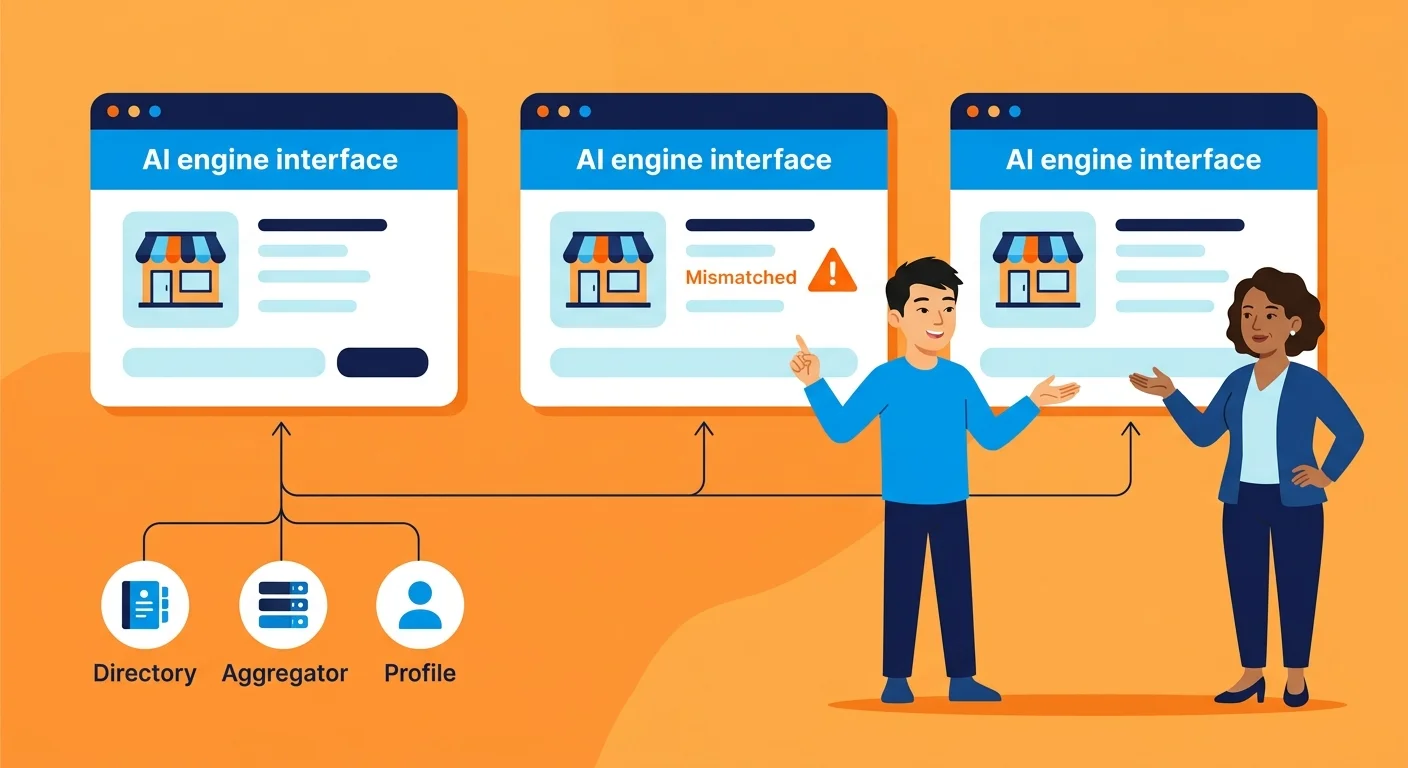
AI engines don't pull your business data from one place. They pull it from a patchwork, then stitch together whichever version shows up most consistently.
Some of that patchwork is obvious. Your Google Business Profile, your website, and your structured data markup all feed straight into how an AI system describes you.
But some of it lives in places you've probably never opened. Legacy directories, data aggregators, and old citation sources still carry weight long after anybody stopped updating them.
| Data Source Type | What It Feeds | Common Error Pattern |
|---|---|---|
| Google Business Profile | Direct answers about hours, location, category, and services when an AI engine treats the business as a local entity | Outdated categories or service descriptions left unchanged since the profile was first claimed |
| Data Aggregators | Bulk-distributed name, address, and phone records that feed dozens of downstream directories at once | An old address or disconnected phone number still circulating years after the business moved |
| Legacy Directories | Citation records AI systems cross-reference to confirm or contradict newer listings | Stale entries nobody remembers creating, still indexed as if they were current |
| Structured Data Markup | Machine-readable confirmation of the business name, services, and personnel straight from the source | Missing or incomplete Schema.org implementation that leaves AI systems guessing instead of confirming |
| Business Website | The version of the business AI engines treat as the closest thing to a primary source | Copy that lags behind real changes to services, staff, or category positioning |
The Data Aggregator Blind Spot
Here's the blind spot: most businesses assume their information is right because nobody's complained. They've got no idea legacy listings, aggregator errors, or subtle little variations are quietly creating ambiguity AI models can't resolve.
A data aggregator never asks you to confirm a change. It licenses whatever record it already has, sells that record to a dozen downstream directories, and keeps pushing an old address years after you moved.
So when an AI engine crawls a business quarterly through a monthly schema and entity governance cadence, it's checking whether those aggregator-fed records still match reality. Skip that check and the old data keeps circulating, quietly contradicting your current listing.
Why 'Just Fixing Google Business Profile' Falls Short
Plenty of businesses think fixing the Google Business Profile solves the whole thing. It doesn't.
It's one source among many. An important one, sure — but AI engines cross-reference it against aggregators, directories, and your own website before they settle on an answer.
Clean up the profile and leave three aggregators sitting on a mismatched phone number, and the contradiction is still live. The AI system still has to pick which version to believe.
This is the part that gets missed. It's not about chasing keywords — it's about handing AI clean, verifiable data so it can recommend you confidently and correctly. Fixing the profile is step one, not the whole job.
How AI Models Match and Reconcile Your Business Identity
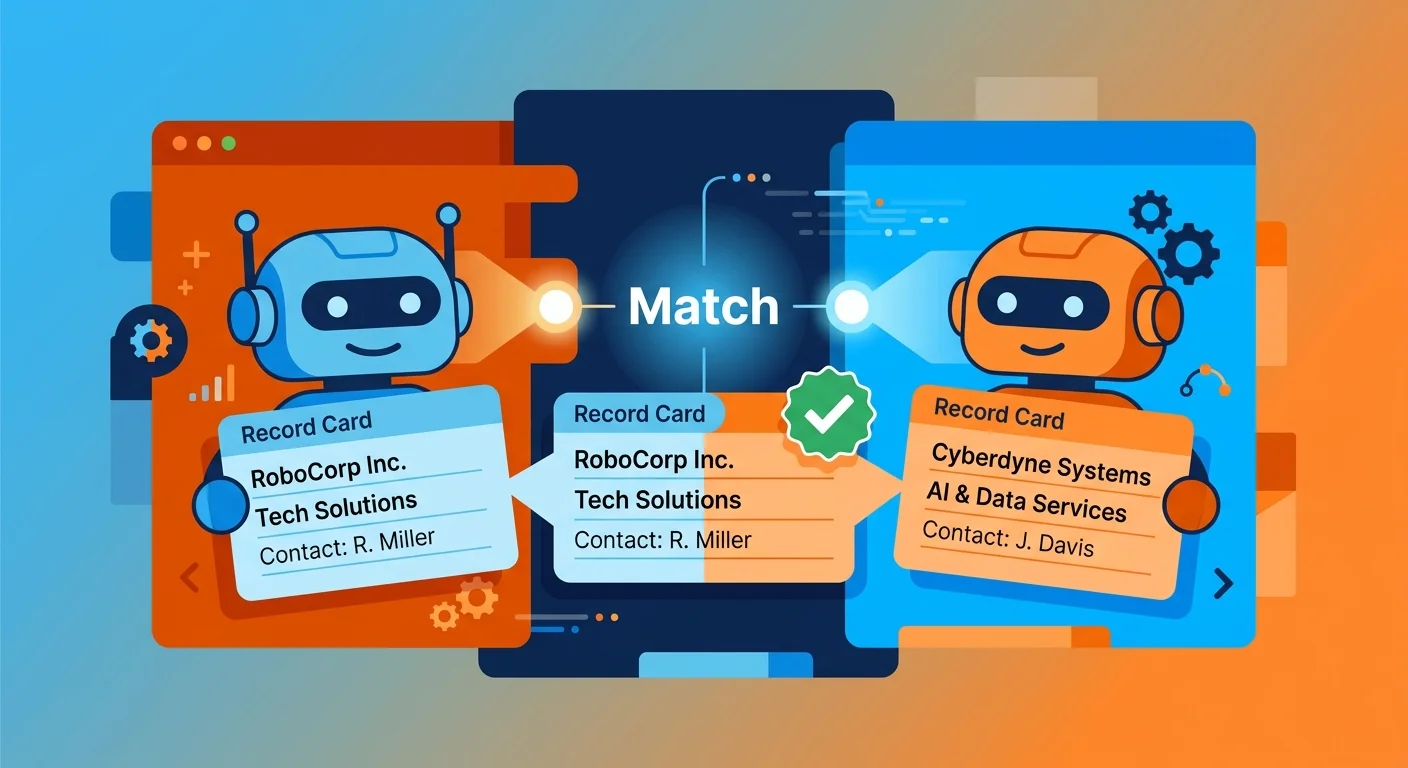
So how does an AI engine actually decide which version of your business is the real one? It doesn't read one page and call it done. It grabs fragments from dozens of sources and tries to fuse them into one identity before it ever answers a question about you.
And that fusing step is where most of the damage happens. A business can have accurate data everywhere and still get misrepresented, simply because the machine can't confidently tell that three slightly different listings all describe the same place.
Once you get that, you build the audit differently. Fixing each listing in isolation isn't enough. The fix has to account for how a model weighs and reconciles conflicting fragments in the first place.
Entity Matching and Why Ambiguity Breaks AI Confidence
Here's the technical core of it. Entity matching is a critical task in data integration that identifies records across different datasets referring to the same real-world entities.
That's not marketing talk. It's a data science discipline, and it explains exactly why a slightly different business category or an old suite number breaks an AI system's confidence. The model has to decide whether two records are one business or two.
So when the records disagree just enough, the safest computational move is to hedge or leave it out. That's what surfaces as a wrong answer, a missing service, or a business dropped from a recommendation entirely.
Entity Reconciliation Inside Large Language Models
Now zoom in on what happens inside a large language model once it's pulled those fragments together. This is entity reconciliation, and it's a structured, ongoing process — not a single lookup.
The model isn't just filing away a name and address. It's building an internal picture of your business, and it constantly checks new data against what it already believes to be true.
That's the deeper reason a data drop beats a one-time correction. A structured, proprietary data release maintained on a recurring schedule hands the model fresh, unambiguous signal to reconcile against, instead of letting it fall back on whatever contradictory fragment it saw last.
The formal research here, published through the arXiv preprint server, treats entity matching as a foundational data integration problem, not a cosmetic one. Sit with that for a second. If the underlying science takes identity resolution this seriously, a business treating its own entity data casually is already behind.
Running the Audit: A Step-by-Step Field Method
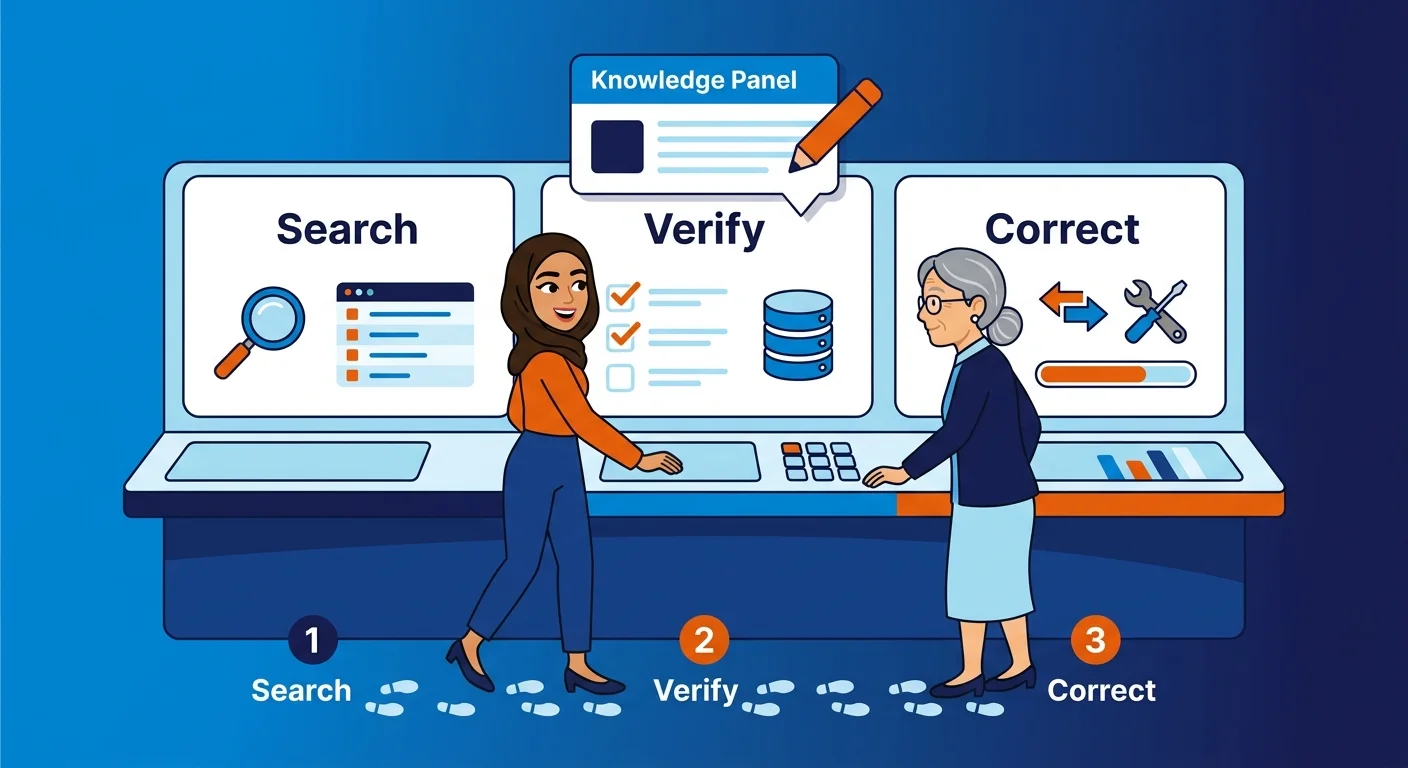
So what does this actually look like, step by step? It starts with a single source of truth. Before touching one directory, the business locks down the exact name, address, phone number, and service descriptions it wants every source to reflect.
That locked file becomes the benchmark. Every listing, every profile, every structured data field gets checked against it — not against each other.
From there, you work outward in circles. Start with the highest-authority sources, drop down to the aggregators and directories feeding everything else, and write down every mismatch as it shows up.
| Audit Step | What You Are Checking | Where to Look |
|---|---|---|
| Lock the Source File | The exact name, address, phone number, and service descriptions the business wants every listing to reflect | Internal records, legal filings, and the current website content |
| Audit the Knowledge Panel | Whether the panel's claims about the business match the locked source file | Google Search results directly beneath the Knowledge Panel |
| Check Structured Data Markup | Whether Schema.org fields on the website match the locked file exactly, not approximately | The website's backend markup or a structured data testing view |
| Cross-Reference Aggregators and Directories | Whether legacy or third-party records still circulate an outdated address, name, or category | Data aggregator listings and older directory profiles |
| Document and Rank Discrepancies | Which mismatches carry the most influence over how AI engines describe the business | The consolidated list built from every source checked above |
Auditing Your Knowledge Panel and Structured Data Footprint
Two sources earn their own pass, because they carry outsized weight in how AI systems describe you: the Knowledge Panel and your website's structured data markup.
Got an existing Knowledge Panel? Verification starts in a specific spot. The business searches for its own name or organization on Google Search, then clicks or taps the prompt that appears below the panel.
That single action, confirmed through Google's own guidance, is your entry point for correcting whatever the panel currently claims. Skip it and the panel keeps circulating whatever it already believes.
Structured data gets audited differently. Somebody has to check the Schema.org markup on the business website against that same locked file, confirming the name, address, and service fields match exactly — not approximately.
Who Should Not Be Running This Audit Alone
Now, a blunt qualifier. This audit isn't a solo weekend project for every business, and pretending it is sets a bar nobody can hit.
One location, a simple service list, no history of mergers or rebrands? An owner can plausibly run this alone. But that's a narrow slice of the businesses reading this.
A multi-location practice, a business that changed its name, or one competing in a market where the zero-sum nature of AI engine recommendations already punishes ambiguity — none of those is a do-it-yourself candidate. The stakes are too high for a spreadsheet built on a Saturday.
Correcting Verified Errors Across the Knowledge Graph
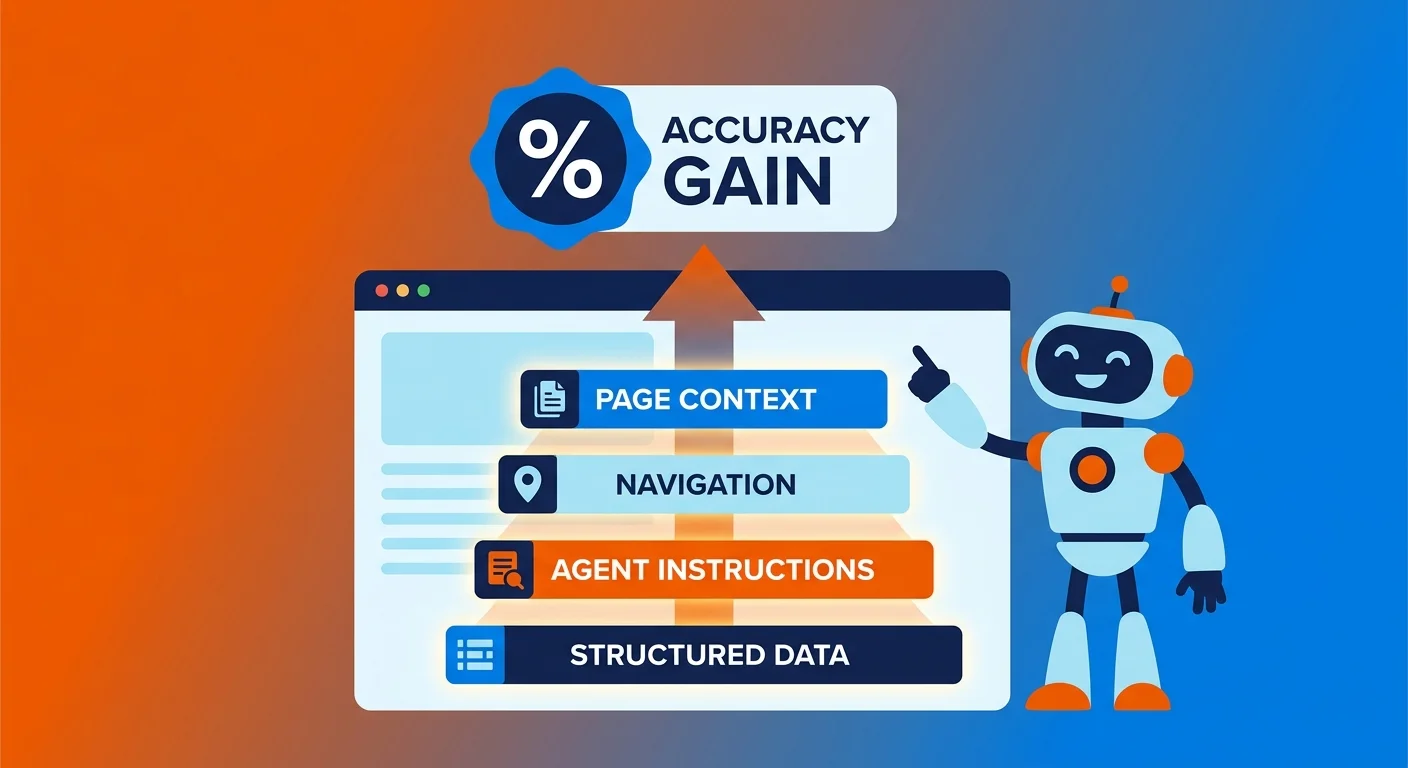
For the businesses that qualify for the deeper pass, this is where the real correction work starts. The Knowledge Graph and the structured entity pages feeding it aren't the same target.
Fixing a verified error means going to the origin point, not the surface listing that happens to show up in a search result. Fix the source record and every downstream citation inherits the fix.
So the mechanics matter here. Edit only what you can see on the surface, and the underlying entity page stays malformed — and that page is exactly what an AI system reads to decide what's true.
| Entity Page Element | Standard RAG Accuracy Gain | Agentic Pipeline Accuracy Gain |
|---|---|---|
| Structured data markup (Schema.org fields) | Meaningful lift, since the model can confirm identity fields directly instead of inferring them | Meaningful lift, as the agent no longer has to cross-check ambiguous fields before acting on them |
| Agent-readable instructions | Moderate lift, mainly by reducing hedged or omitted answers | Substantial lift, since an agentic pipeline depends on explicit instructions to complete multi-step lookups |
| Clear navigation and internal linking signals | Modest lift, helping the model locate the correct page fragment faster | Moderate lift, since an agent chains through the entity page rather than reading it in isolation |
| Combined enhanced entity page (all elements together) | Largest overall lift for standard retrieval, matching the full accuracy improvement documented for enhanced pages | Largest overall lift for agentic retrieval, matching the full accuracy improvement documented for the agentic pipeline |
Building Enhanced Entity Pages That Improve AI Accuracy
An enhanced entity page isn't a cosmetic upgrade. It's a structural rebuild of how a business presents itself to a machine reader, not a human one.
That rebuild covers structured data markup, agent-readable instructions, and clear navigation signals that tell a crawler exactly how the page's pieces fit together. None of it's optional if the goal is a model that stops guessing.
And the gains from doing it right aren't theoretical. Enhanced entity pages built with structured data, agent instructions, and navigation features produced a +29.6% accuracy improvement for standard retrieval systems, and researchers documented in the arXiv research repository recorded a +29.8% gain for the full agentic pipeline.
Look at what that actually means. Two different retrieval architectures, one standard and one agentic, both got meaningfully more accurate once the entity page stopped being ambiguous. That's the payoff of taking the pen back instead of leaving the file to whoever wrote it last.
Frequently Asked Questions
Same questions come up every time a business sees what this really involves. Here's the fast version, no hedging.
What specific tools are needed to perform an entity accuracy audit?
You don't need a proprietary platform to start. A locked reference file, direct access to the business's listings and website admin, and the patience to cross-check by hand will carry the first pass.
How often should a business conduct an entity accuracy audit for AI search?
Treat it as ongoing, not a one-and-done project. Aggregators and directories drift on their own clock, so a business that checks once and walks away drifts right back into contradiction.
What is the most common source of entity errors that AI search engines find?
Old legacy listings and third-party aggregator errors cause most of it. A business can be dead certain its main profile is clean and still get undercut by a stale record it never knew existed.
Can fixing my Google Business Profile solve all entity accuracy issues for AI?
No, and that's the mistake most businesses make. The profile is one source among many, and AI engines cross-reference it against aggregators, directories, and the website itself before landing on an answer.
After an audit reveals inconsistencies, what is the first step to correcting them?
Go to the origin record, not the surface listing. Fix the source that feeds every downstream citation and the contradiction clears everywhere at once, instead of getting chased listing by listing.
The Bottom Line
Here's the thing about an unmanaged file: it doesn't go quiet just because nobody's watching it. Every aggregator, every stale directory, every mismatched panel keeps shaping what an AI engine tells the next person who asks about this business.
So the audit isn't the finish line. It's the moment the file stops being unmanaged, and a wrong answer sold as fact stops being a nuisance and becomes a live liability. That's why entity accuracy is a defensive strategy, not a background chore.
Look, the choice here is simple. Keep letting scattered, contradictory sources write the business's story, or take the pen back and start governing what AI is allowed to believe. If it's time to find out what the machines are actually saying right now, run a free AI visibility check.