
Why Entity Data Is the New Scoreboard

Search stopped working the way it used to the moment machines started generating answers instead of listing links. The goal shifted from chasing a spot in classic search listings to becoming the fact an AI system cites by name. That shift is what separates a listed address from a cited source.
Most agencies selling AI visibility are still running the same playbook they sold for traditional search optimization, just with new vocabulary layered on top. Once answers replaced links, a high position no longer said who would be cited, yet keyword-focused tactics keep getting repackaged as if the underlying mechanism hadn't changed. Before hiring anyone, it helps to review the questions to weigh before hiring an AI visibility agency that actually separate entity work from relabeled keyword chasing.
What Entity Data Actually Means
Entity data is the network of confirmed facts and relationships that define a business, its offerings, and its authority in an AI's eyes. A name alone isn't an entity, but tie that name to a location, a credential, and a service and it becomes one.
That distinction is the whole argument. A listed address is a name sitting in a directory, cut off from meaning, while a cited source is a confirmed node inside a machine's knowledge graph. Before you hire anyone, know what to do when agency answers raise doubts.
The Knowledge Graph Behind the Term
Google's Knowledge Graph Search API exists for one job: letting systems look up entities already in the Google Knowledge Graph. Google's documentation says the Google Knowledge Graph Search API may let users find entities in the Google Knowledge Graph using standard schema.org types compliant with the JSON-LD specification. It is a read-only lookup: nothing a business publishes is submitted through it.
What the API does show is the vocabulary Google uses to describe entities. An agency that writes schema in that same schema.org vocabulary states a business's facts in a form a machine can read.
Sign One: They Talk in Facts and Relationships, Not Just Phrases
Here's the first tell: it shows up in how an agency talks about a business, not just in what it promises to do for it. Listen for whether the conversation centers on facts and relationships or stays stuck on phrases. Then hold that talk up against what each scope of work line should contain.
Why Keyword-Only Thinking Fails
More content has never equaled more visibility on its own. Volume without confirmed facts just adds more unverified phrases to the pile.
Here's the kicker: keyword-only thinking measures the wrong unit. It counts phrases instead of confirming facts a machine can verify. An agency still chasing phrase density is solving a problem that stopped mattering the day answers replaced links.
Sign Two: Structured Data Is Part of Their Process, Not an Afterthought
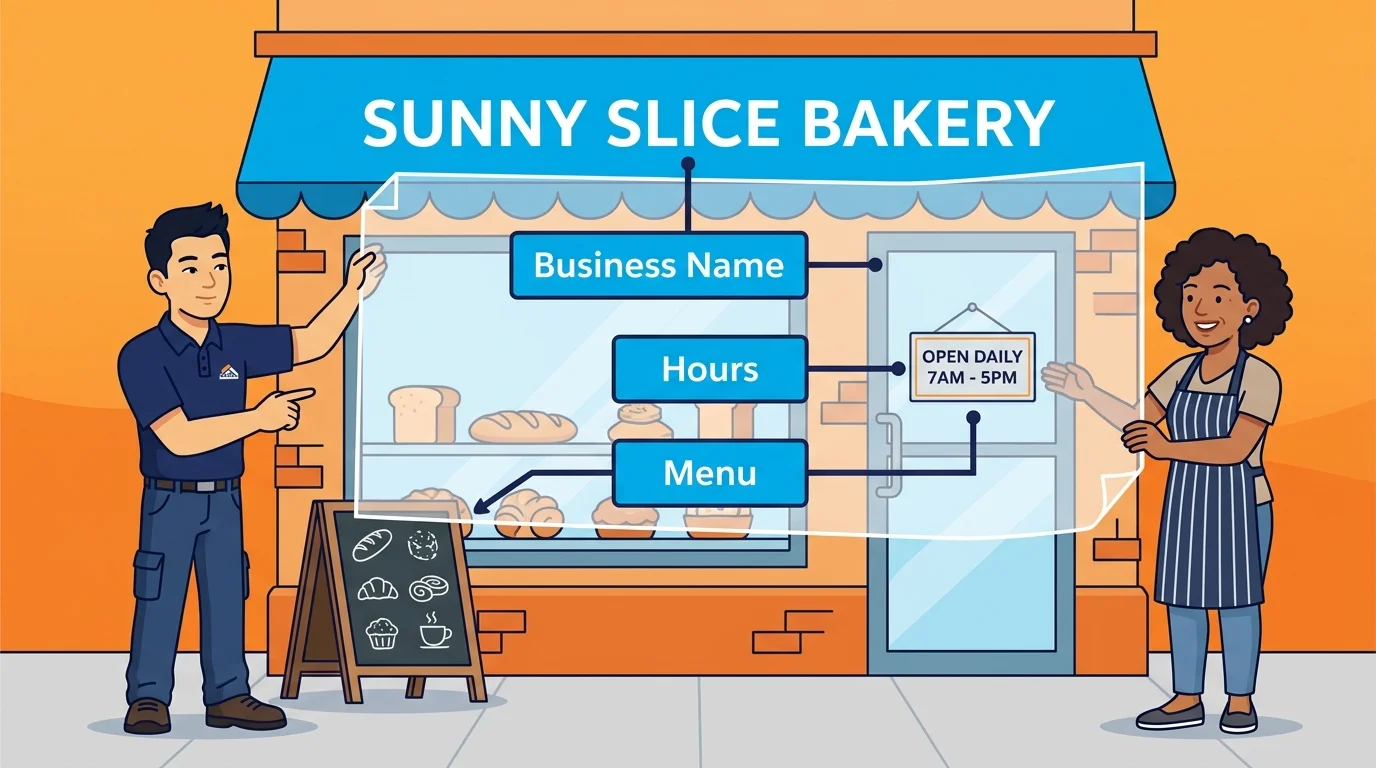
Talking about entity data is one thing. Building it into a process is another.
An agency that treats structured data as core infrastructure writes schema markup for every service, location, and credential a business holds, not just the homepage.
That work is what AI search optimization services should mean in practice — confirmed facts coded in a format machines read directly, not hinted at through prose.
| Structural Layer | What It Confirms | Who Reads It |
|---|---|---|
| Business Name and Location Schema | Confirms the business exists at a specific place under a specific name, matched against every other mention of it online | Knowledge graph systems and local AI answer engines cross-checking identity |
| Service and Offer Schema | Confirms what the business actually does, coded as a defined entity rather than implied through page copy | AI systems matching a query to a confirmed provider instead of a keyword-stuffed page |
| Credential and Review Schema | Confirms demonstrated authority and trust signals tied directly to the named entity, not just claimed in prose | Trust-weighted ranking systems and answer engines deciding which source to cite |
| FAQ and Article Schema | Confirms specific answers belong to a specific source, structured so a machine can extract and attribute them | Answer engines pulling direct responses for citation rather than summarizing unstructured text |
How Schema Markup Confirms What a Business Is
Schema markup is how a business tells a machine exactly what it is, instead of hoping the machine infers it correctly.
The standard formats the Knowledge Graph Search API returns show the vocabulary in use. Facts get coded in a structure a machine can read, not guess at from paragraphs.
An agency writing schema this way is building a confirmed entity. One skipping it is leaving the business to interpretation.
Sign Three: They Treat Citation as the Goal, Not the Ranking Position
Ranking position tells you where a page sits. Citation tells you whether a machine actually uses it as the answer, and that's the only scoreboard that counts now.
| Old Scoreboard Metric | What It Actually Measures | Why It Misleads Now |
|---|---|---|
| Results-page position numbers | Where a page sits in a list of links on a given day | Machines generating answers no longer build a list of links for a user to scan |
| Rank-tracking reports | Movement up or down for a chosen phrase over time | A tracked phrase can climb while the business stays an unconfirmed name to an AI system |
| Site visits from classic listings | Clicks earned from a high place in the list of results | An answer can cite a source directly without ever sending a click back to the page |
| Keyword position tracking | Density and placement of target phrases across a page | Phrase placement does not confirm a fact, and only confirmed facts get cited |
How Citation Evidence Actually Gets Used
Research into Agentic GraphRAG systems found cited evidence is often necessary, since removing it substantially changes answers and reduces accuracy. University of Southern Denmark research documents that cited evidence may be necessary in Agentic GraphRAG systems, because removing it can substantially change answers and reduce accuracy, though citations alone are not sufficient, since accurate answers can also depend on uncited traversal context and surrounding graph structure — a laboratory finding rather than a study in people. That study looked inside one kind of retrieval system, not at agencies or search positions. What it supports is narrower: the evidence a system cites does real work in the answer it gives. Attention bought through classic search listings expires the moment the listing changes.
Where the Old Scoreboard Still Fools People
Position numbers answer a question machines stopped asking.
Sign Four: Trust Signals Are Managed as Infrastructure, Not a Checkbox
Trust isn't a line item an agency tacks on at the end of a project. It gets built across every confirmed fact, every piece of structured data and every consistent record a machine can check. So the real ones maintain it nonstop, because attention rented through classic search listings expires the moment the listing changes.
What Google's Own Trust Framework Reveals
Google states its ranking systems prioritize helpful, reliable information made for people, not content built to manipulate rankings.
Google's documentation says Google's automated ranking systems may prioritize helpful, reliable content created to benefit people, while E-E-A-T is not itself a specific ranking factor and trust is considered the most important of its aspects.
Trust sits as the most important piece of that framework, ahead of any single ranking trick.
An agency building trust as infrastructure is answering that standard directly, not gaming around it.
Sign Five: Reporting Reflects Data Consistency, Not Just Site Visits
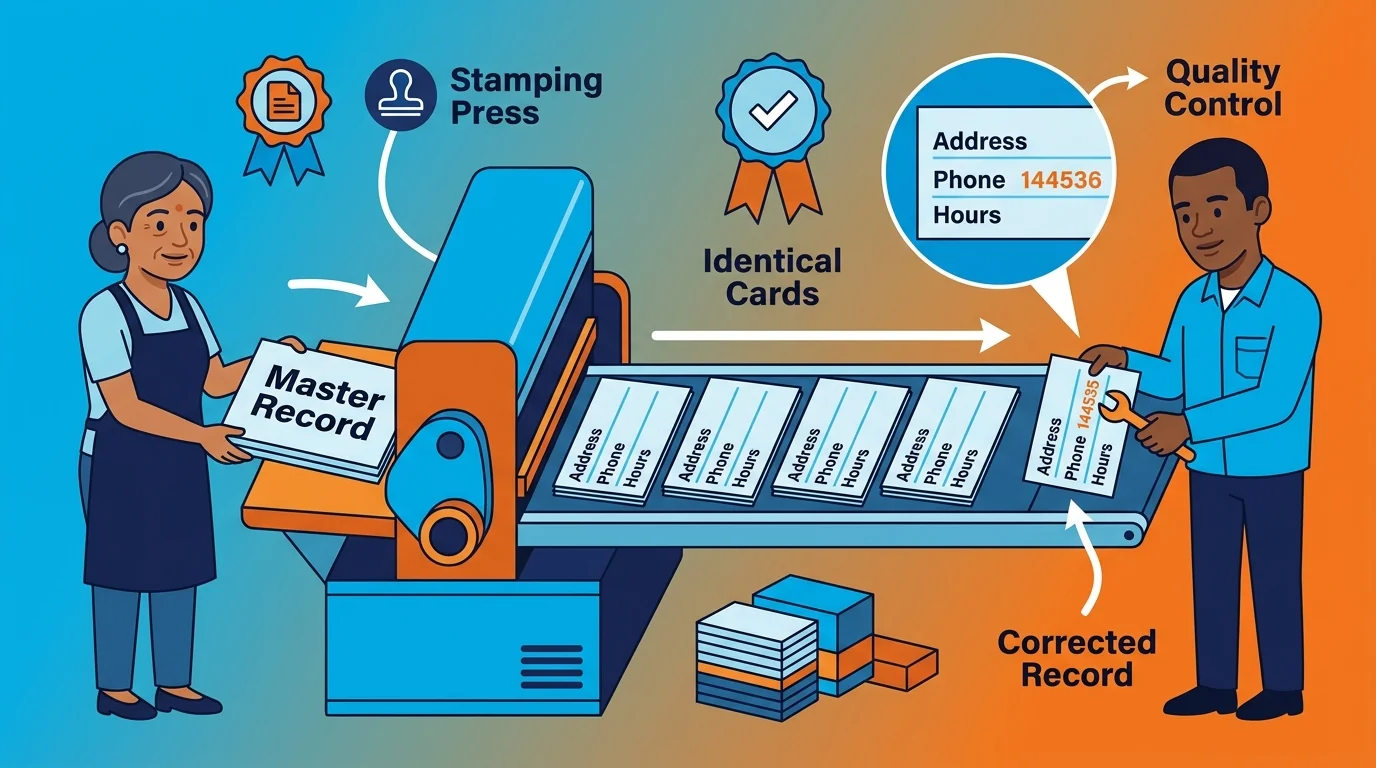
Reporting is where an agency's real priorities come out, no matter what the pitch deck said. One stuck in old-school search work hands over site visits and search position reports and calls that progress. One built on entity data reports on something else entirely: whether a business's facts stay consistent, confirmed and citable across every platform a machine checks.
| Report Element | What It Shows an Operator | Where the Data Comes From |
|---|---|---|
| Entity Consistency Audit | Whether name, location, credential, and service data match identically across every platform a machine checks | Cross-platform record comparison pulled from directories, schema markup, and the business's own site |
| Structured Data Coverage | Whether schema markup exists for every service, location, and credential, not just the homepage | Direct review of the site's coded markup against the business's actual service and location list |
| Conflict Resolution Log | Which outdated or conflicting listings have been identified and corrected since a prior agency's work | Ongoing tracking of directory and citation records compared against confirmed source facts |
| Site Visits | Whether people are reaching the site, a measure that can rise while the underlying entity stays unconfirmed | Standard analytics tools counting visits, detached from whether the entity itself is verified |
What Consistent Entity Data Looks Like in Practice
Consistent entity data means the same name, location, credential and service description show up identically everywhere a machine looks for them. A real report tracks where records still conflict and where they've been reconciled, and reading that takes a grip on data architecture and information retrieval, not vanity metrics. And here's what the shiny dashboards hide: site visits can climb while the entity underneath stays unconfirmed.
Building and Repairing the Entity Record
Building the entity record means closing those gaps, not counting new site visits, so the agency doing it repairs conflicting listings, fixes outdated schema and confirms the facts a prior agency left scattered. That's the work that decides whether a business becomes a cited source or stays a listed address. So ask to see that evidence before you sit through one more report stuffed with vanity numbers.
Frequently Asked Questions
A few questions keep popping up once the five signs are on the table. Here's the straight answer to each one.
How is focusing on entity data different from traditional keyword research?
Keyword research maps the phrases people type. Entity data maps confirmed facts and relationships a machine can actually verify. Totally different unit.
What does a knowledge graph have to do with a company's online presence?
Think of a knowledge graph as the place confirmed entities live inside systems like Google's. A business's facts are easier for a machine to match when they use the vocabulary the graph itself uses.
What's a red flag that an agency is still stuck on old-school search work?
Here's the big one: an agency that leads every conversation with phrases and rankings. Facts and relationships never come up unless somebody pushes.
How can you tell if an agency's proposed strategy is actually built around entity management?
Look for schema markup written across every service, location and credential. Not just the homepage. A real entity strategy treats structured data as infrastructure, never an afterthought.
Why does being a cited source matter more than holding a spot in classic search listings?
A listed address just sits there, hoping somebody finds it. A cited source gets pulled straight into the answer by name. That happens because a machine already confirmed what it is.
What kind of reporting should come from an agency focused on entity data?
Expect reports on consistency. Does the same name, location, credential and service description show up identically everywhere a machine checks? Site visits and position numbers aren't the evidence that counts.
Can inconsistent entity data left by a previous agency be corrected?
Yes. Repairing conflicting listings, fixing outdated schema and reconciling scattered facts is standard work. Any agency built around entity data handles it without blinking.
The Bottom Line
Here's the verdict: an agency's worth now shows in whether it builds confirmed facts or just repeats phrases. All five signs boil down to one question. Does this agency manage entity data, or does it just manage vocabulary?
A listed address sits there waiting to be found. A cited source gets pulled into the answer by name, because a machine already confirmed what it is.
That gap is the whole argument, so test it against a real agency's actual scope before you sign anything. Start with your own AI Visibility Check.