
What Actually Changes When You Switch to an Answer Engine Agency
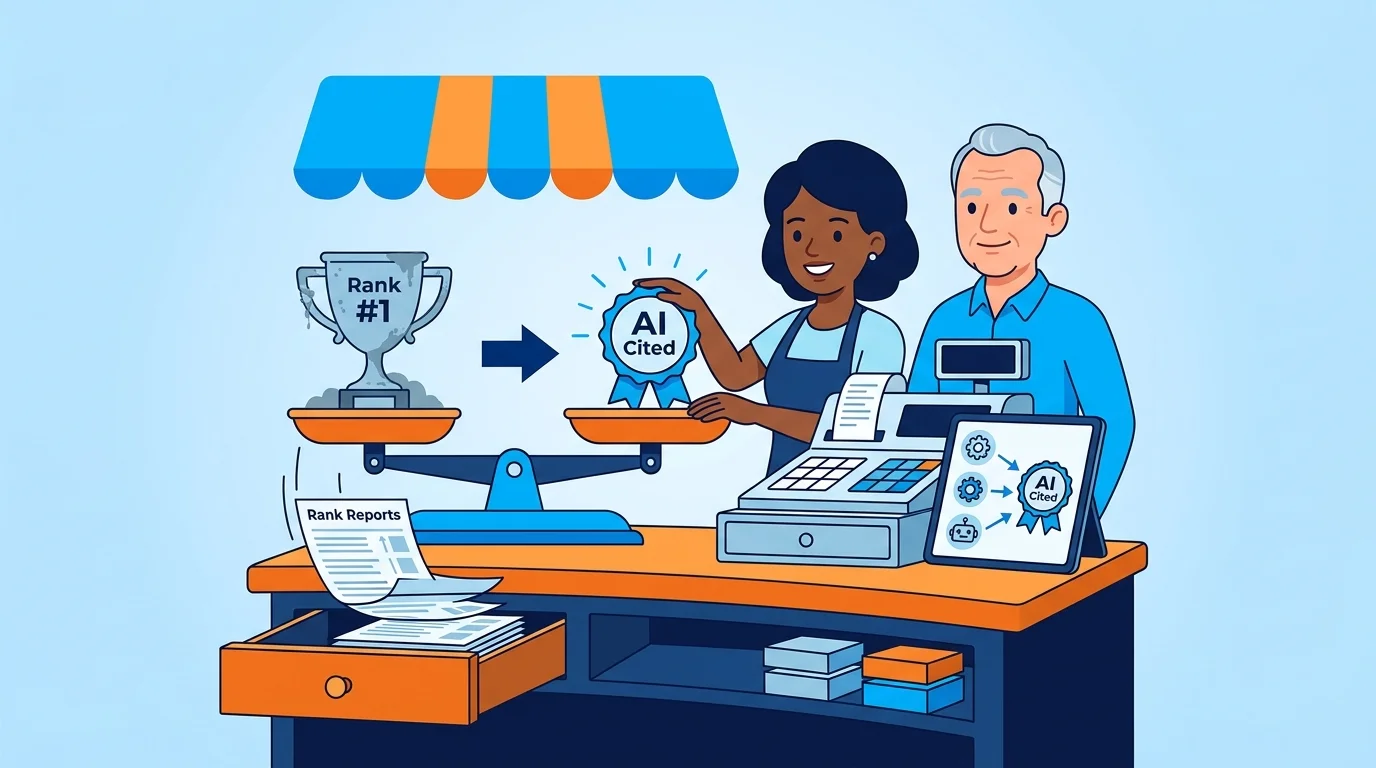
Rankings stopped predicting who gets cited the moment answers replaced links. That scoreboard still gets printed every month by agencies still playing the old game. Switching to an answer engine specialist marks a fundamental shift in strategy, away from a scoreboard built for a contest that already ended.
So don't expect quick wins up front. Expect foundation work first: entity reconciliation, structured markup, and factual consistency. For the full picture of how these deliverables differ from a conventional promoter's, start with what to expect before hiring an answer engine firm.
Why Rank-Tracking Reports Stop Telling You Anything Useful
Here's the kicker: a position number was always a proxy. It stood in for visibility. It never was visibility.
Generative systems do not consult that scoreboard before answering a question. Unlike legacy search optimization, which focused on ranking a webpage, Answer Engine Optimization focuses on making the entity itself the answer — a different target that a rank-tracking report was never built to measure.
The Mechanism Behind a Position Number That No Longer Maps to Visibility
A results-page position number assumes a human is scrolling a list of ten blue links and choosing one. That assumption breaks the moment an AI system composes a single answer instead of a list.
Now… this part matters. A page can hold the exact same spot it held last quarter and still go uncited, because the system writing the answer is checking entity accuracy and structured data, not list position. For the sharper contrast between these two approaches, dig into choosing between generalist and specialist agencies.
What a Dashboard Full of Green Arrows Actually Hides
Green arrows feel great. But they only describe movement inside a results-page game. They say nothing about whether a generative system trusts the entity enough to cite it.
That is the failure mode. A report can show gains in traditional ranked results while the business remains invisible in generated answers, because the two measurements track entirely different systems. A dashboard built for the old contest cannot see the new one.
How Answer Engines Decide What They Can Cite
Citation eligibility has a published bar, and it's no mystery score. Most agencies never bother holding a business's actual pages up against it.
| Old Measurement | What It Tracked | What Answer Engines Check Instead |
|---|---|---|
| Results-page position numbers | Where a single page sat in a list a human was expected to scroll | Whether the entity is indexed, snippet-eligible, and structured for machine extraction |
| Rank-tracking reports | Movement up or down traditional ranked results over time | Whether the entity is actually surfaced and cited inside a generated answer |
| Acquiring inbound links as a volume metric | How many external pages pointed back to a given URL | Whether the content a system selects is predictable to the model and consistent with other trusted sources |
| Keyword position tracking | Which search terms a page was supposedly winning on the old results list | Whether the facts attached to the entity read the same across every source a system checks |
The Eligibility Bar Google Actually Publishes
Google's documentation says a page must be indexed and eligible to be shown in Google Search with a snippet to be eligible as a supporting link in AI Overviews or AI Mode, with no additional technical requirements. That bar sits a lot lower than the old game ever let on. No separate certification, no special markup tier, no paid status, just the same indexing and snippet eligibility a page already needs for classic search listings.
So the bar is narrow, and that's exactly what exposes the real problem. Clearing it is a prerequisite, never a promise that the entity behind the page reads as accurate or citable (the deeper work the deliverables comparison walks through in full).
Why Predictability and Similarity Matter More Than Volume
Clearing the bar only earns a chance. What gets selected afterward runs on a different mechanism entirely. As research from UNC Charlotte, USTC and the University of Washington reports, generative search engines may show a preference for citing web content that is significantly more predictable to the underlying LLMs and shows greater semantic similarity among selected sources. AI visibility is often treated as old-school search work wearing new vocabulary, chasing the same position-number game under a different name. That framing misreads the mechanism: the study describes a preference for content the model finds predictable and similar to the other sources it selects, which is a different thing from a position number.
What the First Technical Pass Actually Touches
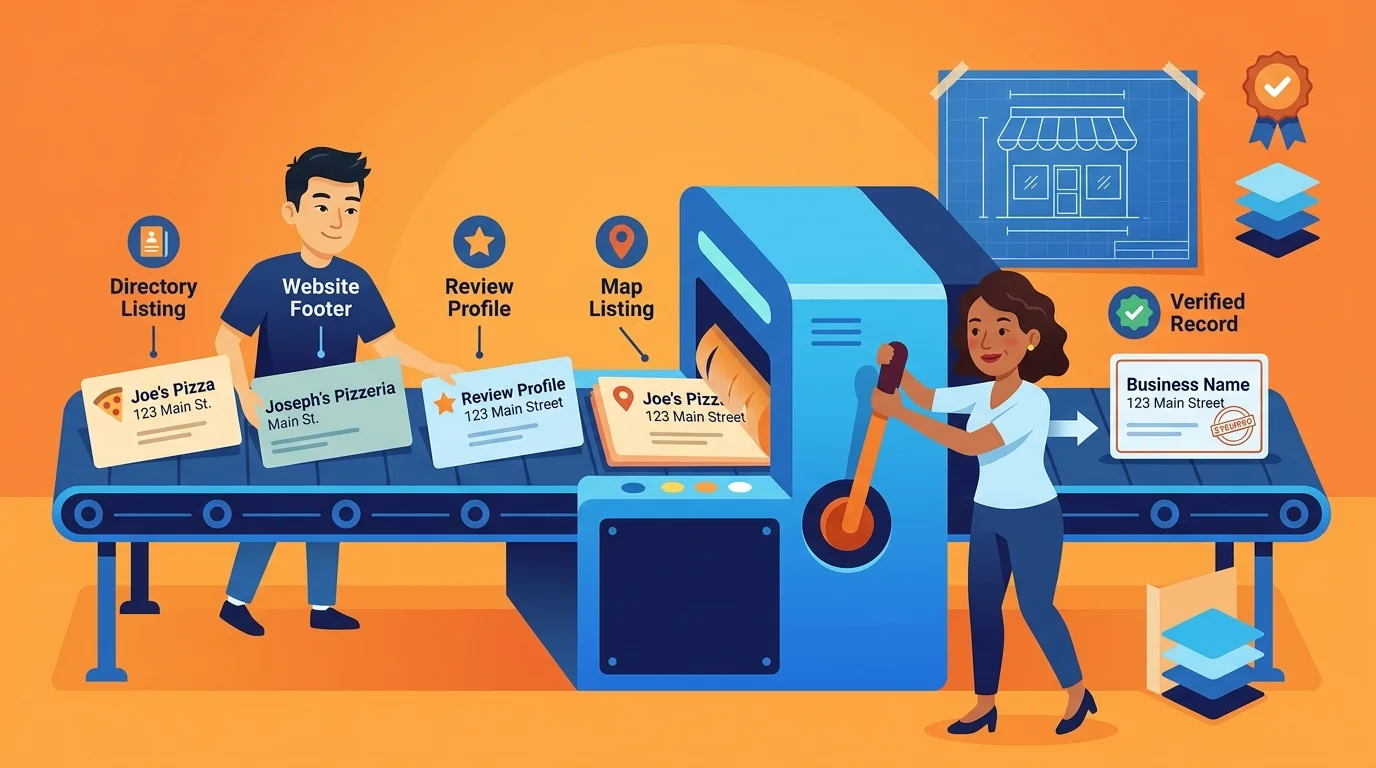
The eligibility bar is published and narrow. What happens after a page clears it is where the real technical work sits, and that work starts with the entity's own records, not its content.
Reconciling Entity Records Across a Business's Existing Footprint
Reconciling entity records means closing the gap between what a business's own site says and what directories, platforms, and citation sources say about the same business, and every new entity joining a knowledge graph can knock existing matches loose, a problem one research team went straight at:
As research from the University of Leipzig reports, incremental entity resolution methods, including a repair approach, may be used to add new entities to a knowledge graph with less dependence on insertion order — a single reported case.
That paper is about building knowledge graphs, not about agency work, and it does not say records must be fixed before content is written. It does show why entity matching is ongoing work, never a one-time cleanup.
Structured Data That Matches What a Visitor Actually Sees
Structured data that lies about the page it sits on fails the first check. Markup has to describe what a visitor actually sees, not an aspirational version of the service list. Getting this right across a site's existing footprint is the kind of ongoing maintenance our managed AI visibility programs are built to handle.
Where the Old Inbound-Link Model Breaks Down
Entity records fixed, the next failure sits in acquiring inbound links itself. More content and more links were never the same thing as more visibility, no matter how often the two get treated as one metric.
A generative system does not count links before deciding what to cite. It checks whether the entity behind the content is accurate and consistent.
That is the breakdown. Volume was the old proxy for authority, built for a game where more pages and more backlinks moved a position number.
Answers do not reward volume. They reward the entity a system can already verify, which is a narrower and different target than a growing link count.
The Order of Operations Behind the First 90 Days

The order isn't random. Foundation work has to settle before anything stacked on top of it can be trusted, and that's the rule the first 90 days actually enforce.
| Phase | Primary Task | Signal That It Worked |
|---|---|---|
| Entity Reconciliation | Correct inconsistent business details across directories, platforms, and the business's own site | Every automated system reads the same facts about the business, with no conflicting records left unresolved |
| Structured Data Implementation | Build machine-readable markup describing the organization, its services, and its expertise, matched exactly to visible page content | AI systems pull verified structure directly instead of inferring meaning from unstructured text |
| Authority Signal Development | Establish credentials, citations, and consistent factual references in place of acquiring inbound links as a standalone deliverable | Generative systems draw on verifiable signals directly rather than inferring trust from link volume |
| Citation-Structured Content | Produce content built for extraction and citation rather than keyword-targeted articles aimed at search placement | The entity itself starts surfacing as a trusted, citable answer inside generated responses |
| Measurement Shift | Replace keyword position tracking with monitoring of whether AI systems surface and cite the entity accurately | Reporting shows citation accuracy moving, not where a page sits in a ranked list |
| Metric Tracked | What It Actually Measures | Why It Replaces the Old Number |
|---|---|---|
| Entity Accuracy Rate | Whether business details match across directories, platforms, and the site itself | A position number never checked for consistency, only for placement |
| Structured Data Coverage | Whether markup describing services and expertise is present and matches visible content | No scoreboard existed for this under the old reporting model |
| Citation Frequency in AI Answers | Whether generative systems surface and reference the entity when answering relevant questions | Replaces rank-tracking reports that measured movement, not trust |
| Authority Signal Consistency | Whether credentials, citations, and factual references about the entity agree across sources | Stands in for acquiring inbound links, which counted volume instead of agreement |
Sequencing the Entity Cleanup Before Any Content Work Starts
Entity cleanup runs first, every time, because content written against unreconciled records just hands a generative system more material it has no reason to trust. And nobody's asking anyone to take that on faith: the pipeline behind this work publishes its own first-party data on how the sequencing performs, documented on the agency's own research page.
What Gets Measured Once the Foundation Is in Place
Once records are reconciled, measurement shifts to citation accuracy rather than position movement. That is the new scoreboard, built for the contest that actually matters now.
Frequently Asked Questions
The same handful of questions shows up every time this shift gets explained. Here are the straight answers.
How long does it take to see changes after hiring an AEO agency?
There's no fixed calendar, and nobody honest will hand you one. Entity cleanup and structured data work come first, and they aren't flashy wins. Citation-level changes follow once the records underneath are reconciled.
Will my old rank-tracking reports become useless overnight?
They do not go useless overnight, but they stop being the primary measure. A dashboard built for classic search listings still runs, it just answers a smaller question than it used to.
What's the first deliverable I should expect from an answer engine agency?
An entity and content audit comes first, every time. It checks consistency across the business's own pages and outside directories. Structured markup comes next, once those gaps are mapped.
Do keywords still matter once an agency shifts to Answer Engine Optimization?
Yep, keywords still shape topics and intent. What changes is the target — content gets built for citation and extraction, not a position number.
How is success measured differently in AEO compared to old-school search work?
Old-school search work tracked movement in search position reports. AEO asks a sharper question: does an AI system cite the entity accurately when it answers? That's the new scoreboard.
What role does entity resolution play in the first technical pass?
It's the cleanup that happens before any writing does. It resolves conflicting facts about the business across its site, directories, and platforms. Unreconciled records leave a generative system no stable entity to trust or cite.
The Bottom Line
This switch isn't cosmetic. It changes what the whole job is aiming at, and your business can keep its old spot in classic search listings while staying invisible to the systems people now ask first.
Verifiable authority is the only asset that survives that transition. Entity accuracy, structured data, and citable consistency do not decay when the scoreboard changes, because they were never built for the old scoreboard in the first place.
Most agencies are still selling reports for a game that already ended.
That gap between the two scoreboards is worth seeing clearly before another budget cycle gets spent measuring the wrong one. iTech Valet built its reporting around entity accuracy and citation eligibility for exactly this reason.
The AI Visibility Check shows where an entity currently stands.