
What Counts as a Legacy Platform — and What AI Systems Actually See When They Visit It
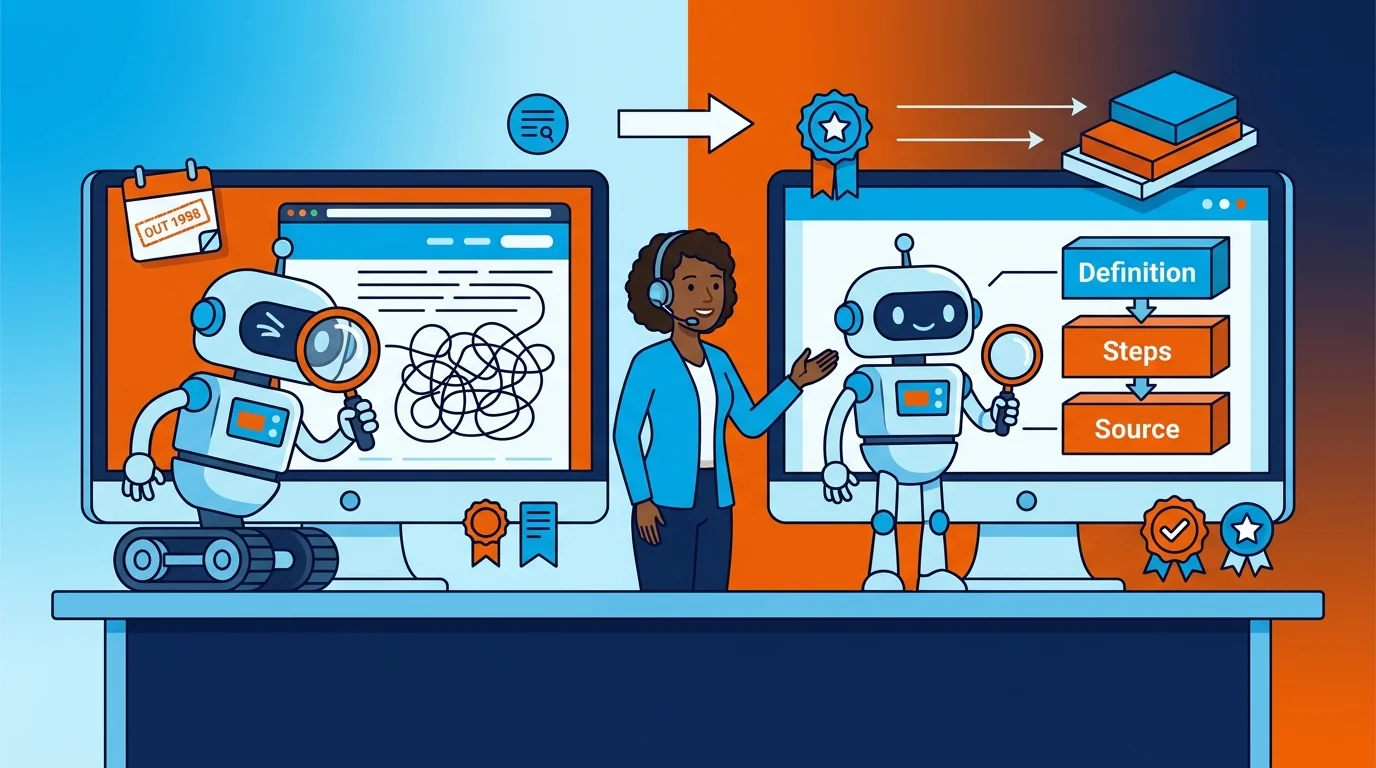
Let's define the thing first. A legacy platform is any content management system its developers no longer actively support or update, or one that leans on outdated technology. And that label covers a lot of sites still running every single day.
Here's the thing: plenty of established businesses run on stable legacy platforms that work fine for visitors but miss the modern features newer systems ship with by default. AI retrieval doesn't care about stability. It reads content structure, so that gap is exactly where a starting guide to AI citations without a rebuild matters before anyone starts talking about a full rebuild.
How AI Engines Decide What Gets Cited
Answer engines pick their sources through retrieval, not results-page placement, and Google's AI Overviews and AI Mode may split one question into several related searches across subtopics and data sources before answering. As Google's documentation says, AI Overviews and AI Mode may use a "query fan-out" technique, issuing multiple related searches across subtopics and data sources to develop a response.
Classic listings measured whether a page matched a query well enough to earn a click, while citation asks a different question entirely: can this page's facts be lifted out, verified, and attributed by name? That's why a page can hold a strong spot in traditional ranked results and still never get named.
Why Chasing the Old Results-Page Game Fails on a Legacy Platform
Optimizing for the old results-page game treats visibility as a single scoreboard. That approach misses how retrieval actually links a page to a question. Entity linking tools predict connections between the entities named in a page and the entries held in a knowledge base. Findings from Dietz & Verga (UMass Amherst, 2014) show entity linking tools predict links between entity mentions in text and knowledge base entries, and entity-centric approaches may benefit retrieval even for non-entity queries. Research on this method suggests entity-centric approaches can even help with queries that never look like entity lookups, the dark chocolate health benefits example being one case cited.
Clear entity statements are what turn a page into a named source instead of a listed address nobody specifically recommends. If the older CMS feels like the sticking point, start with a guide to publishing standalone content on an older CMS.
The Technical Ceiling of an Outdated CMS
A legacy platform's technical ceiling shows up fastest in what the crawl layer can actually read. Retrieval processes can only verify what text they can see on the page.
That limitation narrows what counts as citable. The shift from search listings to AI-generated answers changes the goal of content from ranking to being cited, and a page trapped behind an unreadable layer never enters that contest at all.
Why Treating the Website as a Fixed Listing Fails
Treating a website like a fixed listing assumes just being there earns a citation. It doesn't.
A listed address sits in a directory, available but unnamed. Retrieval mechanisms check for extractable, verifiable text, not for a stable URL that has existed for years. For an operator weighing what to fix first, assessing a current site's readiness for AI citations is the practical starting point before any structural change.
What an Unreachable Media Layer Costs a Legacy Site
Video-heavy legacy pages carry a nasty blind spot. Googlebot can only find content that's textually visible, so any text living inside a video is invisible to it.
As Google's documentation says, Googlebot can only find content that is textually visible, which means text inside videos is not visible to it. So a page that leans on video to carry its claims has basically hidden them from Googlebot. A caption, a transcript, or a text block right next to it is what makes that same information extractable and attributable.
Where Structured Data Gets Overestimated — and Where It Actually Works
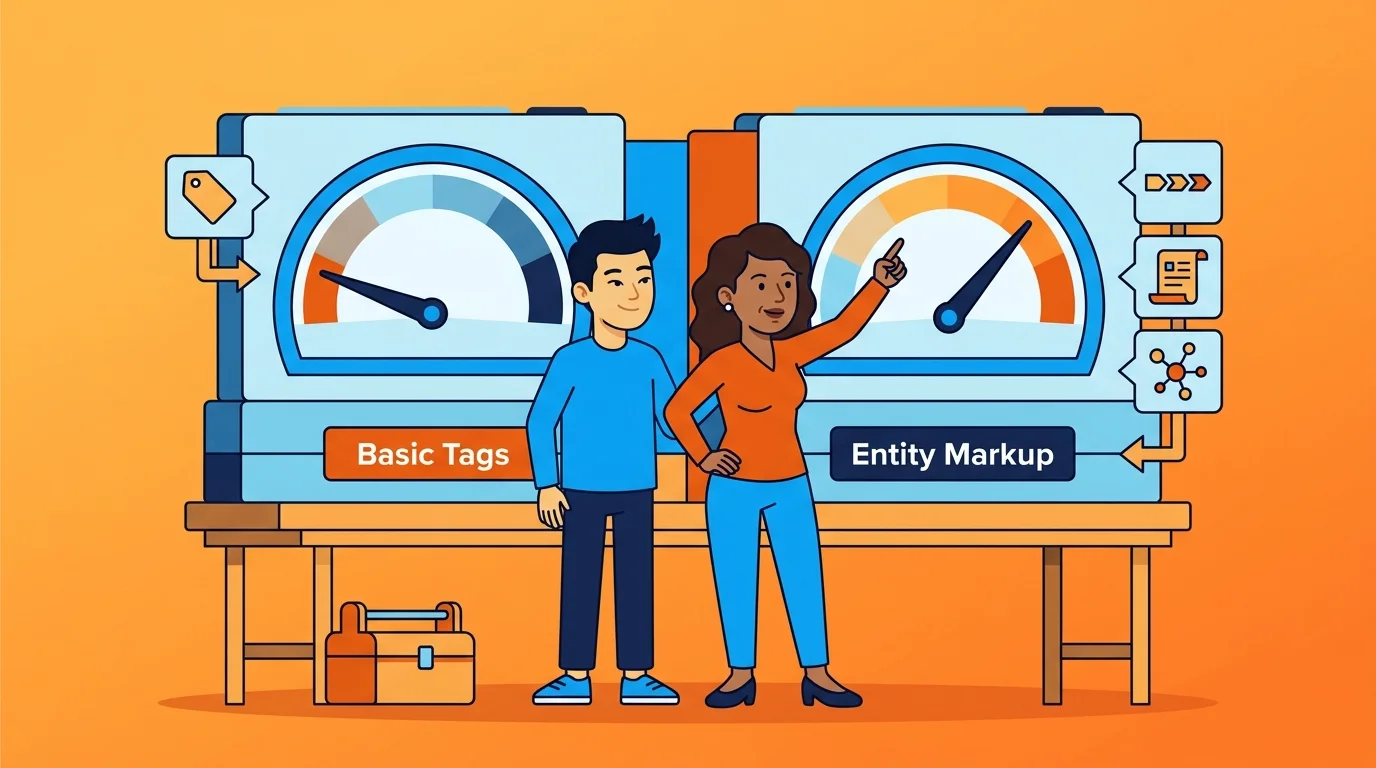
Structured data gets credited with more power than it has. JSON-LD markup alone provides only modest gains against the retrieval benchmarks this section is examining. Findings from a WordLift test show the enhanced entity page format, with llms.txt-style agent instructions, breadcrumbs and neural search, may be associated with a +29.6% accuracy improvement for standard RAG, whereas JSON-LD markup alone may offer only a modest improvement. That gap shows more schema is not the lever.
The fix most teams reach for is piling on more tags. What the figures above show instead is structure quality outweighing structure quantity. For platforms weighing what to prioritize, authority infrastructure services focus on that structural layer rather than adding volume for its own sake.
| Markup Format | Accuracy Change | What It Adds Beyond Markup |
|---|---|---|
| JSON-LD markup alone | Only modest improvement | No agent instructions, no breadcrumbs, no neural search capability |
| Enhanced entity page format | +29.6% accuracy improvement for standard RAG | llms.txt-style agent instructions, breadcrumbs, and neural search capabilities |
| Text structured for parsing and trust | Not quantified in this research | Ensures text can be parsed, trusted, and referenced by modern AI systems |
Building a Citable Layer on Top of What Already Exists
Good news: a legacy platform doesn't need replacing to become citable. It needs a layer of structure built right on top of what's already running.
That layer is an entity page: a piece of content that states who an organization is, what it does, and what claims it stands behind, in language plain enough for a retrieval process to lift and attribute. Building that layer is what turns a fixed address into a named source.
| Component | Function | Where It Sits Relative to the Old Platform |
|---|---|---|
| Entity Page | States who the organization is, what it does, and what claims it stands behind, in language a retrieval process can lift and attribute | Added as new content alongside the existing site; requires no change to the underlying platform |
| Internal Links Between Related Pages | Tells a retrieval process how one page's claims relate to another's, mirroring how knowledge base entries connect entity mentions in a dataset | Layered across existing pages and any new entity pages; does not touch the platform's core templates |
| Captions and Adjacent Text for Video Content | Makes claims carried inside a video extractable, since a retrieval process can only verify text it can see on the page | Attached to existing video pages without replacing the video or the platform hosting it |
| Structured Data Where the Platform Allows | Signals entity identity and claim context directly to a retrieval process, supporting the entity page rather than replacing it | Added incrementally, section by section, within whatever templating the legacy platform supports |
Entity Pages and Internal Linking as the Connective Tissue
Now… entity pages don't work alone. Internal links show a retrieval process how one page's claims connect to another's, the same way knowledge base entries tie entity mentions together across a dataset.
A page citing a claim without linking to the page that supports it in depth leaves that connection for the retrieval process to guess at. A page that links plainly states the relationship itself. That is the difference between holding a spot in classic search listings and being the source an AI answer names directly.
Standalone Articles as the Entry Point
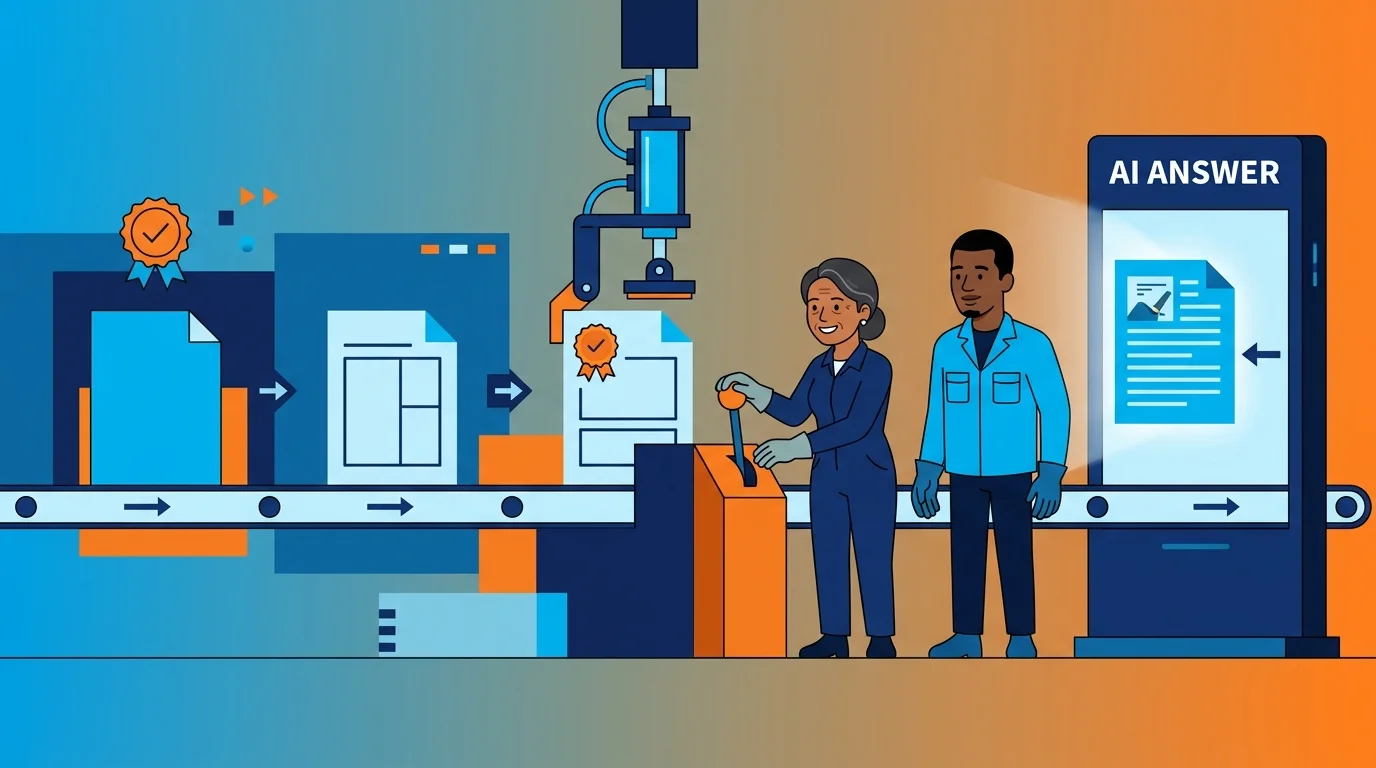
Here's where it gets practical: a standalone article is the smallest piece of citable content a legacy platform can publish without touching the existing front end. One clear claim, stated plainly enough for a retrieval process to lift it and attribute it by name.
| Step | What Happens | Platform Dependency |
|---|---|---|
| Identify the core claim | The organization states one clear fact about who it is, what it does, or what it stands behind, worded plainly enough for a retrieval process to lift | Works on any legacy platform that can publish a new page, no rebuild required |
| Draft the standalone article | The claim gets built into a single page of clean text, free of the layout clutter or video-only framing that hides claims from the crawl layer | Depends on whether the platform allows plain text content separate from older templated pages |
| Add entity statements and internal links | The page names the entity directly and links to related pages, the way entity linking tools connect mentions in text to knowledge base entries | Internal linking works on nearly any platform, though older systems may require manual link insertion |
| Publish alongside the existing site | The new page goes live next to the untouched legacy pages, with no disruption to what already runs | Minimal dependency, since the article sits apart from the existing front end rather than replacing it |
| Sequence the next claims | Later articles build on the first, naming additional claims rather than repeating the same one in different words | Sequencing is a content decision, not a platform constraint, so it carries over regardless of the system in use |
Publishing Mechanics for an Old Front End
Publishing one doesn't mean ripping out the content management system. It's a new page with clean text and plain entity statements, sitting right alongside whatever already runs. The old pages stay put while the new one does the heavy lifting of being extractable.
Sequencing the First Batch of Citable Pages
Sequencing matters more than volume here. The first batch should state the organization's core claims before any secondary topic gets its own page. A platform publishing five vague pages has not out-positioned one that publishes a single page naming who it is and what it stands behind.
Frequently Asked Questions
A few mechanical questions come up every time this shift gets explained. Here are the ones operators raise most often once they picture doing it on their own platform.
Can a website built 10 years ago still be cited by AI Overviews?
Age alone does not disqualify a page. What disqualifies it is unreadable structure or claims that sit behind a layer a retrieval process cannot parse. A ten-year-old page with plain entity statements can still be lifted and attributed.
Is it better to rebuild my old website or can I add citable content to it as-is?
A full rebuild onto the iTech Valet Authority Platform, built for AI visibility, with a design update, is usually the recommended path. If a practice must keep its current site, standalone entity content can be added alongside the existing legacy platform without touching the front end, and iTech Valet reworks the site and rewrites its sales copy, case by case. The old pages stay as they are while the new page does the work of being extractable.
What is the single most important update to make to a legacy site for AI visibility?
Say plainly who the organization is and what it stands behind. That beats every other fix on a legacy site. Structure quality is the lever, not markup volume or page count.
How does structured data like Schema help an older website get cited?
Structured data alone is not the mechanism people assume it is. An enhanced entity page, built with clear agent instructions and plain breadcrumbs, does more than schema markup by itself, though no tag guarantees a citation will follow.
Will simply updating the text on my pages make my legacy website citable?
Text updates help only if the text states claims plainly enough to be lifted and verified. Vague copy, however current, still fails the same retrieval check an old page fails.
The Bottom Line
Here's the verdict: a legacy platform doesn't lose its standing because it looks dated. It loses standing when its claims can't be lifted, verified, and attributed by name.
That is the whole shift this article has been tracing. Being cited beats being listed, because a listed address sits in a directory while a cited source gets pointed to directly.
No schema upgrade or page count fixes that on its own. Structure, stated plainly, is what moves your clinic's site from address to source. If you want to know where your pages stand right now, start with an AI Visibility Check.