
What Counts As An AI Citation (And Why Your Rank-Tracking Report Can't See It)
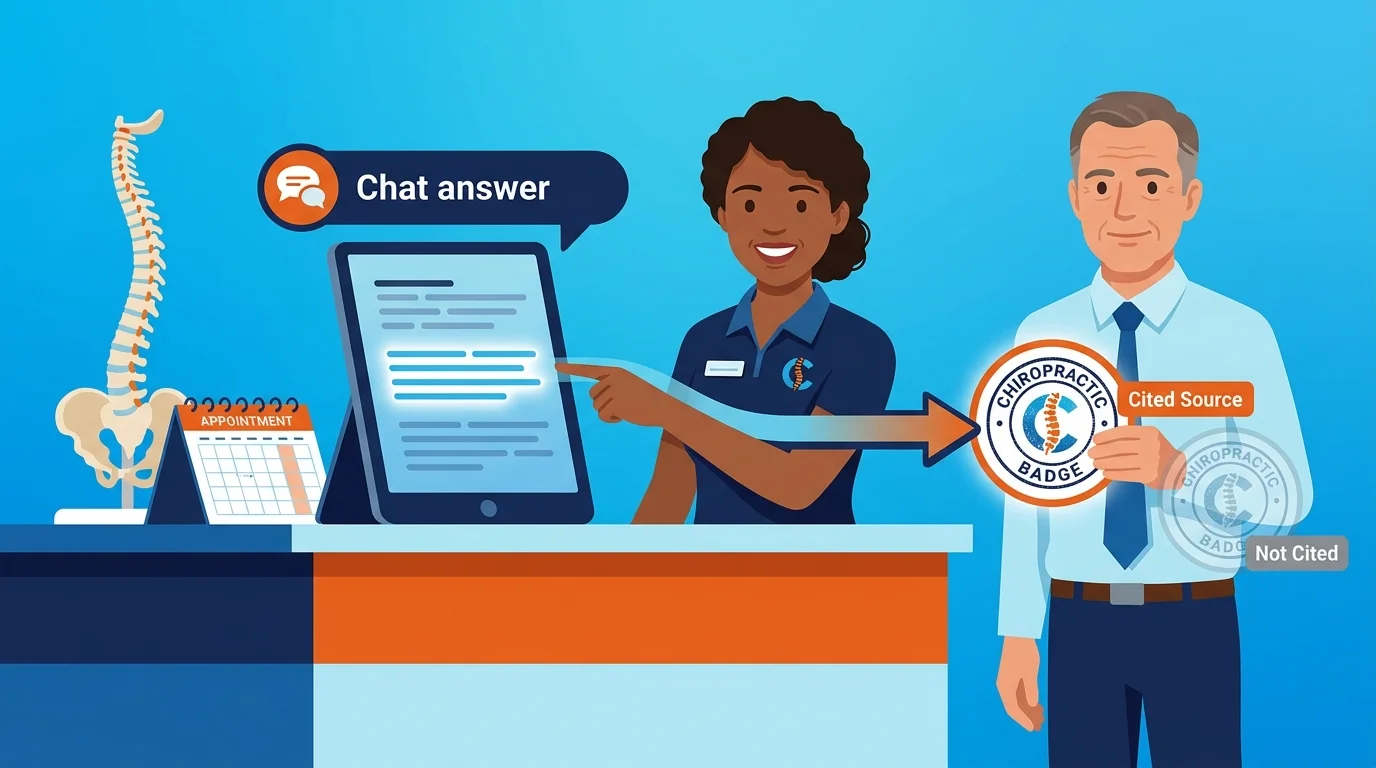
A citation is a passage an answer engine quotes or paraphrases from a page and serves up as the answer itself. A rank-tracking report? It measures position in a list fewer and fewer people bother to scroll, which makes them two totally different scoreboards.
Here's the thing: the goal shifted from occupying a spot on that list to becoming the source quoted inside the answer. Answer Engine Optimization is the practice of structuring a site's content and data so a language model can understand, verify, and extract it cleanly. A practice chasing gaining AI citations without rebuilding a clinic site is chasing that extraction, not a ranking number.
Why Legacy Search Optimization Doesn't Answer This Question
Old-school search work was built to answer one question: where does a page land in a list of ten links? That question lost most of its weight the moment answer engines started handing people a finished response instead of a list.
A practice can hold a spot in classic search listings and still produce nothing an answer engine can lift. Position in a results page and eligibility for a citation are measured by different mechanisms entirely.
Why Holding A Spot In Classic Search Listings Stops Predicting Visibility
Rank-tracking reports were built around a results page that rewarded the right keywords, backlinks, and page speed. None of those inputs tell an answer engine whether a passage is extractable, verifiable, or attributable to a named practitioner.
For a chiropractic clinic, the system now weighs something more specific: how clearly the site states its services, its location, and the credentials behind the care. A page can win on traditional metrics while failing every one of those checks.
Why Rank-Tracking Reports Measure A Different Game Entirely
A results-page position number tells a practice where it sits relative to competitors chasing the same keywords. It says nothing about whether a language model can parse that page's structure and pull a clean answer from it.
Now… this part matters most for a site that's never been checked against this standard. Knowing when new content cannot fix a broken site structure is the difference between piling on more keyword-targeted articles and fixing whatever keeps the whole site from being readable in the first place.
How An AI Model Actually Reads An Existing Site
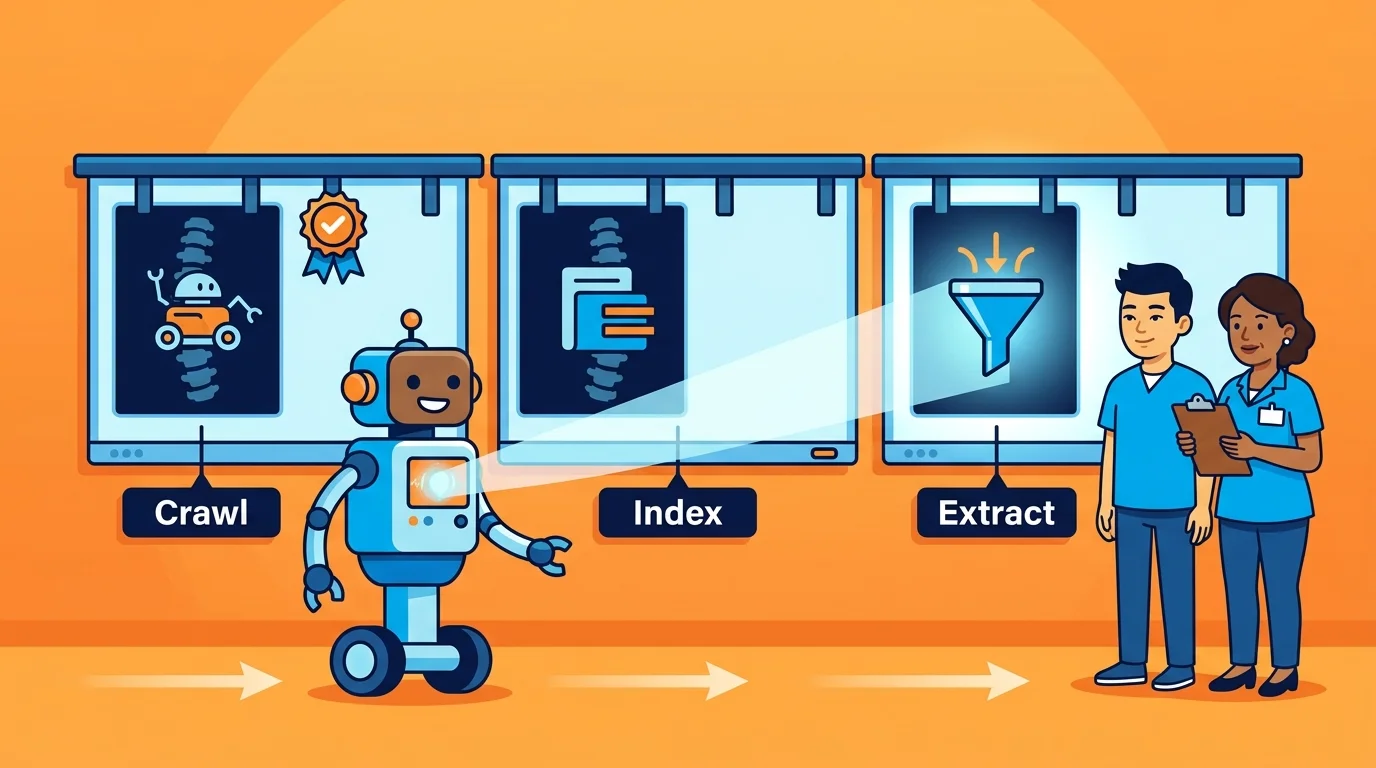
Think about who a chiropractic site from five years ago was built for: a visitor who scrolls, clicks, and skims. An answer engine does none of that (not one bit).
It sends automated software to retrieve a page, break it into parts, and weigh each part against the question it is trying to answer. Writing about classic search crawlers, Olston & Najork note that web crawlers may serve as one of the main components of web search engines, which assemble and index a corpus of web pages.
Where Crawlers Stop And Extraction Begins
But crawling only gets a page into that index. It doesn't decide whether a single sentence on that page becomes the quoted answer.
Getting indexed and getting lifted are two separate jobs, run by two separate processes inside the same system. Extraction works passage by passage, checking a specific block of text against trust signals before it decides that block is fit to quote.
How An Outdated Structure Quietly Blocks Citation
An outdated chiropractic site can pass the first job cleanly and fail the second one completely. Long paragraphs that bury the answer three sentences deep give a crawler plenty to index and a language model nothing clean to lift.
Rankings stopped predicting who gets cited the moment answers replaced links as the thing readers actually see. how clinical articles integrate with legacy content systems often turns out to be the exact spot where an aging structure quietly blocks extraction, long after the page itself still ranks fine.
The Site Elements That Decide Citation Eligibility
Citation eligibility comes down to signals a crawler can measure, not the vibe a human gets while scrolling. Content organization, structured data, and trust markers are either in the code or they aren't.
A clinic chasing a better position in a results page is optimizing for a scoreboard that readers increasingly skip entirely. Practices ready to move past that scoreboard often start with done-for-you AEO services built around these exact signals.
| Signal | What It Tells An AI Model | Common Existing-Site Gap |
|---|---|---|
| Answer-First Structure | Whether a passage can be lifted cleanly and presented as a standalone answer | The useful answer sits three paragraphs into a long page instead of opening the section |
| Schema.org Markup | Whether the practice, its services, and its practitioner are distinct, verifiable entities rather than plain text | Markup is missing entirely or only marks up generic page elements instead of the practice and practitioner as entities |
| Author And Practitioner Attribution | Whether a named, credentialed person stands behind the claim being made | Content is published with no named author or credential, leaving a passage with no one to verify |
| Business And Location Data | Whether the clinic's services and service area can be confirmed independent of the page's prose | Address, hours, and service details live only inside an image or a contact form rather than in readable text and markup |
| Internal Linking And Site Architecture | Whether related pages reinforce the same entity and topic consistently across the site | Pages on the same topic exist in isolation with no linking structure tying practitioner, service, and location together |
| Measurement | Figure | What It Means For An Existing Site |
|---|---|---|
| Visits to AI Overview pages that clicked a cited source | 1% of visits | A quoted passage carries the practice's full credibility, since almost no reader ever reaches the underlying page. |
What The Data Shows About Who Gets Selected
Pew Research Center (Chapekis et al.) documents that clicks to sources cited in AI Overviews may be rare, occurring in 1% of visits to pages with an AI Overview. That figure describes what happens after an answer engine already has what it needs. Most readers never click through, which means the passage itself has to carry the practice's credibility.
Auditing What You Already Have Before Touching Anything
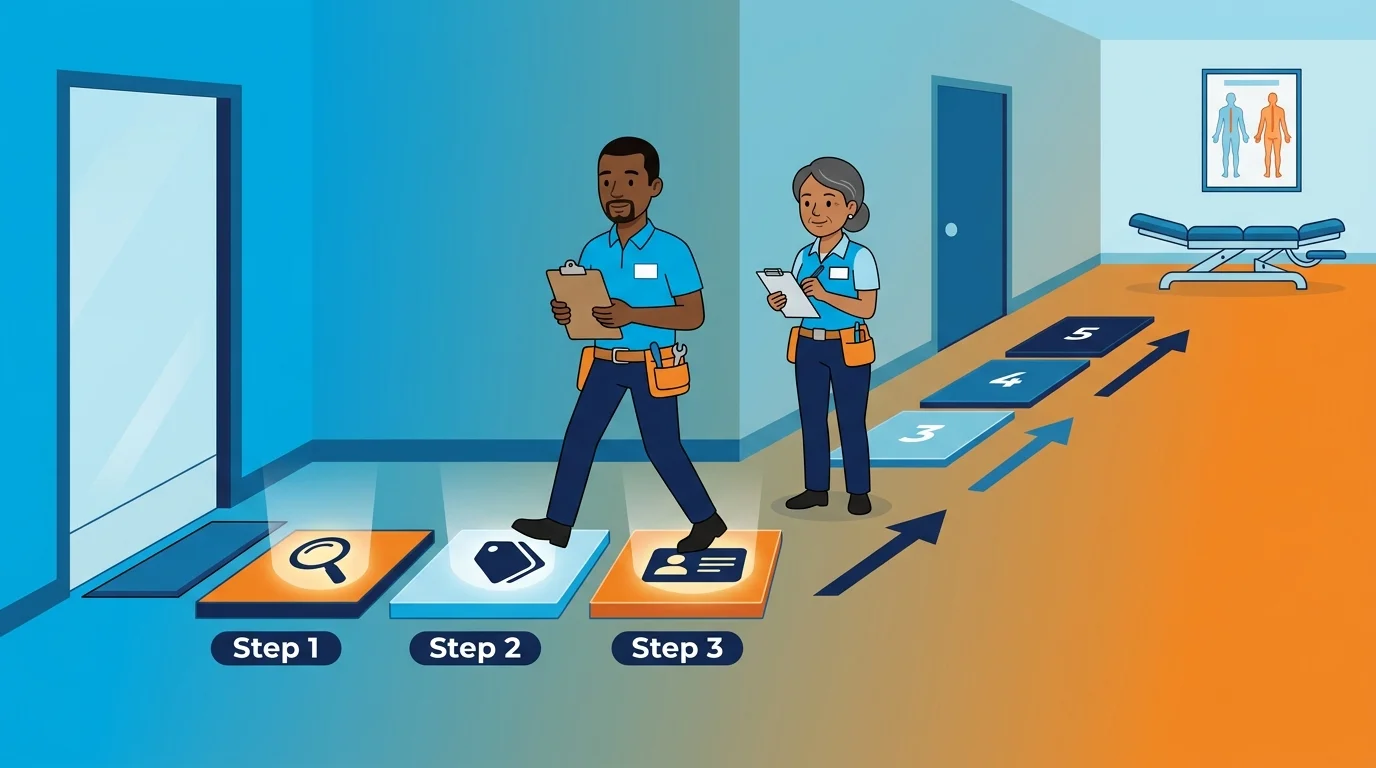
An audit starts with the building that's already standing, not an empty lot. The real question is whether its foundation, wiring, and signage make sense to a visitor that never walks through the front door.
| Audit Step | What It Checks | Why It Comes First |
|---|---|---|
| Structured Data Check | Whether the practice, its services, and its practitioner are each marked up as distinct, identifiable entities a machine can parse | A model cannot verify or attribute an answer to a source it cannot identify as a defined entity |
| Answer Extractability Check | Whether existing pages state a direct, self-contained answer near the top, or bury it inside long-form prose | Extraction happens at the passage level, so a buried answer never reaches the quoting stage no matter how well the page ranks |
| Trust and Authority Signal Check | Whether the site displays clear practitioner credentials, authorship, and verifiable contact and location details | Trust signals matter more for health topics |
| Content Gap Assessment | Where the first two checks fail and whether new content or a structural fix addresses that specific failure | Adding pages before fixing structure produces more material a language model still cannot lift cleanly |
The Order Operations Should Follow On An Existing Site
Structured data comes first: confirm the practice, its services, and its practitioner are each marked up as distinct entities a machine can identify. Next, check whether existing pages already give a direct, self-contained answer to a real question, or bury it three paragraphs deep. New content doesn't get a seat at the table until both checks are done.
Why Adding More Pages Is Not The First Move
Piling on pages assumes more content equals more visibility, and that assumption falls apart the moment extraction, not volume, decides what gets quoted. A site with a hundred keyword-targeted articles and no extractable structure still hands a language model nothing clean to lift. Fixing the structure the model already has to work with beats feeding it more stuff to ignore.
Frequently Asked Questions
A few mechanical questions keep surfacing once the citation versus ranking distinction is clear. Here are the direct answers.
Does my old blog content help or hurt my chances for AI citations?
Old blog content helps only when a passage inside it already answers a question directly. Buried, rambling posts give a crawler volume to index. They give a model nothing clean to lift.
What is the first technical change I should make to my existing chiropractic site for AEO?
Start with structured data. Confirm the practice, its services, and its practitioner are each marked up as distinct entities. Do that before touching a single paragraph of content.
Is it better to add new pages or overhaul the structure of my current website for AI visibility?
Fix the structure first, then add pages. A site with clean markup and self-contained answers needs way less new content. A site still hiding answers in long paragraphs needs far more.
How do patient reviews on my site or Google Business Profile factor into AI citations?
Reviews and a Google Business Profile back up trust signals, which matter more for health topics. They support eligibility alongside structured data and clear content. They don't replace an extractable passage on the site itself.
Can a technically outdated website still earn AI citations if the content is good enough?
Yep, an outdated site can still get cited. The content just has to be organized into direct answers and backed by structured data. Dated design bugs human visitors way more than it bugs extraction.
What is the difference between a web crawler indexing a page and an AI model citing it?
Indexing means a crawler found the page and catalogued it. Citation means a model pulled one specific passage out. Then it presented that passage as the answer itself.
The Bottom Line
Your chiropractic website is a building that's already standing, not an empty lot waiting on a bulldozer. Its foundation, wiring, and signage either read clearly to a new kind of visitor or they don't.
That visitor never walks through the front door, never scrolls, and never forgives a buried answer. Structure decides citation eligibility now, not how many pages you've got or where you sit in a list.
Some existing sites can earn that structure without a teardown, but only after an honest look at what the code actually exposes. iTech Valet usually recommends a full rebuild onto the iTech Valet Authority Platform, built for AI visibility, with a design update; a practice that must keep its current site can have it reworked instead, with the sales copy rewritten, case by case. A practice ready to see where its own site stands can start with an AI Visibility Check.