
Articles in this cluster
- Reconciling conflicting clinic data across directories — How to Reconcile Conflicting Clinic Data Across Directories
- How structured code identifies practitioners and services — How Structured Code Tells AI Who Your Practitioners Really Are
- Service schema compared to practitioner schema — Service Schema vs. Practitioner Schema: What Each One Clarifies
- Verifying listings are fixed after an update — How to Verify Your Listings Are Actually Fixed After an Update
- Which directories AI engines treat as authoritative — What Counts as an Institutional Medical Directory to an AI Engine?
- Updating AI records after a clinic rebrand — Updating AI Records When a Clinic Rebrands or Changes Its Name
- Updating AI records after a clinic relocation — Updating AI Records When a Clinic Relocates to a New Suite
- What happens to listings when a practitioner leaves — What Happens to AI Recommendations When a Former Associate Leaves?
- How long listing reconciliation actually takes — How Long Does Reconciling a Clinic's Listings Actually Take?
- Manual listing updates compared to a full infrastructure rebuild — Manual Listing Updates vs. Full Infrastructure Rebuild: A Comparison
What Actually Counts As a Broken Practice Listing
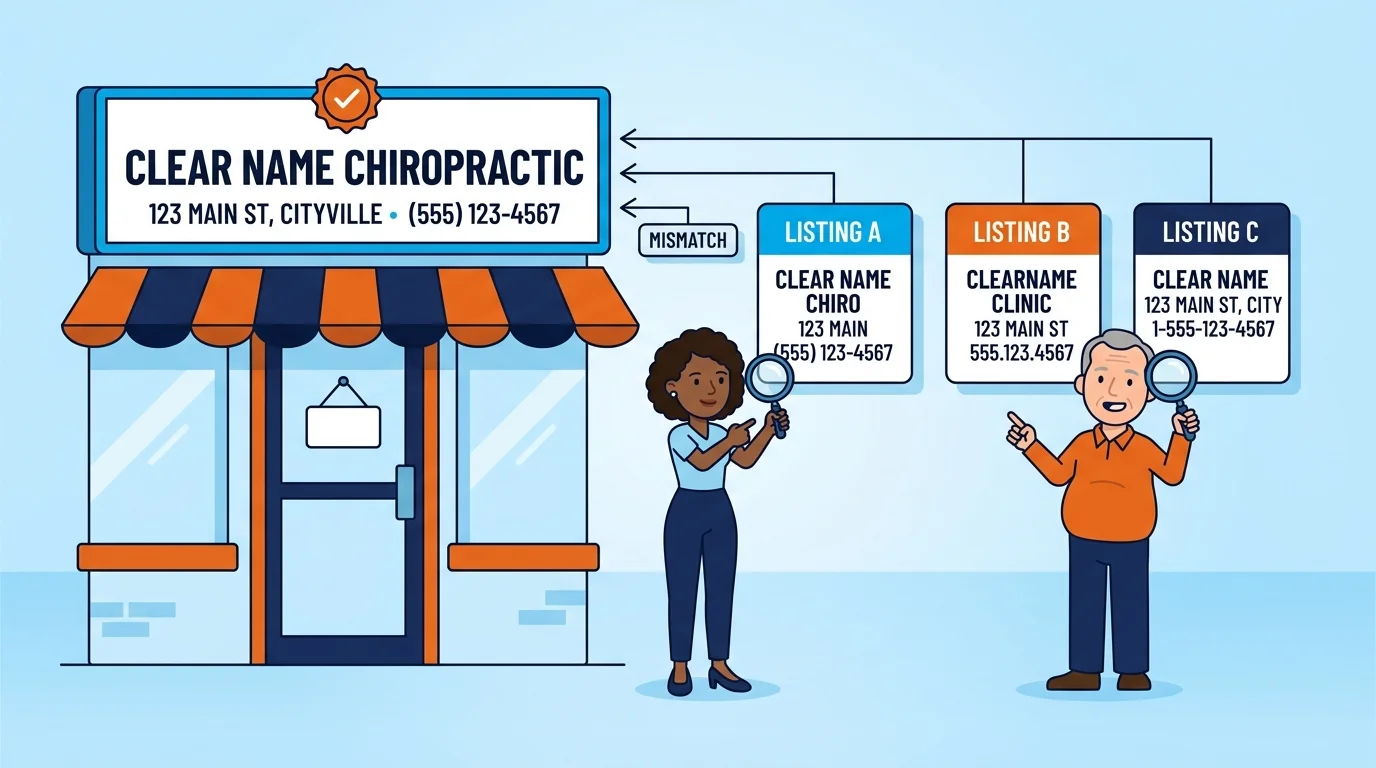
A broken practice listing is any online directory entry where a practice's name, address, or phone number is wrong, inconsistent, or duplicated. So yeah, it covers a lot more than a disconnected phone line. A misspelled suite number, a shuttered location still marked open, two competing profiles for the same clinic (every one of those counts).
Here's the thing: these aren't cosmetic errors sitting quietly in some forgotten directory. Inaccurate online listings are more than a minor inconvenience, they're a direct barrier between potential patients and a practice's front door. Picture a corrupted file copied across the internet. Every directory that scrapes the bad record inherits the same error, and no single fix at one address repairs the copies spreading elsewhere. There is more on AI visibility services if this is the part that matters to you.
Where These Errors Actually Start
So where does the corrupted file actually come from? Most practice owners assume a single typo in one directory is the whole problem.
Nope. The real origin often sits one layer back, in the commercial data lists that some directories can pull from (and almost nobody checks).
The Aggregator Layer Most Practices Never See
Two well-known commercial lists of this kind are the InfoUSA and Dun and Bradstreet business lists. Both were built to sell marketing data, not to serve as a public record of who's actually open.
In a study of retail food stores, Jones et al. (BMC Research Notes, 2017) indicate commercial business lists, which are compiled for marketing purposes, may not provide a completely accurate census of businesses, since some existing stores can be missing while closed ones are listed.
Why Manual Spot-Checking a Listing Fails
Manual spot-checking sounds responsible: every so often, a practice owner searches a handful of directories and fixes whatever looks off that day. But it treats each bad listing as a one-off typo. It's actually a symptom of the same upstream feed.
And it can't keep up with how errors really spread. Fix one directory entry, and the aggregator feed that produced it stays exactly the same. So the same wrong record pops right back up on the next refresh cycle.
| Correction Approach | What It Actually Fixes | Where It Breaks Down |
|---|---|---|
| Manual spot-checking one directory | Corrects the single entry a practice owner happens to view that day | Leaves the upstream aggregator feed untouched, so the same error resurfaces on the next refresh cycle |
| Fixing a listing after a patient complaint | Resolves the one visible symptom a patient happened to notice | Reacts to errors after they cost a visit instead of catching them before a patient searches |
| Correcting a single directory without touching the aggregator source | Updates the copy a practice owner can see in front of them | Ignores the shared data feed that supplies dozens of other directories with the same bad record |
| Treating correction as a one-time cleanup project | Produces a short-lived window of accurate listings across checked platforms | Assumes directories stay static, when aggregator refresh cycles can quietly reintroduce the old error |
The Problem With Fixing One Directory at a Time
Let's keep it real: cheap retainers built on recurring manual checks are a trap. They treat correction like a one-time chore instead of an ongoing data discipline. A retainer billing for scattered spot-checks pays for symptom suppression, not a fix at the source.
The identifying-and-correcting work can feel endless when approached this way, directory by directory, month after month. The process only feels overwhelming when it is treated as improvisation instead of the systematic, logical path it actually follows.
How Inconsistency Actually Breaks Down for an AI Engine
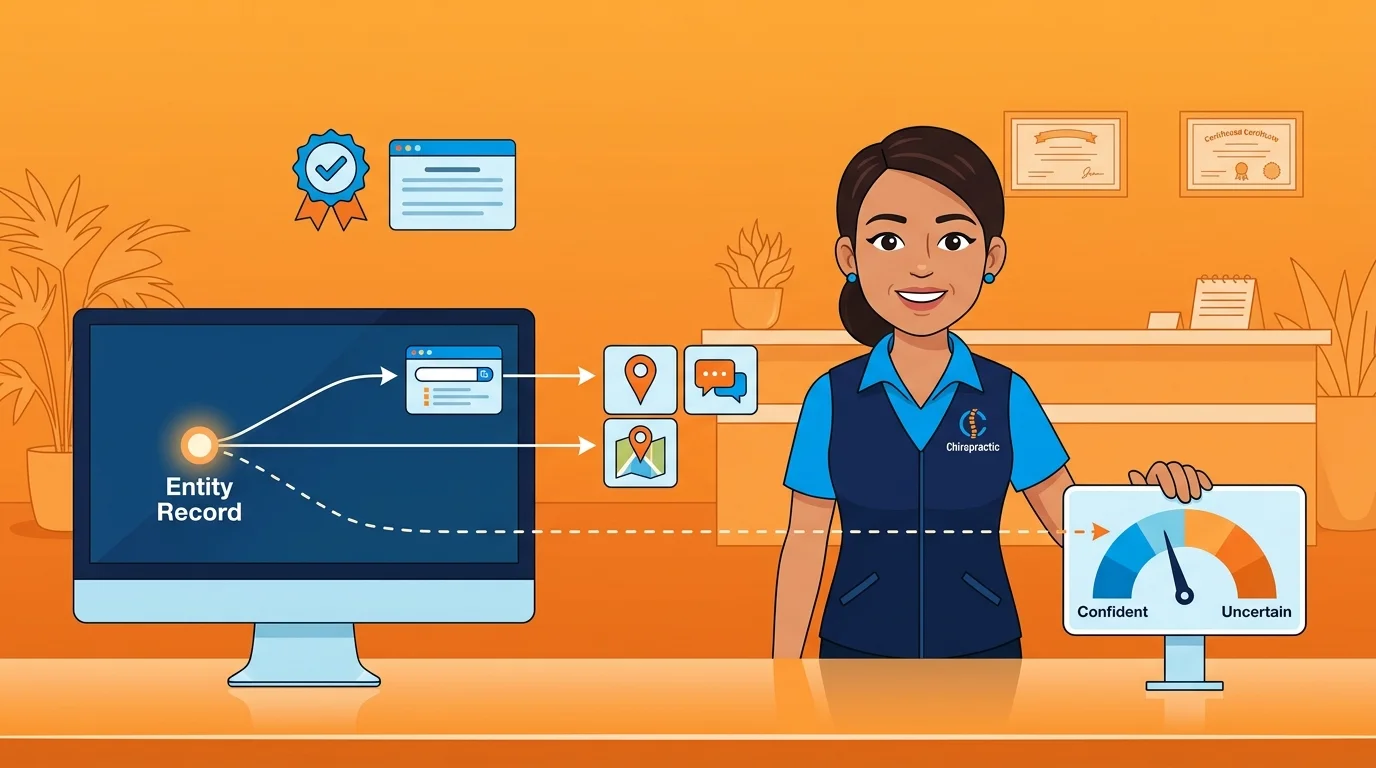
An AI engine may not read just one directory and call it a day. It can pull from a pile of sources at once, then weigh them against each other to decide which answer gets surfaced.
So when those sources disagree on a practice's name, address, or phone number, the model may have no single record to trust. It can end up holding competing fragments of the same corrupted file, with no clear way to tell which fragment is current.
| Data Signal | Consistent State | Fractured State |
|---|---|---|
| Business Name | One spelling appears across every directory and the practice website, matching exactly | Variant spellings or abbreviated forms compete across directories, leaving no single version a model can trust |
| Address | Suite number, street name, and location match on every platform and on structured data markup | Outdated suite numbers or old locations persist on secondary directories after a move, splitting the record |
| Phone Number | A single working number is listed everywhere, reinforced by structured data on the practice's own site | A disconnected or forwarded number sits alongside the current one, so no clear answer is surfaced |
| Operating Status | Every listing and knowledge panel reflects the practice as currently open and active | Closed or relocated status on one feed contradicts an active listing elsewhere, confusing entity confidence |
Entity Confidence and Source Agreement
Look, entity confidence isn't some gut feeling a model has about a clinic. One way to think of it is how often independent sources agree.
Google's documentation says LocalBusiness structured data may let a site tell Google about business details such as hours and departments, and such listings may appear in Search knowledge panels and carousels.
And yes, the vast ecosystem of smaller directories still counts, even with a Google Business Profile sitting at the top of the priority list. Every consistent entry can send a small trust signal, and every conflicting one can chip away at it. That doesn't make AI visibility traditional search optimization with new vocabulary, because the mechanics changed while the need for one verifiable record never did.
The Open-or-Closed Failure and Why It Costs More Than Other Errors
Not every broken listing hits with the same weight. A wrong suite number is just annoying. But a listing that still reads open after a practice has closed, or goes missing after it opened, is a whole different kind of failure.
That open-or-closed signal can matter a lot for local queries. Get it wrong, and a model may not just cite a slightly outdated profile. It may tell someone the practice isn't there to see.
Why a Stale Status Signal Outranks Other Listing Errors
More listings don't beat one correct signal. A practice with a huge pile of scattered directory entries and the wrong open-closed status can look less trustworthy to a model than one with a handful of consistent, accurate records.
So no, volume was never the fix for a corrupted file. Every extra directory entry stacked on a wrong status just copies the error one more time (and widens the exact gap the practice needed closed).
Structured Data and the Correction Sequence That Actually Holds
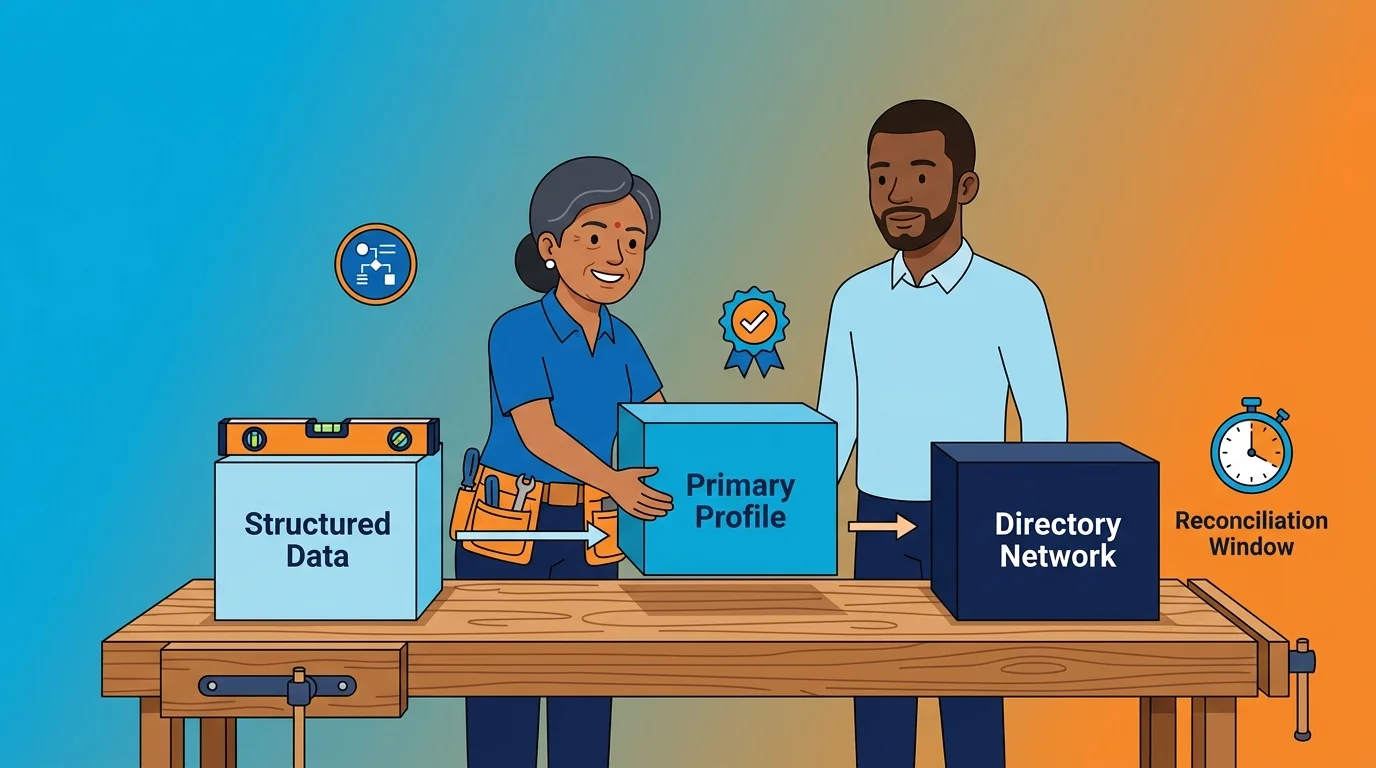
So now you know why listings fight each other. But diagnosis is only half the job, and the other half is fixing them in an order that actually sticks, starting with the one record a practice fully controls.
| Step | Action | Why This Order Matters |
|---|---|---|
| Structured data on the practice's own site | Publish LocalBusiness structured data that states the practice's name, address, phone number, and hours directly on the website the practice controls. | This is the one record the practice fully owns. Fixing it first gives every later step a clean source to point back to instead of another copy of the error. |
| Primary listing platforms | Claim or verify ownership of the main directory and profile platforms, then submit corrected details through each platform's own update process. | These primary platforms feed the aggregator lists that smaller directories pull from. Correcting them here stops the error from being re-fed downstream. |
| Secondary directories | Work through the wider layer of smaller directories that source their listings from the primary platforms and aggregator feeds already corrected. | Skipping this layer leaves old copies of the corrupted file sitting live. Those copies can resurface in search results and generated answers even after the source is fixed. |
| Verification against the live listing | Check the actual published listing on each platform, not just the confirmation receipt from the submission form. | Each platform runs its own reconciliation window. A submitted correction can sit pending before it ever reaches a knowledge panel or an AI-generated answer. |
Why LocalBusiness Markup Reinforces the Correction
That record is the practice's own website, specifically its structured data. It hands crawlers and language models a direct, machine-readable statement of hours, location and identifying details (no guessing from a pile of scattered directory copies required).
The Order Corrections Have to Happen In
Correction has to start at the source, not the symptom. Structured data on the practice's own site comes first, then the primary listing platforms, then the secondary directories that source their data from those platforms. Skipping ahead to the secondary layer without fixing the source can just reintroduce the same corrupted file one refresh cycle later.
Confirming a Correction and Reading the Reconciliation Window
Now, a submission receipt doesn't prove anything, so check the live listing itself to confirm a fix took. Every platform runs its own reconciliation window, which means a correction can sit pending for a while before it ever reaches a knowledge panel or a generated answer.
Frequently Asked Questions
Still got questions? Good. These are the mechanical ones that always come up, answered straight.
What is NAP consistency and why does it matter for my chiropractic practice?
NAP consistency means a practice's name, address, and phone number read identically everywhere they appear online. When those details drift between platforms, the practice stops looking like one verifiable entity and starts looking like several conflicting fragments.
How do I find all the incorrect or broken listings for my practice online?
Start by searching the practice's name and former addresses across major directories and data aggregator platforms, since discontinued locations often resurface there first. Every inconsistent or duplicated entry found that way is the same kind of broken listing already defined earlier in this discipline.
How long does it typically take for corrections to my business listings to appear online?
A verified correction can take days to months to show, depending on the platform. Secondary directories can run on slower aggregator refresh cycles, so the same record may lag there longer. And nobody honest will promise you an exact date for that.
What's the difference between correcting my Google Business Profile and fixing other directory listings?
A Google Business Profile is the top-priority record, and it may update faster once verified. Other directories pull from aggregator feeds on their own schedules. Fix one, and the rest don't magically follow.
How does a duplicate listing actually hurt visibility in AI-generated answers?
A duplicate listing splits trust signals between two records instead of consolidating them into one. An AI engine weighing competing profiles for the same practice may have no single verified source to cite, so it can pick the wrong one or hedge by citing neither.
The Bottom Line
A listing is a copy. A citation is a verdict. The practices AI cites tend to be the ones that own their data, not the ones that just happen to show up in a list.
Every corrupted file, whether it traces back to an aggregator feed, a stale directory or a missing structured data record, gets fixed the same way: correct the source once, and every downstream copy stops inheriting the error. That's the whole discipline. Not more listings, not more noise, just one verifiable record a model can actually trust.
So quit stacking directories and start owning the record, because no pile of scattered listings will ever outweigh one accurate source. If your practice's data needs an honest look before AI treats it as the answer, start with an AI Visibility Check.