
The Expiration Date Nobody Told You About

Here's the false assumption baked into most optimization budgets: that visibility is a project with a finish line. Treat it that way, and the citations start fading the second you close the project.
So the plant beats the trophy. A trophy stays won. A plant nobody waters doesn't stay green, and neither does your standing inside generative answers.
In this new landscape, visibility isn't a permanent achievement anymore. It's a state that needs constant upkeep, which is the whole premise behind a defensive authority moat built for AI search.
Traditional search optimization used to reward a stable placement that could sit for months untouched. AI-driven recommendations don't work like that. Where the old model let rankings hold relatively fixed, these are fluid, always leaning toward whichever information is most current and most corroborated.
Why 'Set It and Forget It' Optimization Is Already Obsolete
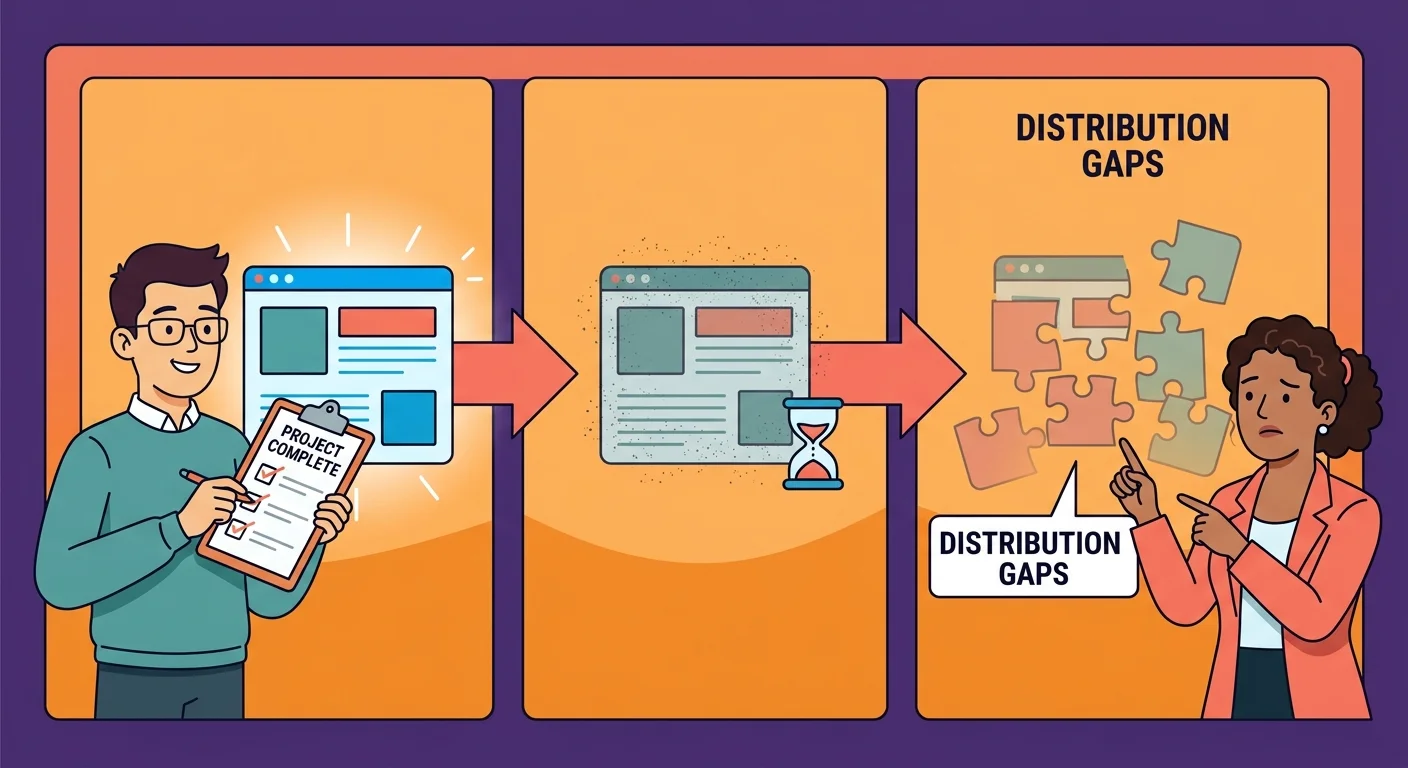
Here's what makes this so expensive. Businesses still budget for optimization like it's a one-time renovation — finish the job, admire the result, walk away.
That mindset was never really accurate. But it was survivable under the old rules. Under generative AI, it isn't.
So "set it and forget it" deserves retirement. What it actually describes is a countdown clock dressed up as a finish line, and the businesses trusting it are already losing ground to the ones who never stopped feeding the system, including clinics competing for the same finite set of AI citations.
The One-Time Project Mindset That Traditional Optimization Trained Businesses to Expect
Traditional search optimization trained a whole generation of owners to expect a project with a beginning, a middle, and an end. Hire someone, fix the site, wait for placing in the classic ten blue links, then move the budget somewhere else.
That made sense when the system rewarded stability. A page that earned a strong position could often hold it for a long stretch with no new work.
Generative AI answers don't reward stability the same way. They reward whoever's currently the freshest, best-corroborated source — which means the one-time project mindset quietly hands the advantage to anyone still showing up after your push ended.
What Happens Inside a Model When Nobody Feeds It Anything New
Now look at the model's side when nobody feeds it anything new. Large language models depend on a steady supply of fresh, verifiable human-generated information to stay accurate about the world.
Researchers studied what happens when models get trained on their own output instead of fresh human material. The effect isn't neutral — the arXiv preprint server's research on this phenomenon documents it as irreversible defects, where entire tails of the original information distribution simply vanish.
That's called Model Collapse, and it matters here for a specific reason. An entity that stops publishing fresh, structured information goes invisible to that refresh cycle, while the ones who keep feeding the system stay inside the distribution the model still trusts.
How Generative Engines Actually Decide What to Cite
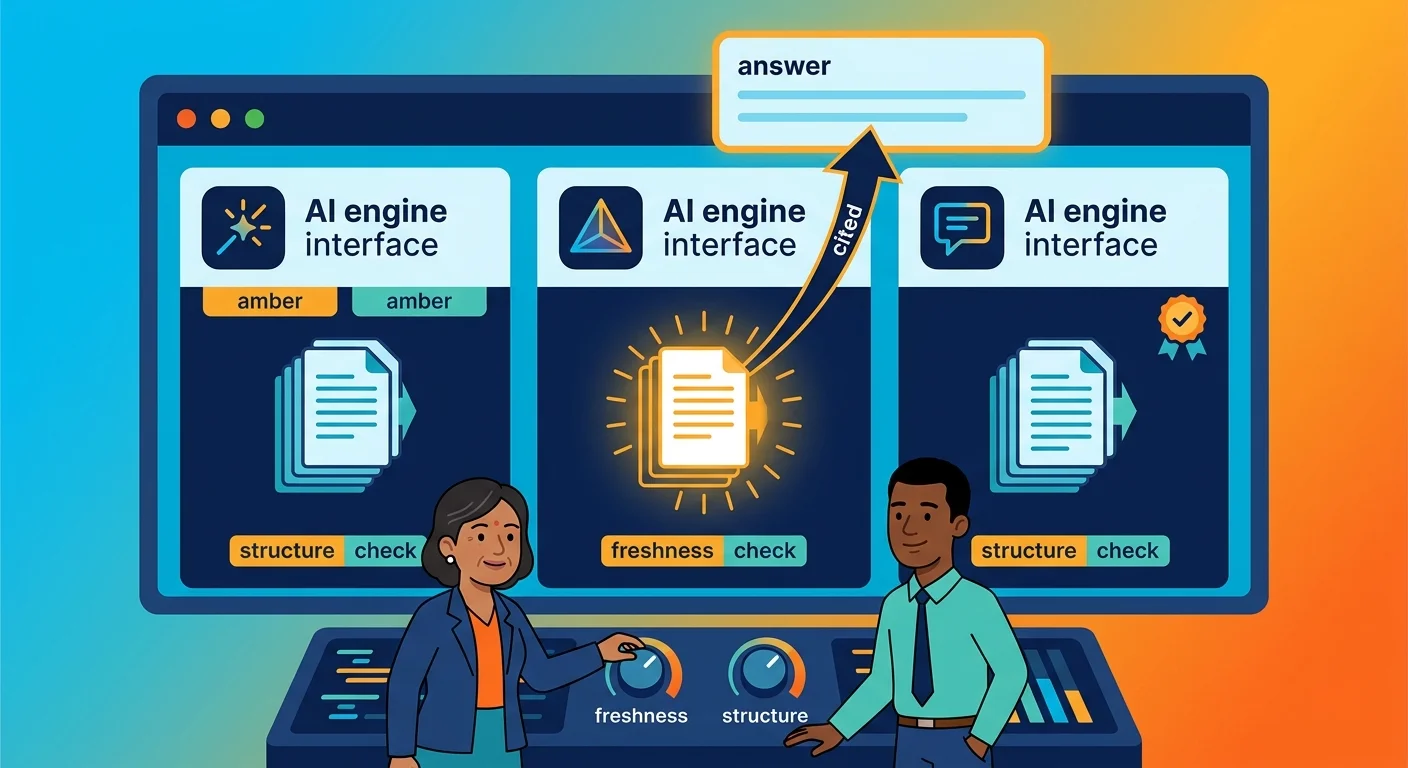
Failure tells you what breaks. Reward tells you what actually works — and that part runs on mechanics, not gut feel.
Generative engines weigh two forces above almost everything else. One is how machine-readable an entity's information is. The other is how fresh that information looks next to every competing answer.
| Signal Type | What It Tells the Engine | Why It Fades Without Reinforcement |
|---|---|---|
| Structural Markup | Confirms what the entity is and lets claims be verified against other sources | Once initial retrieval is done, some systems stop reading it and lean on visible page text instead |
| Content Freshness | Signals that the information reflects the current state of a topic rather than a superseded version | Every new competing publication resets the comparison, so yesterday's fresh page becomes tomorrow's stale one |
| Cross-Source Corroboration | Shows that other independent sources point back to the same reporting, reinforcing its reliability | Corroboration decays as citing sources update their own references toward newer material |
| Publishing Cadence | Demonstrates that an entity is actively maintained rather than abandoned after a single push | A pause in publishing reads to the model as a pause in relevance, even if the underlying entity has not changed |
The Machine-Readable Signal
Here's the thing about structure: it's not decoration hiding behind the page. It's how a generative engine confirms what an entity is, what it claims, and whether that claim holds up against other sources.
Pages carrying Article and BreadcrumbList schema markup get cited 2.3 times more often than otherwise-comparable pages without it, once Google AI Overviews controls for domain authority. That gap shows up in published industry reporting on AI citation behavior, and it's no rounding error.
But structure hits a ceiling. That same testing found pages already sitting on a big stack of AI Overview citations got no real lift when schema was bolted on after the fact.
Systems including ChatGPT, Claude, Perplexity, Gemini, and Google AI Mode ignored that markup entirely during direct page retrieval. They grabbed the visible HTML instead — which is exactly why leaning on structure alone is such a fragile bet, a case made in full for continuous reinforcement over a single optimization sprint.
The Freshness Signal
Now the second signal. Freshness isn't some minor tiebreaker in generative search.
ChatGPT pulls harder toward newer material than organic search results do, favoring citations to pages that run 458 days newer on average. That gap simply didn't exist under the old placement model, where a page could hold its spot for a long stretch with no fresh update.
And that pull isn't cosmetic. It reflects how the model weighs the odds that older material has already been beaten by something more current somewhere else on the web.
There's a quieter freshness signal worth naming too: Google's Highly Cited badge. It flags articles that many other stories have referenced, making the primary reporting easier to find for readers — and, by extension, the systems built on that same corroboration logic, a mechanism Google's own Keyword blog explains in plain terms.
This Isn't for Businesses Chasing a Quick Fix
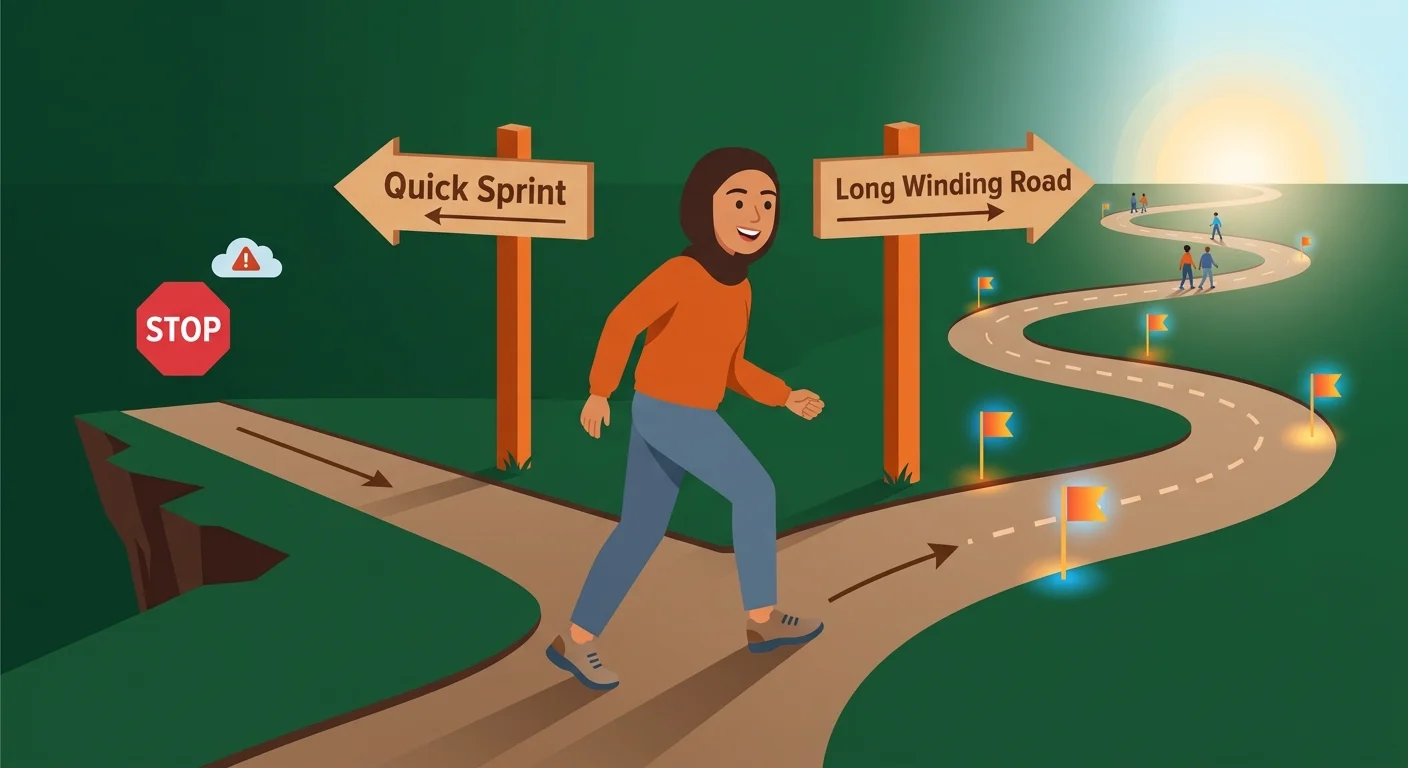
So who does the plant metaphor leave out? Businesses that want to fund one push, freeze the result, and walk away. This isn't for them.
If the plan is a single sprint and then silence, that plan was never wired for how generative engines behave. Fluid, constantly re-ranked recommendations punish exactly that thinking, which is why holding your standing looks less like a finished project and more like the ongoing discipline covered in why monthly schema and entity governance protects standing over time.
Here's the honest line. If you want to check a box marked done and never touch it again, this approach will frustrate you more than help you. It was built for entities willing to keep watering the signal, not for anyone hoping the watering can stays in the shed forever.
Building a Citation Velocity That Compounds Instead of Decays
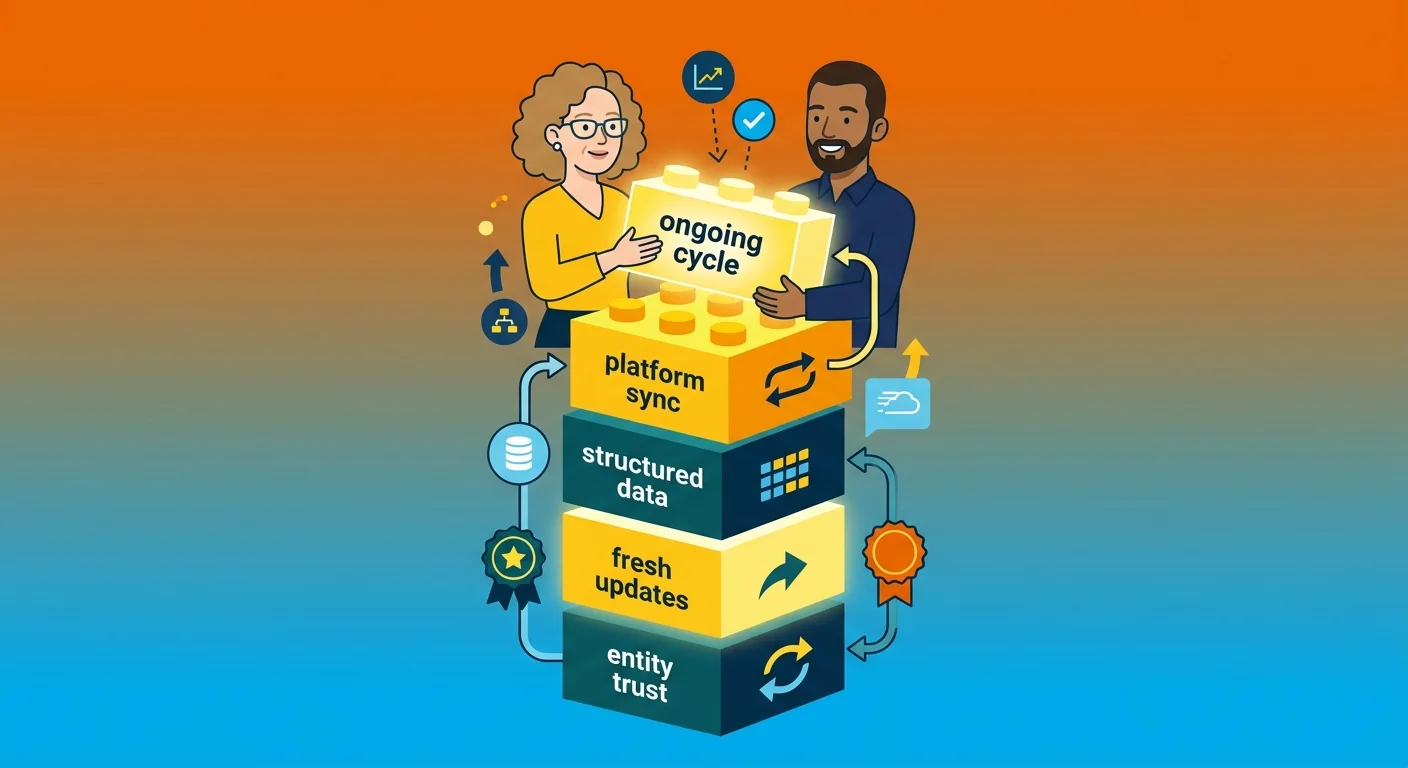
So what does watering the signal actually look like day to day? Not a single sprint. It's a defined term lifted straight out of academic research.
Citation velocity measures how often an entity gets referenced by authoritative sources over time. It's a rate, not a snapshot — and that's the whole point.
A snapshot gets taken once and filed away. A rate has to keep moving, or it reads as slowing down, then stopping cold.
| Maintenance Task | Frequency | What It Reinforces |
|---|---|---|
| Fresh content publication | Recurring, ongoing schedule | Signals to generative engines that the entity remains active and worth re-citing |
| Existing page accuracy checks | Periodic review of live pages | Prevents stale or superseded claims from undermining corroboration |
| Structured data audits | Scheduled revalidation, not a one-time setup | Keeps machine-readable markup aligned with what the page actually says |
| Cross-platform entity consistency checks | Ongoing, alongside content updates | Reinforces a stable knowledge graph that generative engines can corroborate against |
| Monitoring citation appearances | Continuous, not campaign-based | Confirms whether the entity is still part of the distribution models are drawing from |
| Reinforcement Signal | Legacy Approach | Continuous Approach | Reported Impact |
|---|---|---|---|
| Schema Markup Presence | Added once, then left untouched | Audited and validated on a recurring schedule | Pages with Article and BreadcrumbList schema were cited 2.3× more often than otherwise-comparable unstructured pages |
| Authority Measurement | Treated as a one-time badge to earn | Tracked as a rate that must keep moving over time | Citation velocity measures the rate at which an entity is referenced by authoritative sources over time |
| Structural Data Upkeep | Assumed correct after initial launch | Reviewed and corrected as facts shift | Pages with Article and BreadcrumbList schema were cited 2.3× more often than otherwise-comparable unstructured pages |
Structured Data as a Foundation, Not a Finish Line
Structure earns an entity its first look from a generative engine. We've already established that much.
But structure is a foundation, not a finish line. Ship one round of markup and never touch it again, and you're treating a starting signal like it's the whole race.
Here's the pattern worth burning into memory. The same corroboration logic that made structured pages more citable to begin with is the logic that keeps rewarding entities who stay active. Structure gets you into the conversation, but activity keeps you in it.
The Maintenance Rhythm That Keeps Entities Cited
So what does the actual rhythm look like? Not a redesign every few years — a standing cadence of publishing, structuring, and validating information as routine.
That means fresh material on a recurring schedule. It means existing pages checked for accuracy and updated when the facts shift. And it means structured data audited, not just assumed to still be right.
None of that work is glamorous. But it's the whole gap between an entity generative engines keep citing and one they quietly stop mentioning — which is exactly what the next section walks through in concrete terms.
Frequently Asked Questions
Once the decay argument lands, the same objections keep coming up. So here they are — short, direct answers to the questions readers still carry.
What is 'citation velocity' and why does it matter for AI search?
It's the rate at which authoritative sources reference an entity over time. The term comes straight out of academic research on measuring influence. And it matters for a simple reason: a rate keeps moving, while a one-time win just sits there and ages.
Can't I just optimize my website once for AI and be done with it?
No. A single push can earn you that first look. But generative engines re-rank their recommendations nonstop, and they quietly stop citing whoever went quiet first.
How is optimizing for AI answers different from traditional search optimization?
Traditional search optimization rewarded stability — a strong position could hold for a long stretch with no new work. Generative AI answers reward whoever's freshest and best-corroborated right now. That makes ongoing publishing the actual requirement, not a nice extra.
Does my website's content freshness really impact its visibility in AI-generated answers?
Yes, and the gap isn't small. ChatGPT already leans toward citing recently published material far harder than organic search results do. That puts stale pages at a real, measurable disadvantage.
What are the first steps to creating continuous citation velocity for my business?
Start by auditing what's already structured and what's gone stale — both feed the same citation problem. Then build a recurring cadence: publish fresh material, correct outdated pages, re-validate your structured data. Never treat any of it as finished.
Does adding schema markup guarantee an AI engine will cite my page?
No, and this is where a lot of effort gets burned. Some systems — ChatGPT, Claude, Perplexity, Gemini, and Google AI Mode — ignored that markup entirely during direct page retrieval. They pulled only the visible HTML instead.
Where This Leaves You
So here's where this actually leaves you. Generative AI doesn't hand out permanent standing. It hands out temporary trust, renewed only for entities that keep showing up with something fresh to verify.
That plant from the opening was never just a nice picture. Citation velocity is the watering, not the planting — and an entity that stops watering doesn't stay green. It fades the same way the models fade material nobody bothered to refresh.
Structure gets you noticed once. Continuous reinforcement is what keeps a generative engine citing you months from now instead of quietly moving on to whoever published something newer. If you want a clear picture of where your own signal currently stands, start with an AI visibility check.