
Why AI Engines Pick One Clinic Instead of Listing Ten
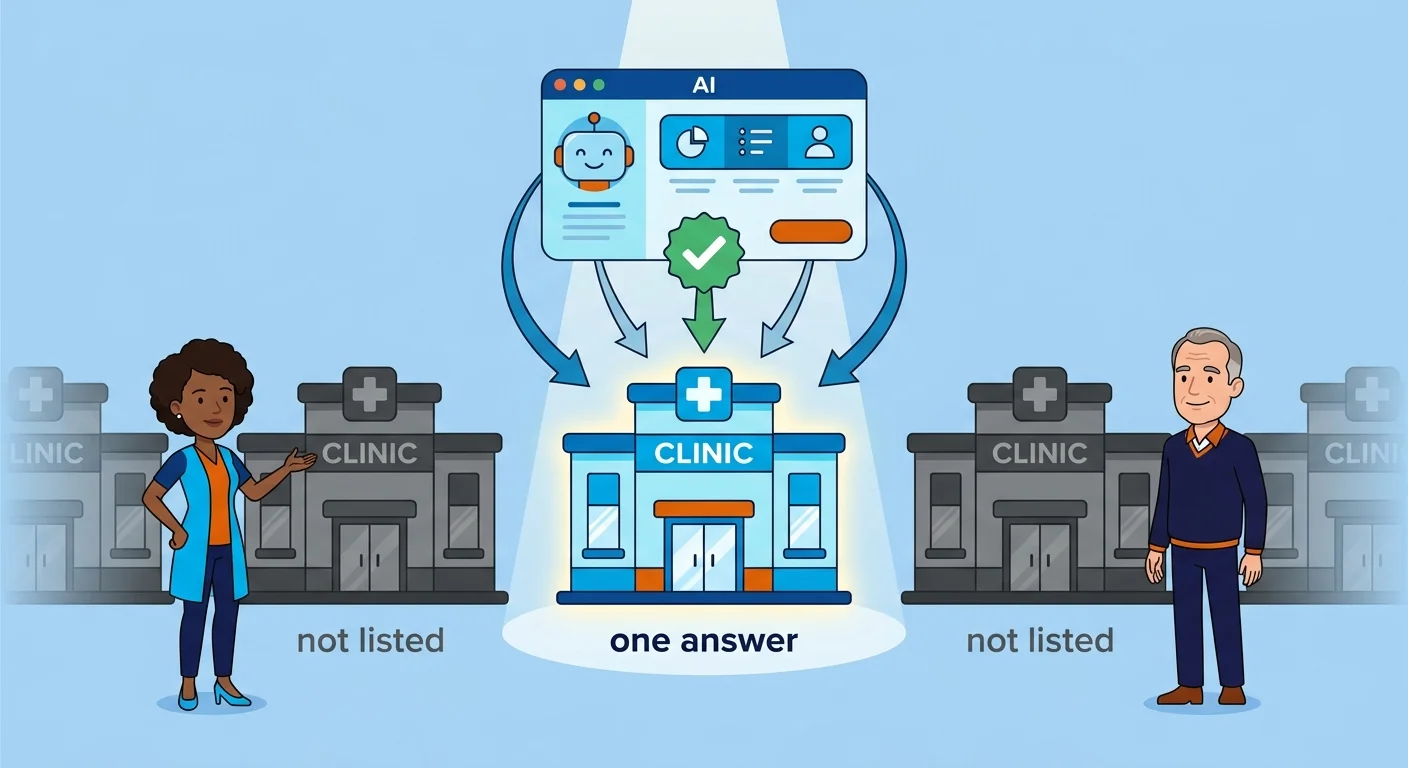
The list is gone. What replaces it is one synthesized recommendation, handed over like it's the only right answer.
So that old promise of a results page, with ten clinics fighting for scroll attention, doesn't describe what a patient sees anymore. For local clinics, this isn't about placing in the classic ten blue links. It's about being the single answer an AI engine gives.
And that one difference changes everything about how a clinic earns attention. This isn't a smaller version of the old game. It's a whole different game.
Here's the thing: AI engines are built to synthesize one definitive answer, not to lay out options. That creates a winner-take-all environment where only the most trusted clinic gets named. Every other clinic in that query just disappears.
The Shift From Search Results to a Single Synthesized Answer
Old results pages let ten businesses share one search, each grabbing a slice of visibility. A generative engine collapses that shared space into a single recommendation.
But that collapse isn't random. The system exists to resolve ambiguity, not keep it, so it picks the one source it judges most trustworthy and calls that the answer. Clinics that understand how a defensive authority moat strategy for AI search protects that single seat are the ones setting themselves up to be that source, not one of the many left unseen.
Why This Creates a Winner-Take-All Environment
Winner-take-all sounds abstract until you picture the seat at the table. Only one clinic sits down when a patient asks which provider to trust.
And that seat doesn't stay filled on its own. It has to be earned again, over and over, because the engine reassesses trust on a recurring basis instead of locking in a result forever. A clinic that wins the seat once and stops reinforcing its authority loses it to a competitor who never stopped.
The One-Time Optimization Trap Most Clinics Still Fall Into
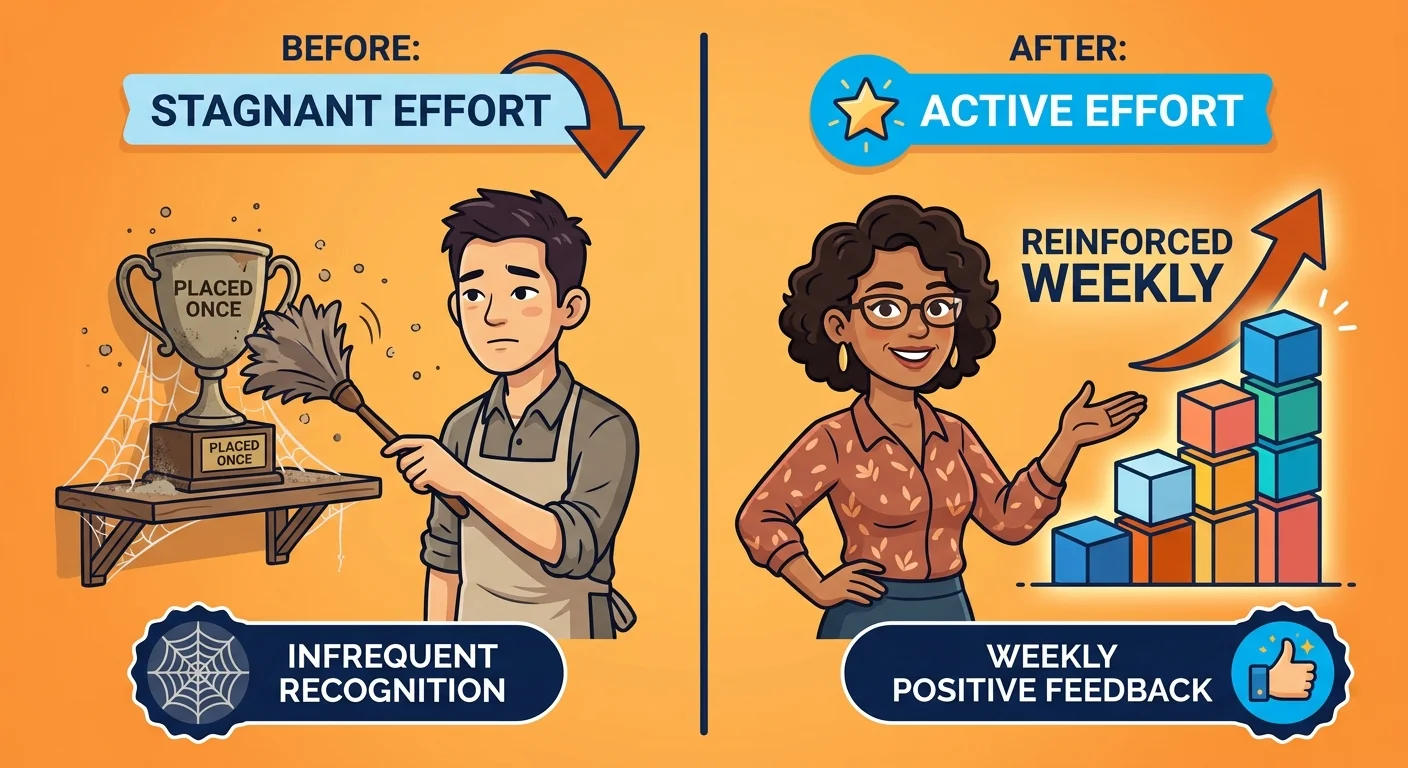
Most clinics still treat online visibility like a project with a finish line. Someone builds the site, writes a batch of pages, patches a few technical issues, and calls it done.
And under the old model, that made sense. A results page held its shape for months, so one big push could hold a placement for just as long.
Here's the thing: treating this as a one-time project is fundamentally incompatible with how AI engines keep re-evaluating authority. The system doesn't check once and move on. It checks again, and again, every time a patient asks.
| Approach | How It Treats Authority | What Happens Over Time |
|---|---|---|
| One-Time Project Model | Treats authority as a fixed asset, built once through a batch of pages and technical fixes, then left in place indefinitely. | Signals go stale as competitors keep reinforcing their expertise, and the AI engine gradually stops recognizing the clinic as current. |
| Continuous Citation Velocity Model | Treats authority as an ongoing signal stream, reinforced through structured data and repeated citations across the web. | The clinic keeps surfacing as a trustworthy source because the engine finds fresh evidence every time it reassesses the query. |
| Static Content Refresh | Assumes a periodic update or occasional edit is enough to keep a page relevant to an evolving evaluation system. | The refresh cycle falls further behind the engine's recurring reassessment, and the gap between reinforced competitors widens. |
Why 'Set It and Forget It' Search Work Fails Under AI Re-Evaluation
So why does a finished project stop working the second an AI engine takes over the recommendation? Because the engine isn't reading one static page and stopping there.
It's scanning for current signals of expertise across the web, weighing what it finds against every other clinic answering the same query. A page frozen in time just stops producing new signals to compare. Understanding why AI search recommendations decay without continuous citation velocity shows you exactly where that erosion starts.
That decay is where citation velocity earns its name. It's the steady, ongoing reinforcement of a clinic's expertise across the web, a signal of current relevance that AI models are built to reward. A one-time project produces none of that ongoing signal, no matter how well it launched.
What AI Engines Actually Pull From When They Recommend a Clinic
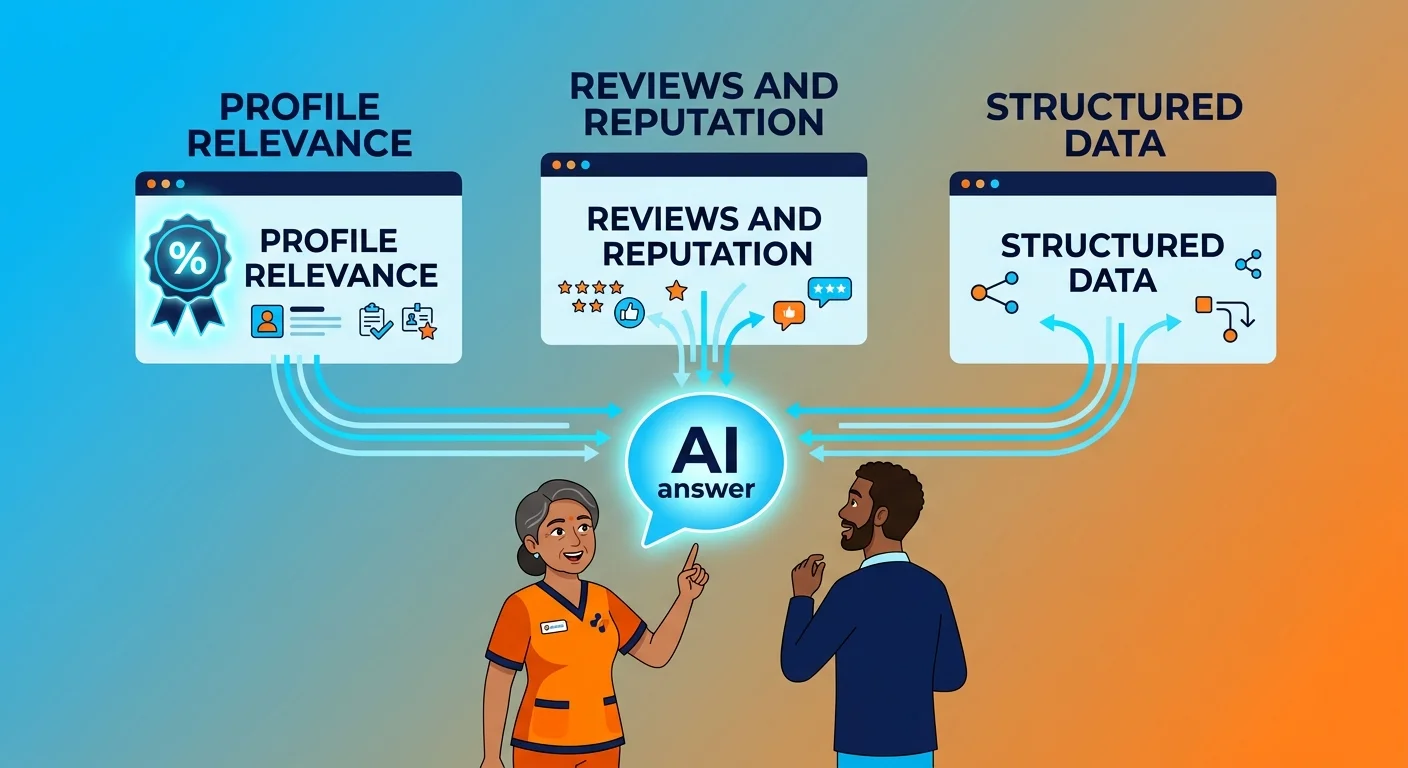
So what's an AI engine actually reading when it picks that one clinic? Not a single page. Not a single ranking factor either.
It pulls from three layers at once: Layer 1 (The Content Layer) feeding it expertise signals, Layer 2 (The Structured Data Layer) feeding it machine-readable facts about the business, and Layer 3 (The Reinforcement Cadence) feeding it proof those signals are still current.
Here's the thing: a clinic can crush one layer and still lose the seat because the other two went quiet. That imbalance is where most clinics get displaced without ever knowing why.
| Data Source | Role in Generative Recommendation | Example Weighted Signal |
|---|---|---|
| Google Business Profile | Feeds real-time alignment between the clinic's listed services and the patient's exact query | Profile relevance score carries 19.6% importance in generative results |
| Query Intent Classification | Determines whether an AI Overview absorbs the search entirely or lets a clinic's own site surface | Informational searches are the most vulnerable of all query types |
| Mobile Search Behavior | Signals how often a patient's question gets fully resolved before reaching any clinic site | Mobile shows a significantly higher rate of good abandonment than PC |
The Google Business Profile Signal Clinics Underestimate
Now take the one signal clinics chronically underestimate: their Google Business Profile.
Most owners treat it like a directory listing, something you set up once and forget. But generative engines read it as an active data feed about how well a business matches what the patient actually asked.
In the food and restaurants sector, that profile-to-query alignment, measured as Google Business Profile relevance score, ranks at 19.6% importance for visibility in generative engine results, according to published industry reporting tracking these signals across positions one through twenty-one. Leave a profile static and it stops earning that weight.
How Search Behavior Itself Has Shifted the Stakes
And the stakes behind all this trace back to how patients actually search in the first place.
Informational searches, the ones asking which clinic to trust, are the most vulnerable query type of all to being swallowed whole by an AI Overview, according to published industry reporting on US healthcare search behavior. That stacks on top of the mobile abandonment pattern already covered: patients get their answer from the AI alone and never reach a clinic's site, which is exactly why one-time optimization projects can't sustain the authority signals this system rewards.
Not Every Clinic Is Built for This Kind of Visibility Work

Let's be honest: this isn't a fit for every clinic. Those three layers want steady attention, not one hard sprint and done.
A clinic that treats visibility as a checklist item, something you hand off once and revisit next year, won't hold the seat even after a brief win. Here's the thing: reinforcement cadence only works when someone actually owns it week over week. Clinics exploring proprietary data drops that keep a clinic's authority signals current are already thinking in that continuous frame, not the project-based one.
So this framework serves clinics ready to treat authority as an ongoing operating discipline. It doesn't serve the ones chasing a finished deliverable they can forget about afterward.
Building Citation Velocity: What Continuous Authority Actually Looks Like
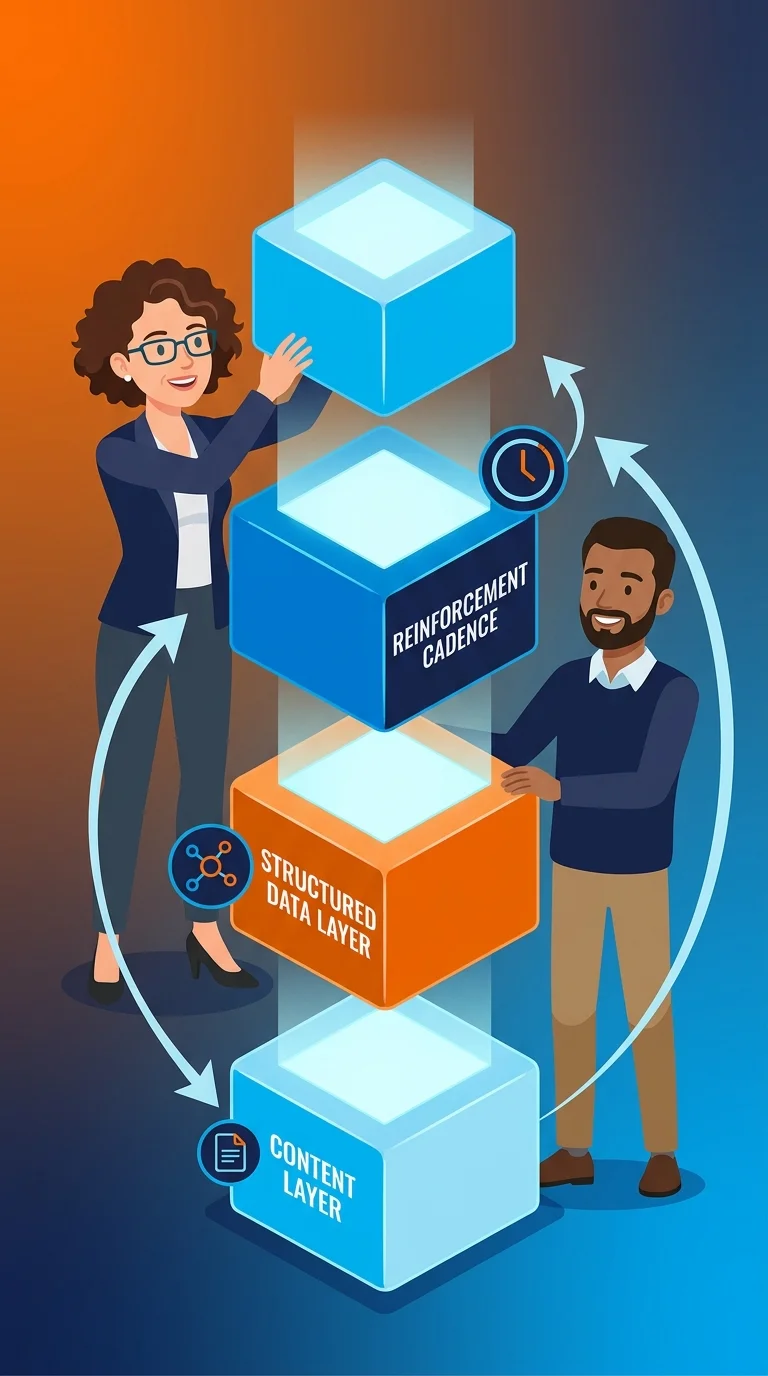
So what does continuous authority actually look like once a clinic buys into the framework above? Not one clever tactic. Not a redesigned page.
It looks like three layers working together, each handing the AI engine a different kind of proof. Drop any one of them and the signal weakens, even when the other two stay strong.
Here's the thing: these layers aren't sequential steps a clinic finishes and walks past. They run in parallel, all the time, because that's the only cadence the recommendation model actually rewards.
| Layer | What It Reinforces | How Often It Needs Attention |
|---|---|---|
| The Content Layer | The clinic's demonstrated expertise, stated in language an AI system can extract and trust | Continuously — material left unrevisited eventually reads as archived rather than current |
| The Structured Data Layer | Machine-readable facts about the business, including services, credentials, and identity details | Whenever underlying facts change — stale markup tells the engine less than it needs |
| The Reinforcement Cadence | Proof that the Content Layer and the Structured Data Layer are still active | Ongoing — this is the rhythm that keeps the other two layers from going quiet |
The Content Layer
The Content Layer is where a clinic states its expertise in language an AI system can pull out and trust. This isn't a blog calendar you tick off a list.
It's an ongoing body of material that keeps showing what the clinic knows, refreshed often enough that the system reads it as current, not archived. A page written once and never touched again eventually reads as silence.
The Structured Data Layer
The Structured Data Layer hands the AI engine machine-readable facts about the business instead of prose it has to interpret. Services, credentials, location details, business identity — all of it belongs here in a format the system can parse without guessing.
Most clinics treat this layer as a one-time technical setup. But structured data decays the same way content does. Services change, credentials update, and stale markup tells the engine less than it needs.
The Reinforcement Cadence
The Reinforcement Cadence is the layer that ties the other two together. It's the ongoing rhythm of citations, updates, and verifiable signals that prove the first two layers are still alive.
Without it, Layer 1 and Layer 2 can both be well built and still go quiet. That quiet is exactly what costs a clinic the seat, because citation velocity is the reinforcement itself, not a one-time win parked in the background.
Where Reviews and Reputation Signals Actually Fit Into AI Citations

Reviews sit at a weird angle inside this framework. They feel like reputation. To an AI engine, they're something narrower: one more data point about whether a clinic matches what the patient asked.
That reframe matters. Most clinics still handle reviews like a star rating stuck in a storefront window. Collect a pile of them, keep the average high, move on.
But a generative engine isn't averaging stars into one number and stopping. It reads the words inside each review the way it reads a page of content. It pulls out signals about services, symptoms, and outcomes a patient described in their own words.
Why a Star Rating Alone No Longer Carries the Same Weight
Here's the thing: a 4.9 average built from one-word reviews carries less weight than a 4.6 average built from detailed ones. The number alone tells the system almost nothing about whether this clinic matches the query in front of it.
So a star rating works as a coarse filter today, not a citation. It answers whether patients were happy. It doesn't answer whether this clinic treats the exact condition a patient just asked about, and that second question is the one the engine is trying to resolve.
How Review Content Becomes a Machine-Readable Citation
That's where review content starts to act like the reinforcement cadence above. A review that names a condition, a treatment, or a specific outcome becomes machine-readable evidence the system can extract and match against a query.
And that evidence keeps compounding the same abandonment pattern from earlier. Mobile search shows a markedly higher rate of good abandonment than PC search across every locale studied, according to independently verified survey findings, so patients are resolving their question and never clicking through. A clinic's reviews are often the last proof the engine reads before it decides who earns that single seat.
Frequently Asked Questions
So once clinics see this framework laid out, a few objections come up every time. Here are the ones we hear most, answered straight.
If I'm already showing up on Google Maps, do I need to worry about AI recommendations?
No, and that gap is exactly the problem. A map listing confirms where you are. It says nothing about whether an AI engine trusts your clinic enough to name it as the single answer.
How can a small clinic compete against large hospitals in AI-generated answers?
Scale doesn't earn the seat. Reinforcement does. A smaller clinic that keeps its three layers current can out-signal a hospital system coasting on stale, one-time setups.
What's the difference between traditional search optimization and optimizing for AI engines?
Traditional search optimization chased a spot in the classic ten blue links. Optimizing for AI engines means earning the single recommendation itself, and that takes ongoing proof, not a one-time build.
How long does it take to build enough AI authority to be recommended?
There's no fixed timeline, because this isn't a project with an end date. Authority builds as long as the reinforcement cadence keeps running. It erodes the moment that cadence stops.
Can negative patient reviews cause an AI engine to stop recommending my clinic?
Yes, but not how most clinics think. The engine isn't averaging your stars. It's reading whether reviews name the exact condition a patient asked about, and vague ones weaken that signal even when the average stays high.
Is this something my front desk staff can manage, or does it require a specialist?
Front desk staff can maintain pieces of it. But keeping all three layers running in parallel, week over week, is what usually needs a specialist, not a side task handed to someone already busy.
Where This Leaves Your Clinic
So here's where the seat metaphor lands. One clinic sits at that table when an AI engine answers a patient's question. Every other clinic nearby is reading this same reality, whether they've named it yet or not.
The one-time project built a version of that clinic frozen at launch. But the seat doesn't stay filled on the strength of a launch. It gets re-earned every time the engine checks again, and it checks constantly.
That's the whole argument. Not a bigger site. Not a longer list of pages. It's a continuous reinforcement cadence across content, structured data, and proof that both are current, because that cadence is the only thing generative engines actually recognize as authority worth recommending. Treat visibility as a finished project instead of an ongoing signal, and the gap between you and the clinic that keeps reinforcing theirs only widens. Start with an honest read on where your signals stand today by requesting a diagnostic AI visibility check.