
Why Placing in the Classic Ten Blue Links No Longer Guarantees an AI Citation
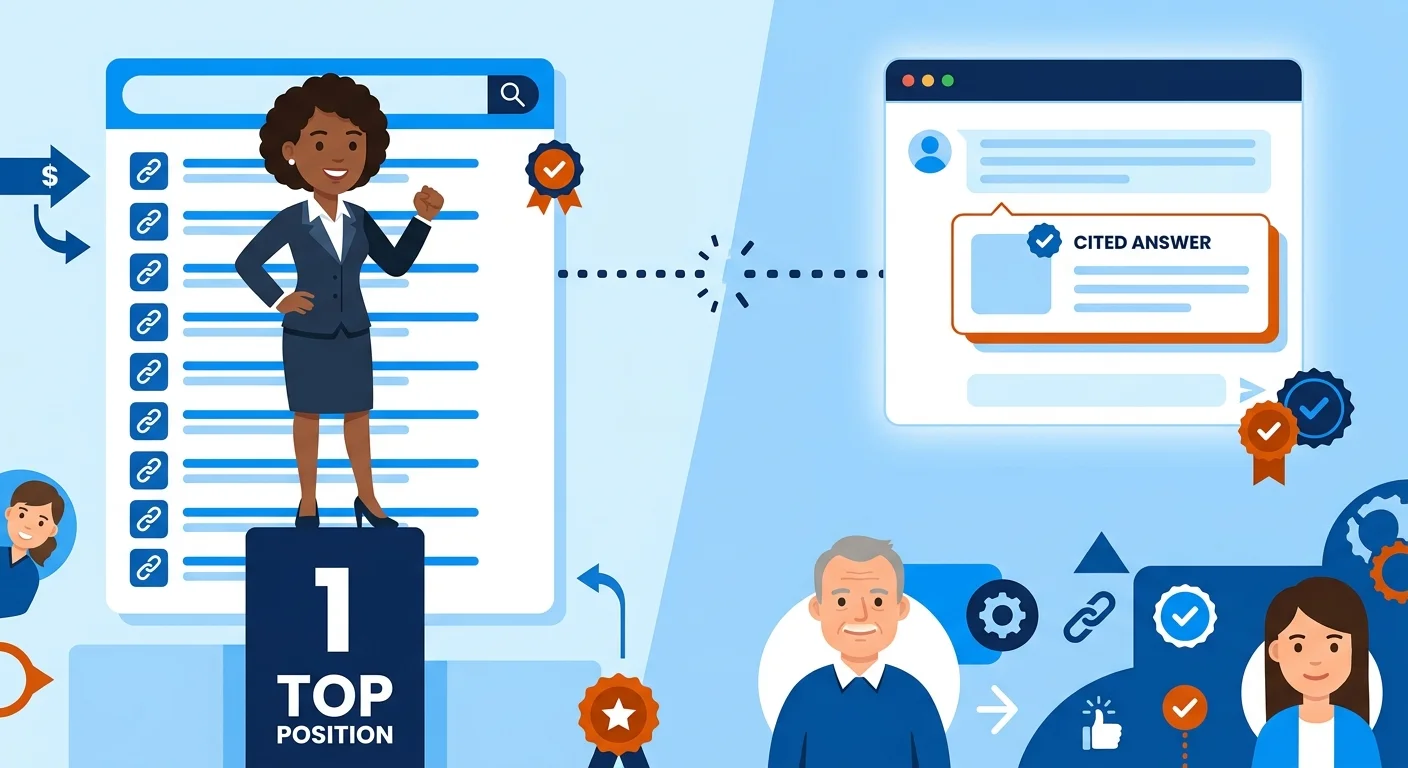
Here's the gap most businesses still miss. Placing in the classic ten blue links used to be the finish line. But generative answer engines quietly moved that line somewhere else entirely.
So chasing keyword position tracking now solves the wrong problem. A page can hold the top spot and still never get named as the source behind an AI answer, because citation and placement stopped being the same event.
And that split isn't theoretical. Nearly 30% of the domains cited in Google's AI Overviews never show up in the top results on the same page, a gap documented on the arXiv preprint server, which tells you the citation mechanism picks sources by a different logic than the ranking algorithm ever used. Businesses still measuring success by placement are watching the wrong scoreboard.
Look, this is exactly why a defensive authority moat matters more than another placement win. In generative search, visibility isn't about ranking on a list anymore; it's about becoming the cited source inside the answer itself. Everything after this builds toward that one distinction.
Why Chasing Keyword Position Tracking Fails as an AI Citation Strategy
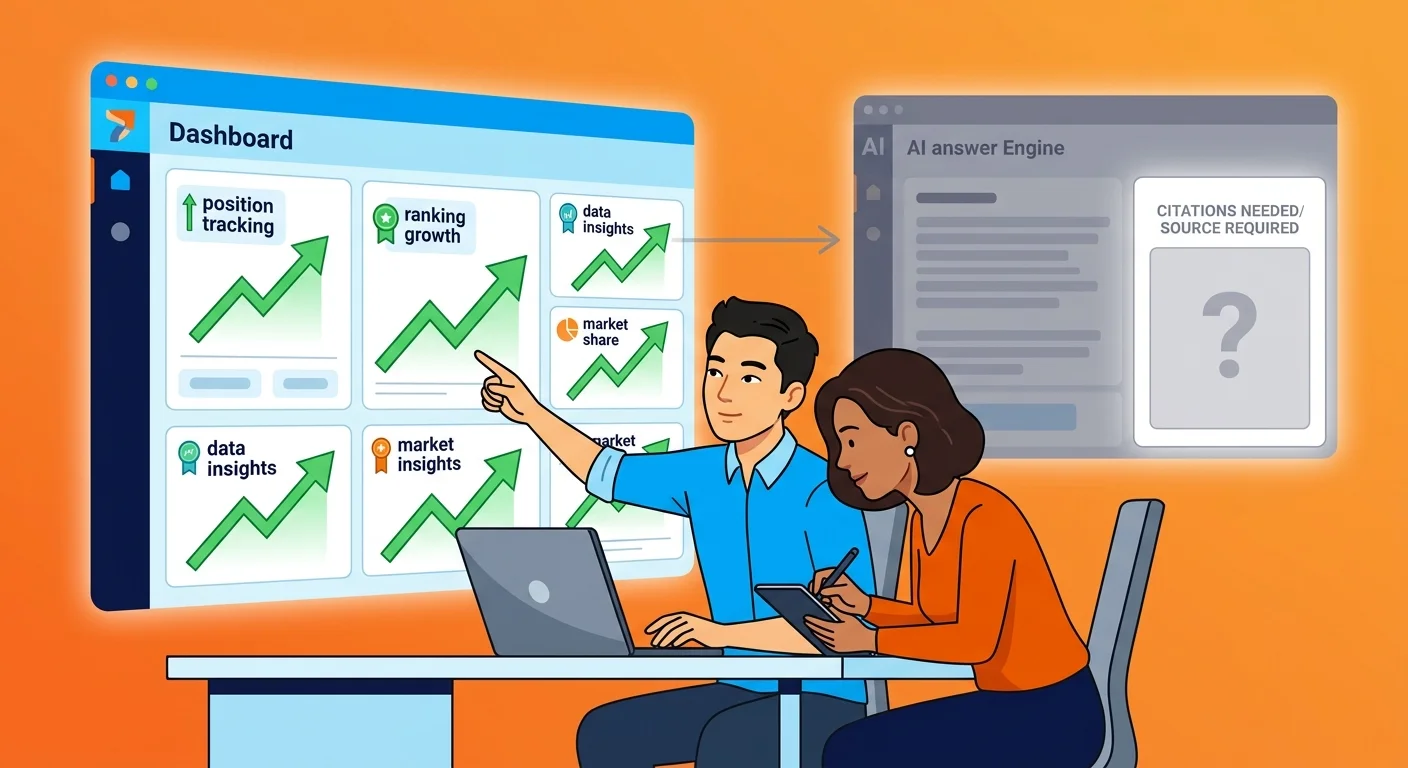
Keyword position tracking measures the wrong thing, full stop. It tells you where a page sits in a list humans read differently now, and says nothing about whether an answer engine names you at all.
Here's the reaction first: this is a rejected method, not a weakened one. Treating position tracking as a stand-in for AI visibility is a category error, because the two systems answer different questions with different logic.
So what takes its place? You stop asking how to rank for a keyword and start asking how to become the canonical, citable entity for a concept. That flip is the whole point of this section.
The Mechanism Behind the Failure
The mechanism is simple once you name it. Position tracking assumes a searcher scans a page of links and picks one. A generative answer engine already picked for them before the reader ever sees a result.
That means the engine runs on entity clarity, structured data, and traceable specificity, not the placement signals that built the classic ten blue links. Optimize for the old signals and you're solving a problem the engine stopped asking.
Now, checking that an engine even has your facts straight is its own discipline. Anyone unsure whether their entity data is being read right can start with a structured audit of their own entity accuracy, which surfaces the mismatches before they cost a citation.
Who This Method Quietly Hurts
This method quietly hurts the businesses proudest of their position tracking reports. A dashboard full of top placements feels safe, while the citations happen somewhere that dashboard never measures.
But the real cost lands on anyone treating a snapshot in time as a stable asset. Position tracking rewards you for winning a game whose scoreboard generative engines already stopped watching.
What Actually Makes an AI Engine Treat You as the Source of Truth
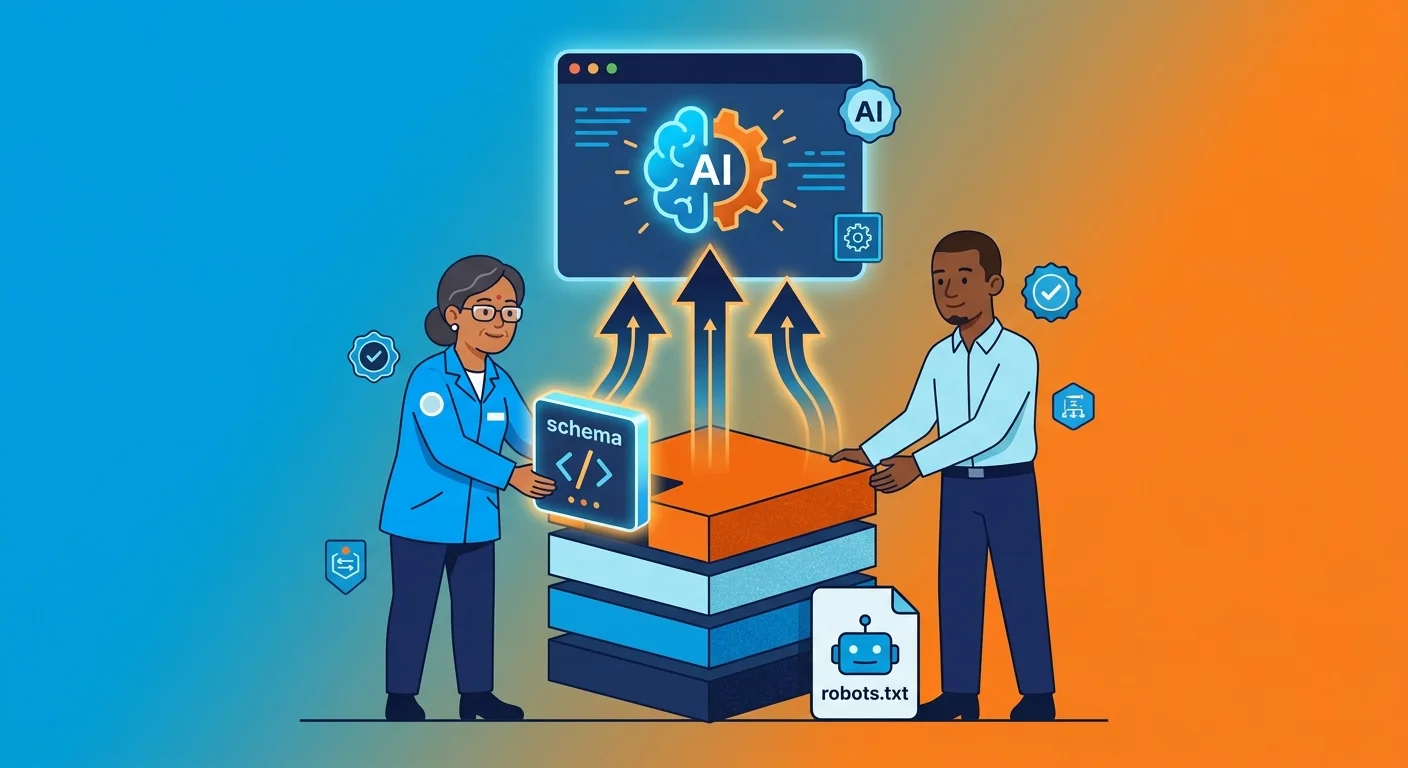
So what actually earns a citation, if position tracking never could? Entity clarity. An AI engine has to know exactly who you are, what you claim, and whether that claim checks out against a structured record.
And that verification layer isn't decoration you bolt on later. It's the line between a page an engine can read with confidence and a page it has to guess about — and engines don't cite guesses.
Here's the reaction first: most businesses treat this as a technical afterthought, and that's exactly backwards. Structured data and entity governance are the load-bearing wall of the citation moat, not a coat of paint applied after the writing's done.
| Signal | What It Tells an AI Engine | Why It Matters for Citation |
|---|---|---|
| JSON-LD schema present on a page | Confirms the page's facts, entities, and relationships in a format the engine can parse without inferring intent | Pages already cited by AI carry this signal at a much higher rate than pages never cited, though the correlation does not prove causation |
| Schema present without a genuine citation record | Tells the engine a page is machine-readable but does not by itself prove the page is trustworthy enough to name as a source | Adding schema alone produced no major uplift in citations on any platform, so structure without substance still gets passed over |
| Page indexed and eligible to show a snippet in Search | Confirms the page has cleared Google's baseline technical bar for supporting-link eligibility | A page must be indexed and eligible to be shown in Google Search with a snippet before AI Overviews or AI Mode will ever surface it as a supporting link |
How Structured Data Turns a Website Into a Machine-Readable Source
Look, structured data is the layer that turns prose into something a machine can actually confirm. JSON-LD tags your facts, entities, and relationships in a format an AI system reads without guessing at tone or inferring intent.
But the correlation here is easy to oversell, so read it carefully. Pages already cited by AI are almost three times more likely to carry JSON-LD schema than pages that never get cited — a pattern Ahrefs' research documented across 1,885 test pages.
That's not proof schema causes the citation. It's evidence that the entities engines already trust tend to be the same ones that bothered to structure their data — a different claim, and a more honest one.
Why Google's Own Guidance Confirms the Shift
Now, this is exactly why entity governance can't be a one-and-done project. Data drifts, schema goes stale, and a business that wants lasting citation dominance needs the same discipline applied to monthly entity accuracy reviews that it applies to publishing fresh proprietary data.
And that discipline isn't a guess dressed up as strategy. It sits right on the platform's own guidance: to show up as a supporting link in AI Overviews or AI Mode, a page has to be indexed and eligible to appear in Search with a snippet — a technical bar spelled out plainly in Google's documentation.
Why Novelty Is the Currency AI Models Actually Reward

Novelty isn't a stylistic nicety to these systems. It's the actual currency they're built to hunt, because a model fed the same recycled claims as everyone else has nothing distinctive to cite.
So when an answer engine hits genuinely new information, it treats that source differently than one parroting the consensus. AI models are engineered to seek out and reward what's new, and that hands a business willing to publish data no competitor can replicate a real opening.
That opening cuts both ways, though. If your unique data is valuable enough for an engine to chase, it's valuable enough for a rival to want a copy of, which is why understanding how rivals reverse-engineer a citation profile belongs in the same breath as publishing the data at all.
The Extraction Evidence Behind Why Unique Data Holds Value
Here's the reaction first: proprietary data isn't just persuasive to an AI system, it's extractable from one. Researchers showed that creators of open-source large language models can pull private downstream fine-tuning data straight out of a model using nothing but black-box access, through a method built on backdoor training.
The numbers are the whole point. Extraction across four open-source models tested hit 76.3% in practical settings, and climbed to 94.9% in more ideal ones, a result reported on a preprint hosted by arXiv.
That evidence cuts two ways for anyone building a citation moat. It confirms unique data is valuable enough for a model to encode and later reveal, but it also means the fine-tuning layer itself is no vault. Look, the proprietary asset that actually holds is the published, verifiable data drop, not a hope that private information stays private inside someone else's model.
Designing a Proprietary Data Drop Businesses Can Actually Sustain
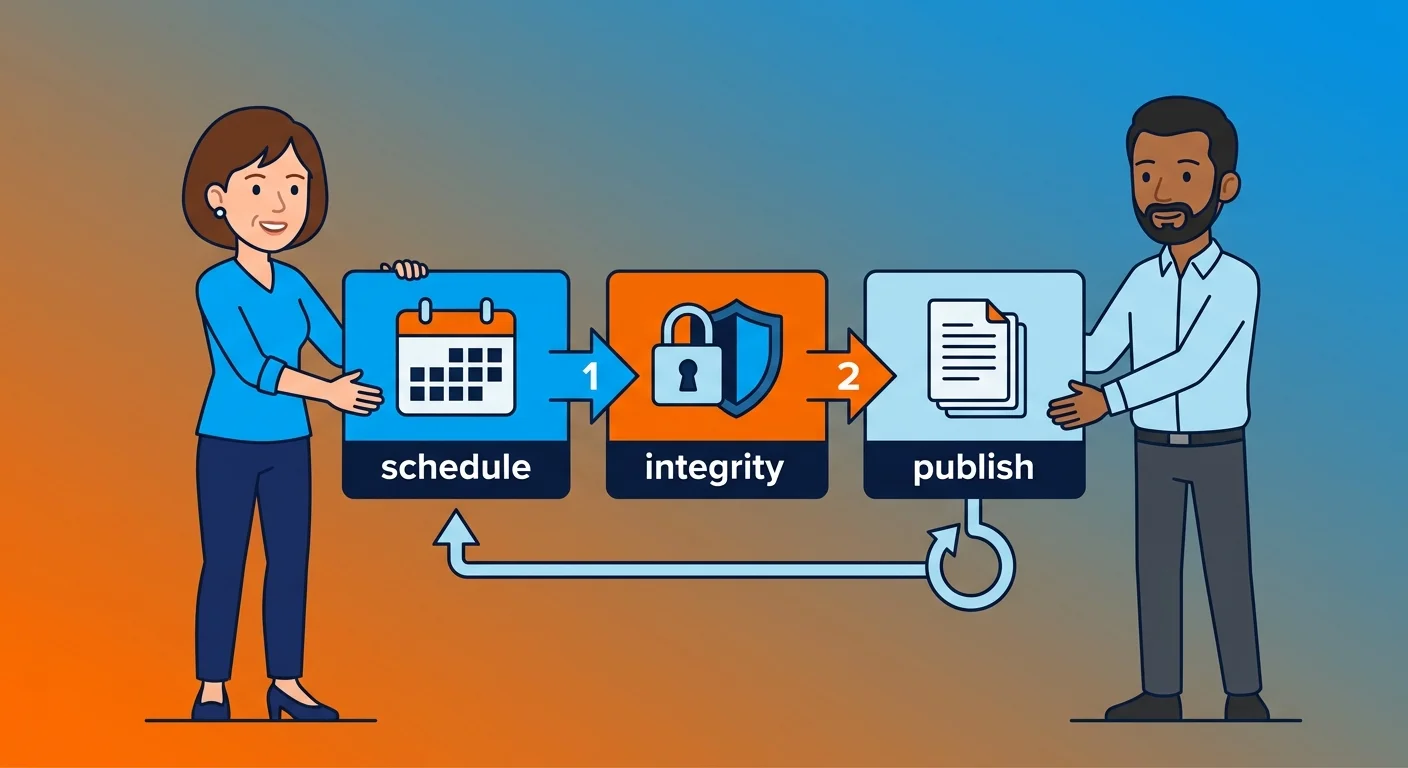
So what does a data drop actually look like once the theory ends and the calendar starts? A proprietary data drop is the act of publishing unique, structured, verifiable information only your organization has. That definition earns its keep — it rules out commentary, it rules out recycled statistics, and it rules out anything a competitor could produce by reading the same public sources.
Here's the reaction first: most businesses build a data drop as a one-time event, and that's the design flaw that kills the whole program. One release teaches an engine nothing about consistency. And consistency is exactly what earns a return visit.
The earlier reframing still holds. Becoming the canonical, citable entity for a concept isn't a headline you hit once — it's a condition you maintain, and maintenance needs a structure built to outlive the first publish date.
| Component | Purpose | Who Owns It | Recommended Cadence |
|---|---|---|---|
| Governance Owner | Assigns a named accountable party for accuracy, publishing decisions, and which internal figures are safe to release | A designated internal owner, not a rotating committee | Reviewed on a fixed, recurring schedule tied to the publishing calendar |
| Data Source Mapping | Identifies which internal datasets refresh naturally and on what internal timeline, so releases follow real change instead of forcing numbers out of a static system | Governance owner working with the operational team that generates the underlying data | Reassessed each time a new data drop is scheduled |
| Structuring and Verification Layer | Converts raw internal figures into structured, machine-readable format and confirms each figure before it is published, so the release can be trusted rather than guessed at | Governance owner in coordination with technical staff responsible for schema implementation | Applied to every release, no exceptions |
| Access and Integrity Control | Controls who can edit source data, logs every change, and corrects errors transparently instead of silently rewriting a figure an engine already cited | A restricted set of authorized editors, separate from content publishers | Audited on an ongoing basis alongside every scheduled release |
| Publishing Cadence | Turns a single release into a recognizable pattern by matching the schedule to how often the underlying data actually changes | Governance owner, in consultation with leadership on which topics matter most to authority | Set as a predictable, standing schedule rather than a one-time event |
| Business Profile | Fit for Data Drop Strategy | Reason |
|---|---|---|
| Organizations sitting on unique operational, transactional, or performance data nobody else can produce | Strong fit | This is the raw material a citation moat is built from, and structuring it satisfies the demand for verifiable, non-replicable information |
| Businesses chasing a single citation spike before a launch or event window | Poor fit | A one-time release teaches an engine nothing about consistency, and consistency is what earns a return visit |
| Organizations willing to name an owner for accuracy and commit to an ongoing publishing cadence | Strong fit | Governance and cadence are the structural pieces that turn a single publication into a recognizable pattern an engine expects |
| Businesses that want the appearance of authority without exposing real internal figures or building a review process | Poor fit | Data an engine cannot verify is data an engine will not cite, no matter how confidently it is presented |
| Organizations with no internal datasets worth structuring and no appetite for ongoing governance | Poor fit | Without source material or maintenance discipline, a data drop program has nothing to publish and no one to keep it accurate |
Who Should Not Bother With a Data Drop Strategy
Look, this strategy isn't for every business, and pretending otherwise wastes everyone's time. No internal data worth structuring, no operational figures nobody else can produce, no appetite for ongoing governance? A data drop program will just sit there unread.
This isn't for a business chasing a quick citation spike before an event or a launch window. A citation moat gets built over sustained cycles. You don't assemble it overnight for a single result.
But the sharper disqualifier is attitude, not size. A business that won't expose real internal numbers — or one that wants the look of authority without the verification work behind it — will produce data an engine can't trust and won't cite.
Building the Governance Layer That Keeps a Data Drop Program Alive
Now, assuming the fit is right, the first structural piece is governance. Somebody inside has to own accuracy, own the publishing calendar, and own the call on which internal figures are safe and useful to release.
That ownership can't rotate randomly between departments. A governance layer treats accuracy the way a public company treats financial reporting — a fixed process, a named owner, and a review step before anything goes public.
Establishing the Cadence: Publishing Schedule Components
So the second piece is cadence, and cadence is more than picking a frequency. It means mapping which internal datasets refresh naturally, on what timeline, then matching the schedule to that rhythm instead of forcing new numbers out of a system that hasn't changed.
A predictable schedule tied to the topics that carry an organization's authority is what teaches an answer engine to expect the next release. That expectation is the pattern that turns one publication into a habit an engine returns to.
Protecting the Data: Access and Integrity Controls
Here's the reaction first: publishing proprietary data without an access and integrity layer isn't publishing an asset — it's publishing a liability. If the underlying dataset can be changed without a record, an engine has no reason to keep trusting figures pulled from it.
So the final structural piece is control. Who can edit the source data, what gets logged when they do, and how errors get fixed without silently rewriting a figure an engine already cited. Get that wrong and the moat stops holding water.
Frequently Asked Questions
Here's what people actually ask once they start building this moat instead of chasing a position. Short answers. No hedging.
What qualifies as a proprietary data drop for an AI search engine?
It's published, structured information only your organization has and can verify. Commentary doesn't count. Neither does a recycled statistic somebody else already published first.
How does structured data relate to getting cited by AI?
Structured data won't force a citation, but it strips out the guesswork an engine would otherwise be stuck doing. Here's the kicker: the pages engines already trust are far more likely to carry that structured layer. That's a correlation worth acting on, even though it isn't proof of cause.
Can a small business realistically compete with large corporations' data drops?
Yes, because the moat is built on owning real internal data, not on budget size. A small shop with one genuinely proprietary dataset and tight governance beats a giant publishing recycled industry commentary.
What is the difference between an AI mention and an AI citation?
A mention is a passing reference buried inside a longer answer. A citation is the source line an engine points to as where the answer came from. Only one of those builds the moat.
How frequently should a company perform a data drop to maintain its authority?
Frequency should follow how often the underlying dataset naturally refreshes, not some arbitrary calendar. What you're after is a recognizable, sustained cadence — not one release you treat as finished work.
Is it possible to place in the classic ten blue links but be invisible to AI answer engines?
Yes, and it's getting common. Placing in the classic ten blue links and earning an AI citation get measured by different mechanisms, so a page can hold one without ever earning the other.
The Bottom Line
Here's the reaction first: a citation moat isn't a metaphor, it's a maintenance schedule. Governance, cadence, access control — every piece above exists to answer the one question an engine asks nonstop. Can this source still be trusted right now?
That question never gets asked once and filed away. It gets asked every single time a model reaches for an answer, which means the businesses treating this like a finished project are already losing ground to the ones treating it like a standing practice. Visibility stopped being about a list position the moment engines started answering questions straight instead of pointing at a page — and nothing about that shift is reversing.
So the choice here isn't complicated, even if the work is. Build the moat, keep it filled with verified proprietary data, and become the source an engine returns to on reflex — or skip the work and become one of the pages an engine quietly stops mentioning. For a business ready to see where its own entity data stands right now, the next step is checking your current AI visibility standing.