Why Your Schema Setup Already Started Decaying the Day You Shipped It

Most businesses think schema is finished work. That's the first crack in the moat. The file ships, the team moves on, and a closed task is exactly the wrong way to see it.
Here's the thing: treating schema as a one-time technical task leaves your digital identity wide open to drift and misinterpretation as AI models evolve. That assumption made sense back when simpler crawlers just scanned for static tags.
But it stopped making sense the moment generative systems started weighing that data against everything else on the web about you — constantly, in the background.
So the setup pass was never the moat. It was the first shovel of dirt.
Look, if you want to understand what a real defensive posture against AI misreading actually requires, you've got to look past the build and at what happens to that data over time.
So what silts a moat? Directory listings change hands, old citations hang around, and a new address takes months to spread everywhere it should. None of that needs a dramatic failure. It just needs nobody watching.
The 'Set It and Forget It' Trap That Leaves Businesses Exposed

Call it the checklist mentality. A business builds its structured data once, checks the box, and files the whole thing under done.
But an AI engine doesn't see that data as finished. It sees one input among many — re-weighed every single time it re-crawls the web.
The Checklist Mentality and Why It Breaks Down
The checklist mentality sticks around because it mirrors how most technical work gets scoped. A task has a start, a deliverable, and a close date.
So structured data got shoved into that same shape, and teams applied the same closing logic. Ship the markup, mark the ticket complete, move on.
Here's why it breaks: entity recognition isn't a closed task at all. It's a constantly re-evaluated judgment — and a judgment made once and never revisited gets outvoted by fresher, conflicting information published somewhere else. Anyone building a full entity accuracy audit for AI search engines finds that most of the gaps aren't new mistakes, just old ones nobody rechecked.
How Small Data Gaps Compound Into Bigger Authority Problems
Here's what makes this dangerous: the damage never shows up as one event. It shows up as a slow pile-up of small mismatches.
A phone number changes on one directory but not another. A business description gets rewritten slightly differently across three platforms. On their own, none of these look serious.
So an AI engine runs into a handful of small contradictions instead of one clean, verified record. Skip the monthly review, and those tiny inconsistencies compound — quietly eroding how AI engines read your brand's authority. That erosion never announces itself, which is exactly why it spreads before anyone notices the moat needs dredging again.
How AI Engines Actually Read and Reconcile Your Business Identity

Here's the mechanical shift nobody bothers to explain. AI engines don't read your identity off a single page anymore.
They stitch it together from dozens of fragments scattered across the web, then reconcile the whole mess into one working answer. That reconciliation is where authority gets won or lost, because being cited as a trusted entity now matters more than any single placement ever did.
| Data Signal | What AI Engines Look For | Risk If Inconsistent |
|---|---|---|
| Structured Data Properties | Whether required and recommended schema fields are complete, current, and free of contradictions with the visible page content | Engines default to whichever competing source looks more complete, pushing an under-maintained entity out of the trusted answer |
| Cross-Platform Business Details | Consistency of name, address, phone, and descriptive language across every directory, profile, and review platform where the entity appears | Fragmented details force the model to guess which version is authoritative, and the guess is rarely in the business's favor |
| Third-Party Mentions and Reviews | Whether outside references corroborate or contradict the business's own published entity data | Unaddressed contradictions read as unresolved conflict, and unresolved conflict lowers the confidence an engine assigns to any single answer |
| Update Recency | How recently the entity's structured data and profile information were verified or refreshed relative to competing sources | Stale records get quietly outranked by fresher, better-governed competitors even without any factual error on the business's part |
Why Conflicting Sources Confuse Language Models
Retrieval-augmented models pull from a handful of sources before they answer, and those sources argue with each other constantly. A directory says one address, a review platform says another, and your own site says a third.
And the model has no built-in preference for the right one. It's only got whatever signals help it judge which source deserves more weight.
That's exactly why telling a model up front what kind of conflict is sitting in its retrieved sources sharpens the quality of its answers — a finding confirmed by published research data on retrieval-augmented systems. Structured, consistent entity signals hand the model that same conflict-resolution context. Strip them away, and the model is left guessing which contradictory source to believe.
What Happens When AI Engines Can't Agree on the Facts
So what happens when the guess lands wrong? The model picks a source, states it with total confidence, and moves right along.
There's no flag, no asterisk, nothing warning you the answer might be stale or flat wrong. That silent failure is exactly why understanding how proprietary data can reinforce citation dominance matters as much as fixing the conflicts, and it tees up the next question straight away: what actually happens once AI engines can't agree on the facts.
What Schema Types Carry the Most Weight for Entity Recognition
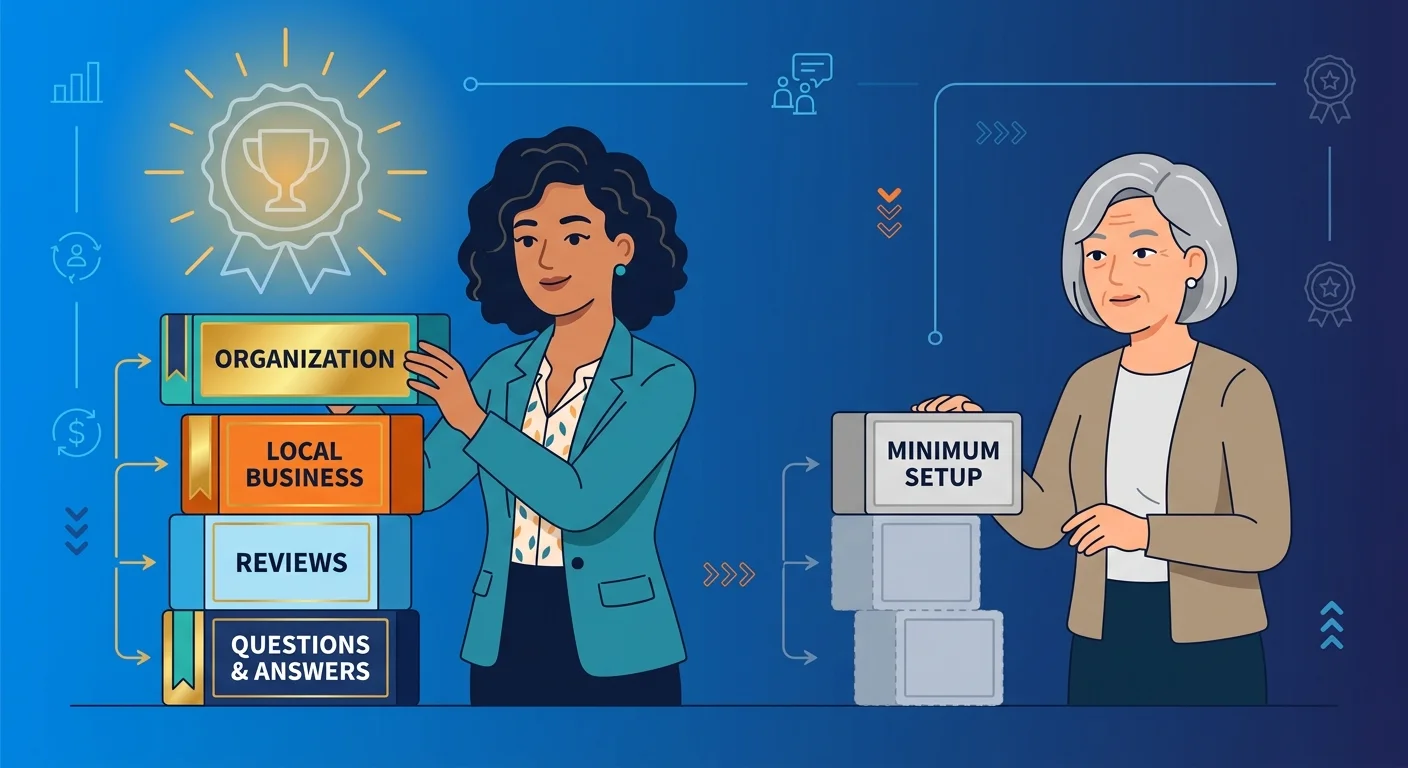
Not every schema type pulls the same weight in an AI engine's eyes. Some vocabulary terms map straight onto how these systems classify a business. Others barely register at all.
Knowing which types matter most isn't a technical curiosity. It's the difference between a structured data file that reinforces the moat and one that just sits there, unread and unused.
| Schema Type | Primary Purpose | Governance Priority |
|---|---|---|
| Organization or LocalBusiness | Anchors the core identity an AI engine references before anything else, including name, location, and category | Highest — this is the record every other schema type gets checked against |
| Review or AggregateRating | Reinforces trust signals by giving the model third-party validation to weigh alongside the business's own claims | High — thin or stale review markup weakens the fuller record an AI engine favors |
| Question and Answer content | Supplies the model with pre-packaged, extractable answers it can lift almost directly into a generated response | High — directly feeds the exact conversational queries AI engines are built to resolve |
| Product or Service markup | Describes what the business actually offers in a structured format rather than leaving it to be inferred from page copy | Moderate — valuable, but only as reliable as the organization-level record it sits under |
| Event or Job Posting | Covers time-bound or role-specific information that changes on its own schedule and needs its own recheck cycle | Moderate — priority rises whenever the underlying listing is actively changing |
The Entity Types AI Systems Recognize Most Often
Products, local businesses, events, job postings, reviews, and question-and-answer content are the popular types of entities annotated with schema.org terms, and that popularity isn't an accident. These categories line up with the exact questions people ask AI engines most: what does this business sell, where is it, and what do other customers say about it.
Here's the thing: skip organization-level markup and you're asking an AI engine to guess your identity from scraped fragments instead. That guesswork is exactly the crack in the moat this article keeps circling back to.
So the priority order isn't arbitrary. Local business and organization markup anchor the identity, review markup reinforces trust signals, and question-and-answer markup hands the model pre-packaged, extractable responses it can lift almost straight into a generated answer.
Why More Complete Structured Data Outperforms the Bare Minimum
Most businesses stop at the required fields and call the job done. That instinct is the second crack in the moat, sitting right next to the first.
Google recommends going past the required fields with additional recommended properties, because fuller structured data improves result quality for users and affects rich result ranking — a standard laid out directly in Google's documentation for structured data implementation. A bare-minimum file technically validates. It just doesn't give the model much to work with.
Completeness is what separates a passive listing from an authoritative one, which is the same line this article keeps drawing between continuous reinforcement and a one-time build that never gets revisited. Businesses treating the recommended fields as optional are picking the bare minimum over the moat, and an AI engine weighing recommended properties, dense reviews, and clear entity types against a competitor's sparse file will favor the fuller record — not out of preference, but because fuller records answer more of what the model is checking. This is where the broader entity picture matters too: products, local businesses, events, job postings, reviews, and question-and-answer content all interlock, and published academic findings on schema.org adoption confirm these are exactly the entity types AI systems are already trained to expect.
Reading the Warning Signs Before an AI Engine Gets Your Identity Wrong
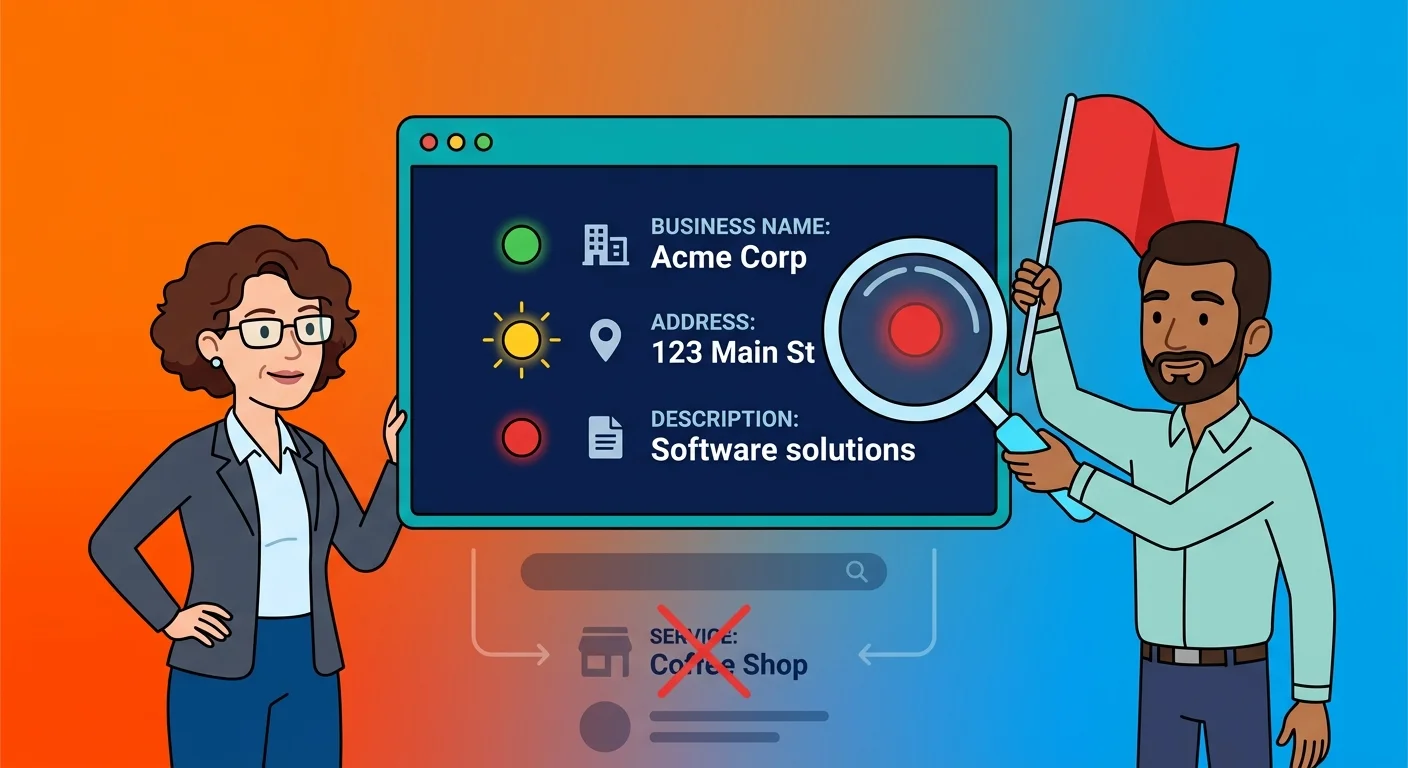
So what does the moat look like once it starts silting up? Rarely a crisis.
It looks like small, quiet inconsistencies that seem too minor to chase. A slightly different business description here. An outdated service list there.
Entity governance is the practice of actively managing and standardizing your business's core information across the web, so AI systems read it without ambiguity. Catch the warning signs early and you catch drift before an AI engine has already gotten your story wrong.
This Isn't for Businesses Chasing a Quick Fix
This isn't for businesses hunting one clean pass and a checked box. If the plan is to fix the data once and never look again, these warning signs won't matter to you.
Here's the blunt version: a business chasing a quick fix patches the loudest inconsistency, calls it solved, and walks. That's the same checklist mentality that let the moat silt up in the first place.
Look, this serves the businesses willing to keep watching after launch. Everyone else keeps rediscovering the same cracks — just later, and more expensively.
Building a Governance Cadence That Actually Holds Up
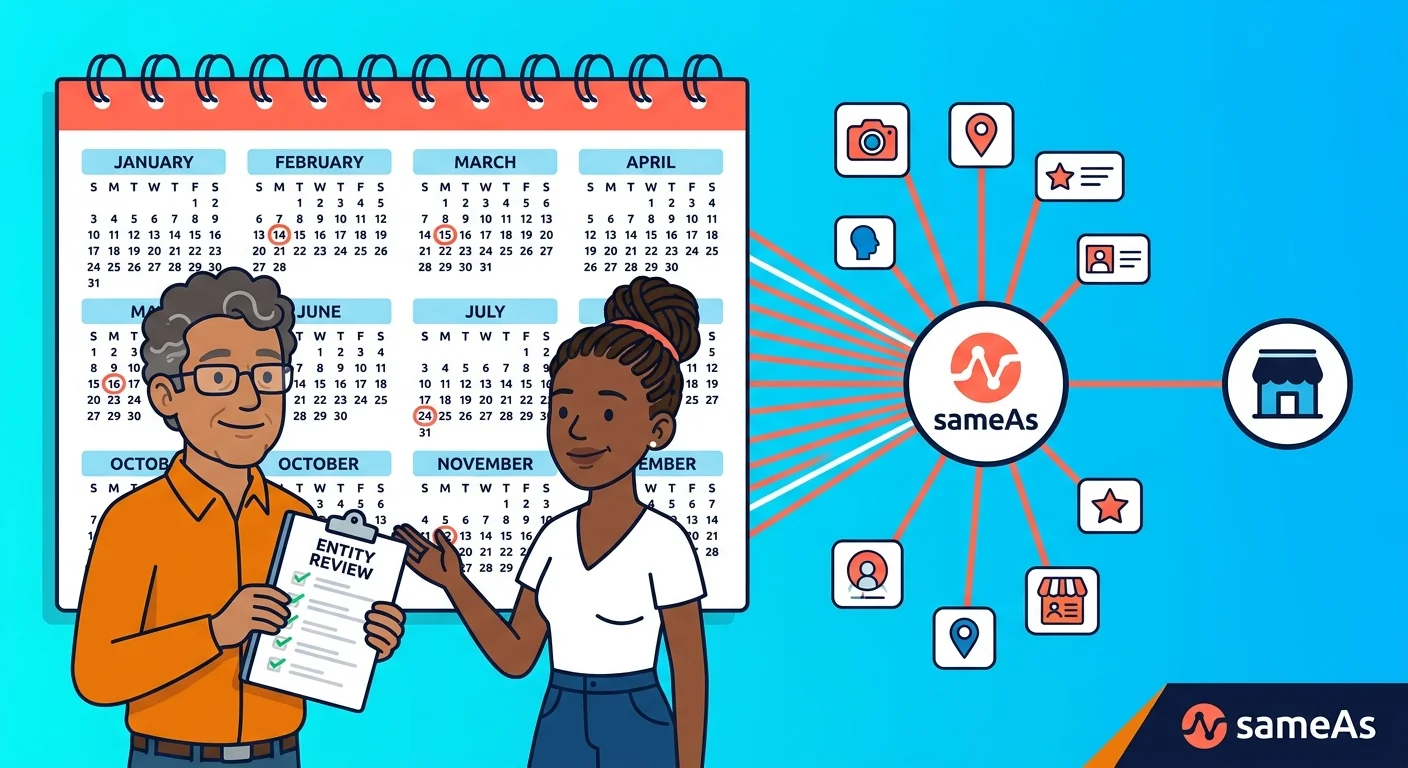
So what does dredging the moat actually look like on a calendar? Not one dramatic overhaul. And not a one-off audit either.
It's a recurring, unglamorous cycle — checking the same handful of things every month. You catch the small drift before it piles up into the kind of contradiction an AI engine has to guess its way through.
| Governance Task | Frequency | What It Prevents |
|---|---|---|
| Cross-Platform Fact Comparison | Monthly | Small contradictions between the site, directories, and review platforms compounding into a record no AI engine trusts |
| Structured Data Revalidation | Monthly | Recommended properties left blank and new pages sitting outside the entity's markup entirely |
| sameAs Property Audit | Monthly | An AI engine treating separate profiles as unrelated fragments instead of one consolidated identity |
| Entity Description Alignment | Monthly | Drift between how the business describes itself and how third parties describe it, forcing the model to guess which version to trust |
What a Monthly Review Cycle Actually Covers
Here's what goes first in that cycle: line up the business's core facts side by side. Its own site, its directory listings, and any platform where customers or reviewers describe it on their own.
Name, address, phone number, hours, service descriptions — all checked against each other. And any mismatch gets fixed at the source, not patched over on whatever platform it happened to surface on.
Next to that comparison sits a review of the structured data file itself. New pages need markup, existing markup needs revalidation, and any recommended property you left blank the first time finally gets filled in.
The 'sameAs' Property and Other Tactics That Consolidate Your Identity
One property does more consolidating work than almost anything else in this cycle: sameAs. Its whole job is to tell an AI engine, in the model's own language, that a set of separate profiles all describe the same entity.
Without it, your website, your social profiles, and your third-party listings sit there as unconnected fragments. The model has to infer they belong together — and inference is exactly where contradictory sources get weighed against each other.
With it, those fragments are explicitly tied to one identity. Now the model doesn't have to guess whether the LinkedIn profile and the business site describe the same organization or two that just happen to look alike.
That single property won't fix everything on its own. But pair it with a monthly check of the core facts it points to, and a scattered set of profiles turns into one reinforced record — and that reinforcement is the dredging this article keeps coming back to.
Frequently Asked Questions
Before we close out, a few tactical questions deserve straight answers. These are the specifics readers want nailed down before they touch a single schema field.
What specific types of schema are most critical for maintaining entity accuracy in AI search?
Organization and local business markup matter most — they anchor who you are. Review and question-and-answer markup come next, reinforcing trust and handing models answers they can lift straight out.
How often should a business realistically audit and update its schema and entity data to prevent AI authority loss?
Monthly is the floor, not an aggressive target. Anything slower lets small mismatches compound before anyone notices.
Can a business with no physical location still use schema governance to prevent AI authority loss?
Yes. Organization markup, sameAs consolidation, and review governance all work whether or not you have a storefront.
What are the first signs that an AI is misinterpreting my business entity, and what's the immediate corrective action?
Watch for an AI answer citing an outdated address, service, or description. Fix the source record first, then revalidate markup everywhere it shows up.
Besides schema, what are the top two signals AI engines use to verify a business's entity information?
Consistency across independent third-party mentions ranks first. Review volume and recency rank second — both signal an active, trustworthy entity.
The Bottom Line
So here's the bottom line. Authority in AI-driven search isn't something you build once and bank forever. It's a moat — and moats silt up whether anyone's watching or not.
The businesses that keep their edge aren't the ones with the cleanest launch. They're the ones who show up every month with a shovel — checking the same facts, revalidating the same markup, tying every fragment back to one identity through sameAs. Everyone still treating this like a checklist item keeps finding the cracks after an AI engine has already answered a customer wrong.
Look, the checklist mindset was never built for a system that re-reads your identity every single day. Disciplined, monthly governance is the only version of authority that actually holds. Want a clear read on where your own entity data stands right now? start with a free AI visibility check.