
Why the Old Rule of More Reviews Is Losing Its Grip
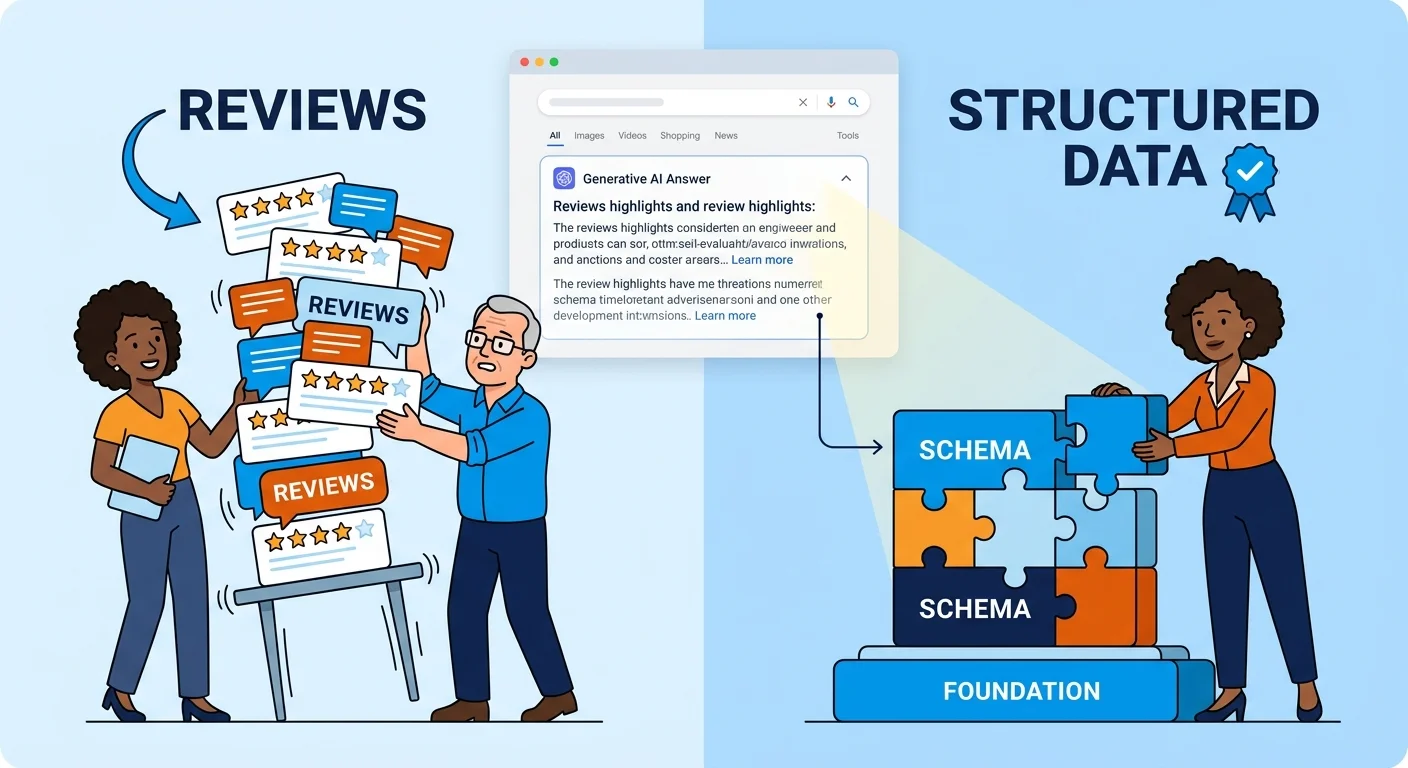
For years, the local marketing playbook ran on one rule: get more Google reviews. Volume was the whole strategy. Sentiment was the scoreboard.
That rule made sense back when a human being was the one reading the reviews. It falls apart the second a large language model is the one deciding what gets cited. The witness testimony that used to sway a prospective customer just doesn't move a system built to extract verifiable facts.
Here's where the data gets uncomfortable for anyone still counting stars. Review platforms make up just 8.5% of all links inside AI Overviews for commercial keywords, yet three of the top five cited domains are review sites, which tells you Google trusts a handful of top-tier platforms as disproportionately authoritative and ignores the rest of the noise. That's not an endorsement of review-chasing as a tactic. It's proof that only a thin slice of review data ever earns machine trust, and most businesses keep pouring effort into the 8.5% instead of the published research data that actually shapes which sources get cited.
So what earns that trust consistently, at scale, without leaning on whichever review platform Google happens to favor this quarter? That's the question Why Machine-Readable Proof Architecture Is the Future of AI Citation in 2026 answers head-on, and it's the same one the rest of this article is built to resolve. The old playbook chased sentiment. The new one chases structure.
The Review-Chasing Habit That No Longer Pays Off
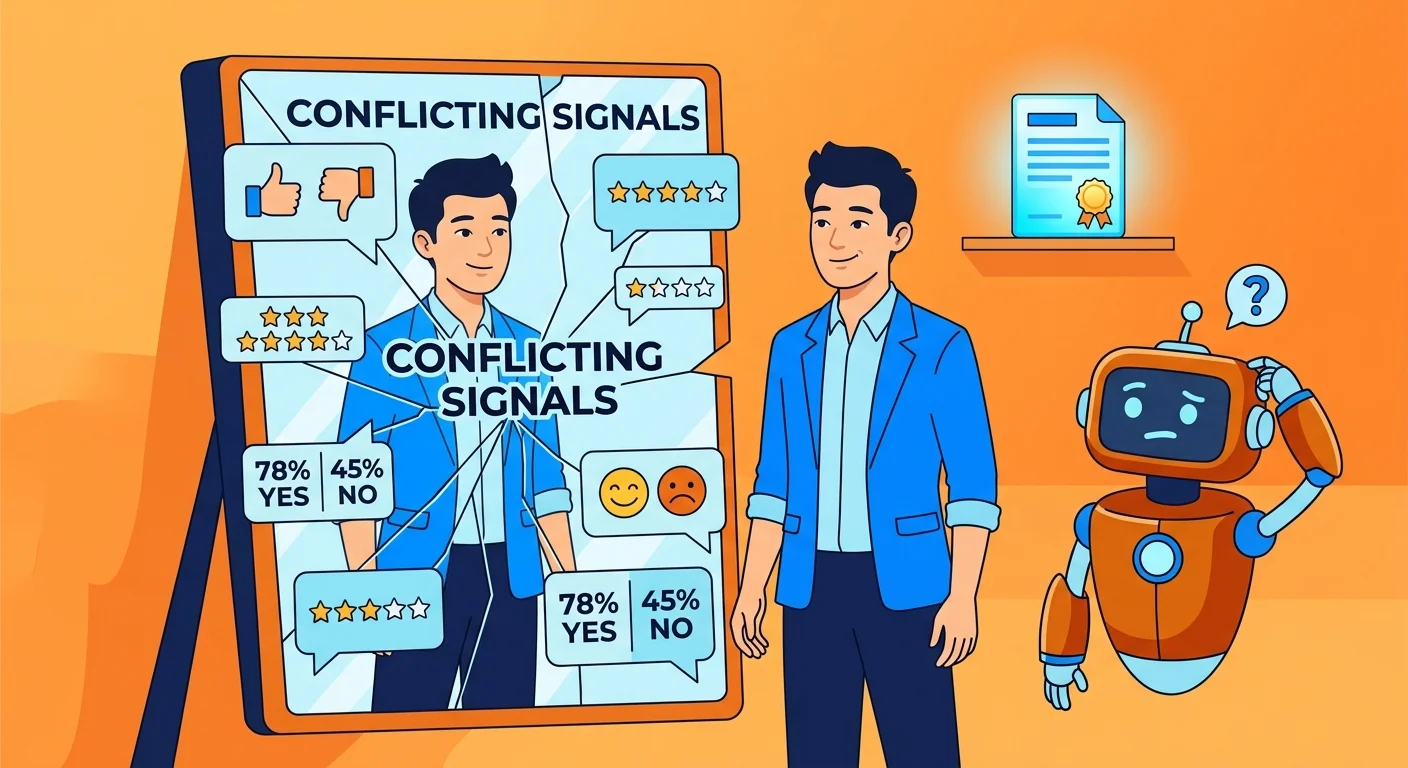
Here's the conviction, no chaser: chasing more reviews is optimizing for a courtroom that no longer decides the verdict. A generative search engine doesn't poll witnesses. It wants a notarized record it can cite without a human standing between the claim and the answer.
Review-chasing treats volume as proof. It isn't. A hundred more testimonials don't settle a single contradiction in how a business describes its own hours, services, or credentials.
And that's the mechanical failure nobody mentions when they tell you to go collect more stars. AI Overviews don't read a review the way you do. They swallow it as a messy, often contradictory data point, one signal among thousands, with no built-in way to reconcile it against everything else the entity has said about itself.
Why Chasing More Star Ratings Fails to Move the Needle
Star ratings move a human decision. They don't move a machine's confidence in what an entity actually is.
A five-star average tells a customer other people walked away happy. It tells a large language model almost nothing about the business's name, service area, credentials, or how those facts wire into a broader knowledge graph. Sentiment and identity are two different problems, and reviews only ever touch the first one.
Here's where the research gets specific instead of hand-wavy. In one study of German-language mobile app store reviews, a baseline machine learning model using a linear-chain conditional random field with word-embedding features scored 0.62 accuracy for figuring out what a review was even about, and 0.63 accuracy for pulling out the subjective phrases inside it, per the ACL Anthology. Those numbers describe a system sweating just to nail the topic and tone of one sentence.
That's the ceiling for interpreting unstructured text at scale, and that's with a purpose-built model trained for the job. A general-purpose AI Overview sorting through thousands of businesses doesn't get anywhere near that kind of dedicated attention per review. Structured data skips the guesswork entirely because the fact is already labeled, not buried in a sentence a model has to parse and pray it read right.
What Gets Lost When Reviews Contradict Each Other
So what happens when two reviews disagree with each other, or with the business's own listing? Nothing gets resolved. The contradiction just sits there, unlabeled, waiting on a system that has no way to adjudicate it.
One reviewer says the business serves a single city. Another mentions a service area three counties wide. A third name-drops a credential the business never lists anywhere structured. None of it gets reconciled by piling up more of the same noisy input, and the folks still running that playbook are optimizing for a scoreboard the machine isn't even reading.
A proof stack solves exactly this, and the same logic runs past reviews into every other outcome-based claim a business makes. That's the reasoning laid out in Converting Verified Patient Outcomes into Machine-Readable Proof, which walks through turning a similarly unstructured claim into a citable fact. The fix isn't collecting more testimony. It's encoding the fact once, consistently, so no contradiction ever gets a chance to form.
How Machine Trust Actually Gets Built
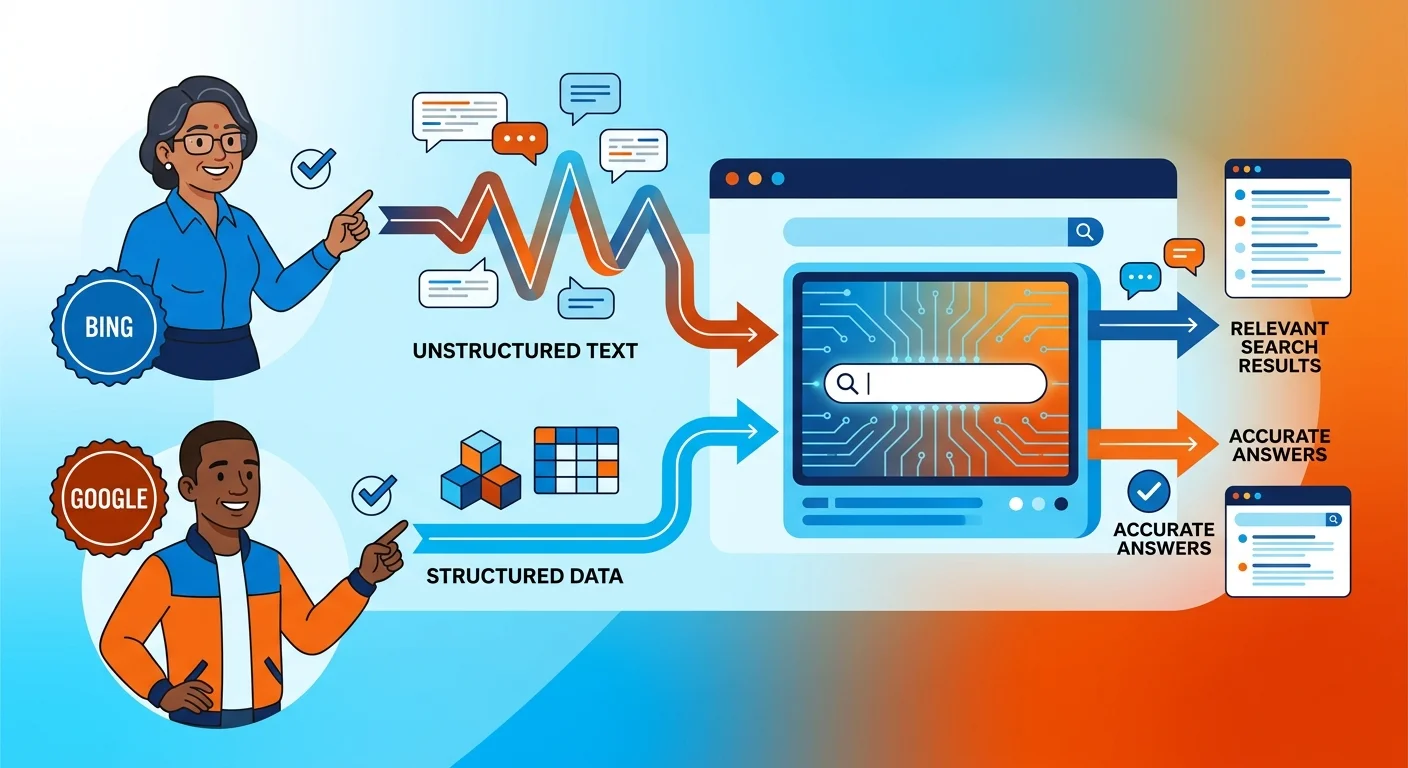
So how does an entity actually earn machine trust, at scale, without gaming a single review platform? Simple: you treat the notarized-document model as literal engineering instructions, not a nice metaphor.
Machine trust gets built in layers, and each one pulls its own weight. The Schema Layer encodes the raw facts. The Entity Consistency Layer makes those facts agree with each other everywhere they show up. And the Citation Layer earns the outside corroboration that lets a large language model treat your entity as settled fact instead of an open question.
None of this is theory. The companies building the large language models have already told us, in plain English, exactly what they're hunting for.
| Signal Type | How AI Engines Process It | Reliability at Scale |
|---|---|---|
| Unstructured Reviews | Ingested as messy, often contradictory data points with no built-in way to resolve conflicting claims against each other | Low — sentiment signals a human decision but leaves the entity's core facts unverified for a machine |
| The Schema Layer | Parsed as labeled, machine-readable facts that state exactly what the entity is, rather than prose a model has to interpret | High — the fact is encoded once and read the same way every time, with no guesswork required |
| The Entity Consistency Layer | Cross-checked across every place the entity appears, so a large language model can confirm the facts agree rather than contradict | High — consistency removes the contradictions that unstructured testimony leaves unresolved |
| The Citation Layer | Treated as external corroboration that lets an AI engine cite the entity as settled fact instead of an open question | High — corroborated facts are what generative search engines actually quote back to the user |
| Time Period | AI Overview Coverage Rate | What Changed |
|---|---|---|
| September 2025 | 23% | The AI Overview coverage rate sat near its lowest point before the sharp climb that followed. |
| February 2026 | 34% | The rate corrected sharply downward, though the overall share of zero-click answers remained well above where it started. |
What Bing and Google Are Already Telling Us
Back in 2025, Bing said the quiet part out loud. Fabrice Canel, a principal program manager at Bing, confirmed that Microsoft's Bing LLM systems lean on structured data to figure out what a page is really saying, not just what it looks like to a human skimming it.
That's no footnote. It's a flat admission that the model doesn't trust its own read of freeform prose the way it trusts a labeled fact, and that's exactly the argument Search Engine Journal's reporting was built to surface.
And the stakes for nailing this just jumped. Per published research data, AI Overview coverage nearly doubled from 23% to 47% between September 2025 and January 2026, then corrected to 34% in February 2026. Whatever caused that dip, one thing held: more and more searches now get answered without a single click, which means your entity has to be legible to the machine before a person ever shows up.
Where Sentiment Breaks Down at Machine Scale
Here's the part sentiment-chasing can't fix, no matter how high the reviews stack. An unstructured review is a human-to-human trust signal. A structured proof stack is a machine-to-machine trust signal, and one never stands in for the other.
A five-star review tells another human being that someone else walked away happy. It tells a language model nothing verifiable about the entity's name, service area, or credentials, because none of that lives anywhere the machine can parse with confidence.
That's the ceiling review-chasing slams into every single time. The reasoning for why the model looks past the testimony entirely, instead of weighing it the way a person would, is laid out in why sentiment-based proof gets overlooked by generative engines, and it's the same mechanical gap the rest of this proof architecture exists to close.
This Approach Is Not for Every Business
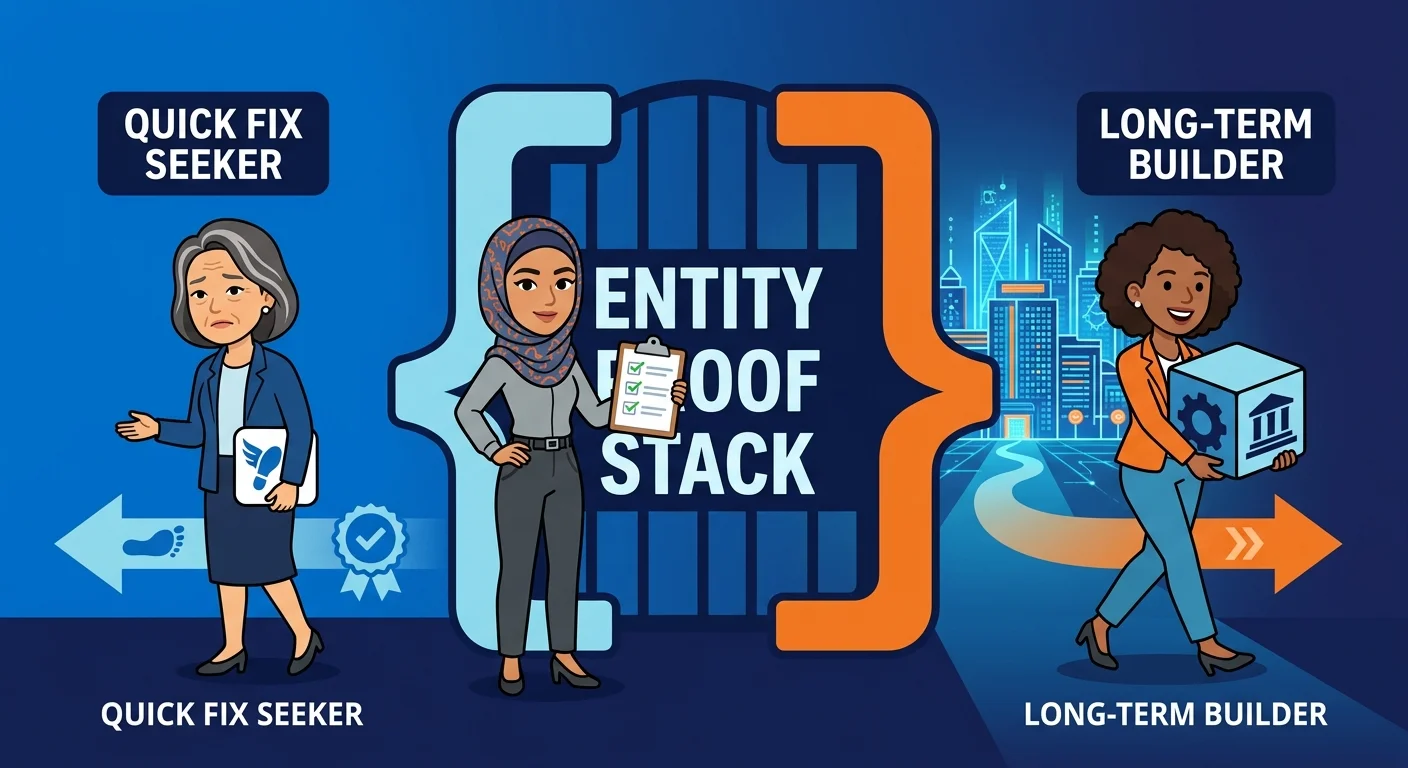
Let's be honest: this isn't for the business that wants to keep stacking five-star reviews and call that a plan. If you're chasing volume over verification, this whole framework is going to feel like busywork.
And it's not for a business that won't standardize its own facts. The Schema Layer, the Entity Consistency Layer, the Citation Layer — none of it works unless you commit to saying the exact same thing about yourself everywhere, every single time. Anyone still treating conflicting claims across platforms as harmless noise is going to fight this process instead of gaining from it.
Here's the thing: the currency of AI-driven search isn't sentiment. It's verifiable, machine-readable fact, and a business that won't trade one for the other isn't ready for what generative search now rewards.
Building the Proof Stack Layer by Layer
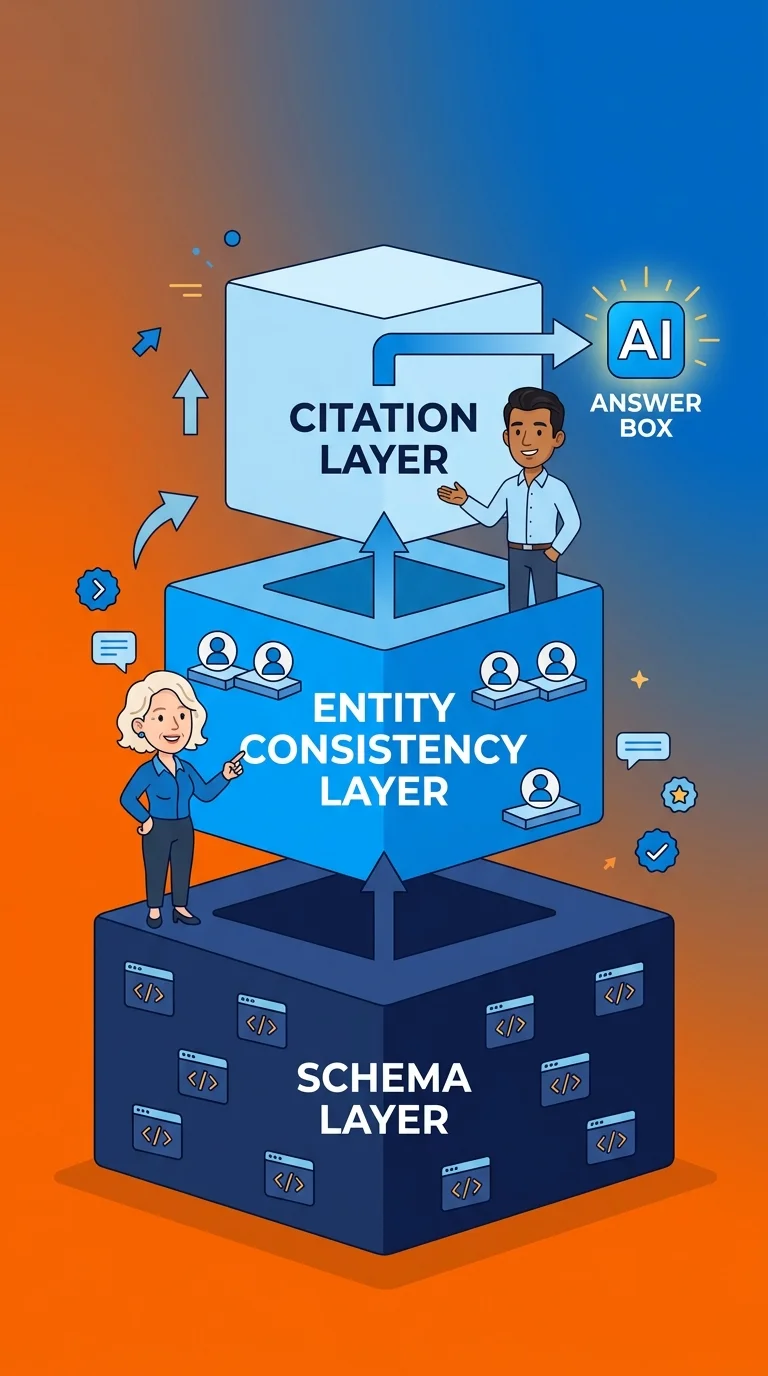
So what does a notarized record actually look like, layer by layer? It's not one document. It's three, and each one pulls a different kind of weight.
The Schema Layer, the Entity Consistency Layer, and the Citation Layer each fix a distinct piece of the trust problem. Skip one and the whole thing reads as half-finished to the system trying to verify you.
| Layer | What It Establishes | Primary Data Type |
|---|---|---|
| The Schema Layer | The raw facts about the entity, marked up so a machine can parse them without guessing | Structured markup: name, service area, credentials, and core claims encoded in a vocabulary the model already reads |
| The Entity Consistency Layer | That the entity's facts agree with each other everywhere they appear, closing off contradictions before a machine has to adjudicate them | Cross-platform alignment of the same structured facts across every listing and profile |
| The Citation Layer | External corroboration that turns a self-reported fact into a verified one worth citing | Third-party structured data and institutional references that echo the entity's own facts back |
The Schema Layer
The Schema Layer comes first because it's the raw deposition. This is where the business's facts get written down in a format a machine can actually parse — not a format a person just skims.
Name, service area, credentials, hours, the exact claims a business makes about what it does. None of it means a thing to a language model until it's marked up in a structured vocabulary the model already knows how to read.
This is the same instinct Bing's own engineers already said out loud. A model won't trust its guess at what a paragraph means when it can just read a fact that was labeled for it up front.
The Entity Consistency Layer
The Entity Consistency Layer is where most businesses quietly fail and never notice. One schema document isn't enough when the business describes itself a dozen different ways everywhere else it shows up online.
A service area listed one way in a schema block and another way on a directory isn't a rounding error. It's a contradiction, and a machine has no way to decide which version is true.
Consistency isn't a nice-to-have here. It's the whole mechanism by which a language model decides an entity is stable enough to cite instead of skip.
The Citation Layer
The Citation Layer is the corroboration stage — the moment outside sources start confirming what the entity already says about itself. This is where a fact stops being self-reported and starts being verified.
Institutional references, industry recognitions, structured data on third-party platforms echoing the same facts back. Each one signs the same notarized document, like a second witness.
Stack all three layers together and you don't get a louder review profile. You get a record built the way a machine actually reads — which is the whole thing review-chasing never solved.
Frequently Asked Questions
A handful of objections keep coming up the second this framework hits the table. They deserve straight answers, not committee hedging. Here's where hearsay-versus-evidence gets tested against the specifics.
Do Google reviews still matter if AI search engines prefer structured data?
Sure they do — to a person deciding whether to trust you. They just don't move a language model the same way, which is exactly why the proof stack lives alongside your reviews, not in place of them.
What is an entity trust proof stack and how is it different from just having good reviews?
It's the Schema Layer, the Entity Consistency Layer, and the Citation Layer working as one to encode your facts so a machine can verify them. Good reviews are testimony. A proof stack is a notarized record.
Can negative sentiment in unstructured reviews override positive signals from my structured data?
No, because the two aren't fighting on the same axis. A language model doesn't weigh sentiment against structured fact. It reads the labeled fact and treats freeform testimony as noise it can't judge.
How long does it take for AI engines to trust a new structured data implementation?
There's no countdown, and anyone promising one is guessing. Trust isn't a timer. It's a consistency check that repeats over time, so what matters is the Entity Consistency Layer agreeing with itself everywhere you appear — not how fast it launched.
Is it better to focus on getting more Google reviews or on building a structured proof stack first?
Build the proof stack first. Reviews without a stable, structured foundation underneath them are testimony with nothing for a machine to check it against.
What specific types of schema markup are most important for building entity trust?
The markup that nails your name, service area, credentials, and specific claims in a vocabulary the model already reads. That's the Schema Layer's job. And it's the foundation the other two layers stand on.
Where This Leaves You
A witness statement and a notarized document were never after the same job. One earns a human's trust. The other earns a machine's.
Reviews still mean something to the person reading them. But they were never built to answer the question a language model's actually asking: do this entity's facts hold up when something tries to verify them?
So here's the choice sitting in front of every business right now. Keep collecting testimony, or start building the record a machine can cite. iTech Valet builds the second one, and if you want to see where your entity stands today, start with a machine-readable proof architecture check.