
Why Keyword-Stuffed Copy Leaves AI Engines Guessing at Your Business
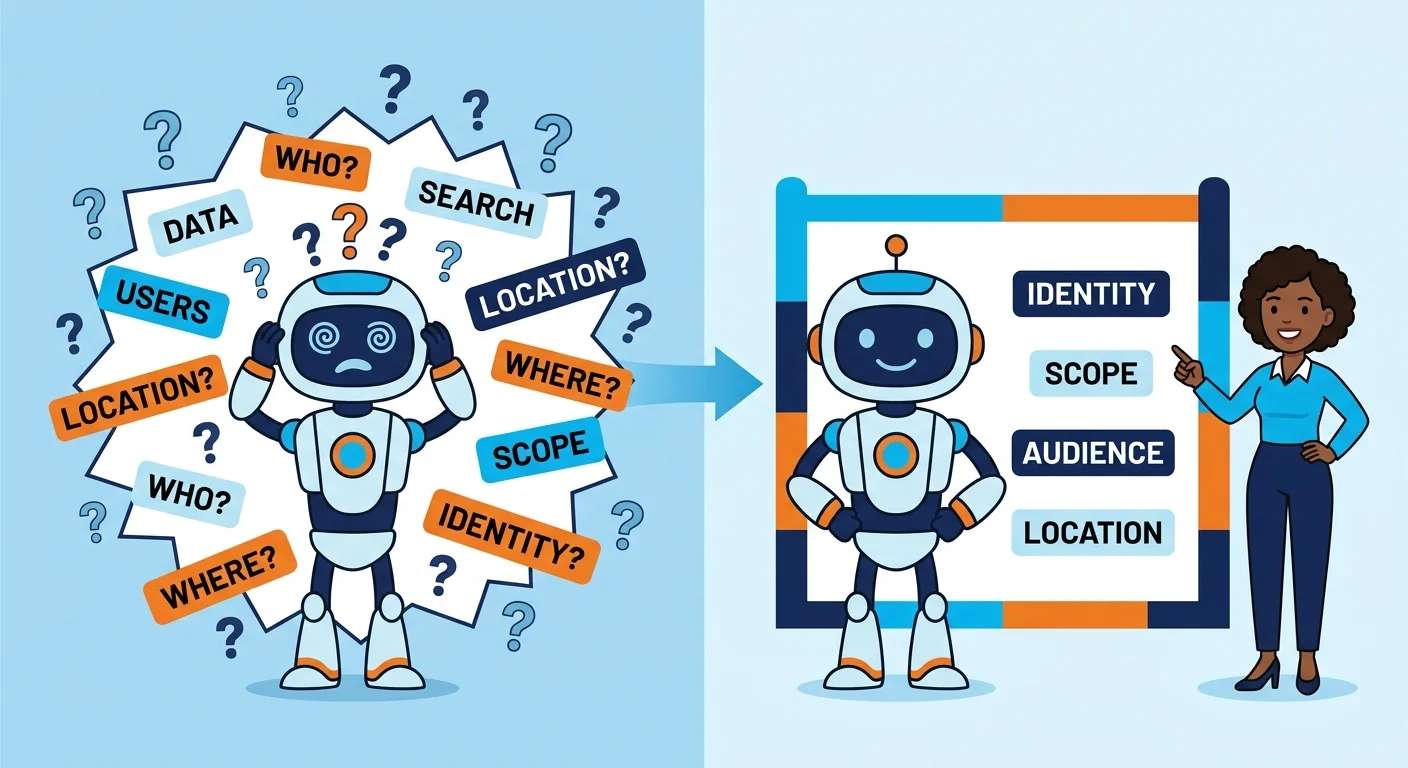
Here's the broken assumption most local content still runs on: pack in more keyword-dense copy and you'll signal authority. You won't. Keyword density says nothing about what a business actually is, does, or serves, and an AI answer engine can't turn a repeated phrase into a boundary it trusts.
So the old playbook of stacking keywords and citations was built for a different scoreboard. Practiced the conventional way, traditional search optimization piles up those signals instead of drawing hard lines around what a service actually covers. That can build recognition. It can't tell a machine classifier where a business starts and stops.
And the cost of that gap just got sharper. In the first four months of 2026, SparkToro's clickstream study found that 68.01% of Google searches ended without a click. That means more and more queries get answered right inside the results, with no visit to a site at all — which makes it urgent that whatever an AI engine does read is precise enough to quote with confidence.
Look at what that shift really demands. If the engine is answering for the reader, the content behind that answer already has to carry the boundary lines the engine needs. There's no follow-up click where a vague page gets to clean itself up.
That's exactly the gap standalone AEO content boundaries are built to close. Keyword-stuffed copy leaves an AI engine guessing at category, scope, audience, and geography all at once. A page built on the four boundary lines kills the guesswork — and guesswork is what keeps a business out of the answer set it should be winning.
The Problem With Writing for Keywords Instead of Machine-Readable Scope
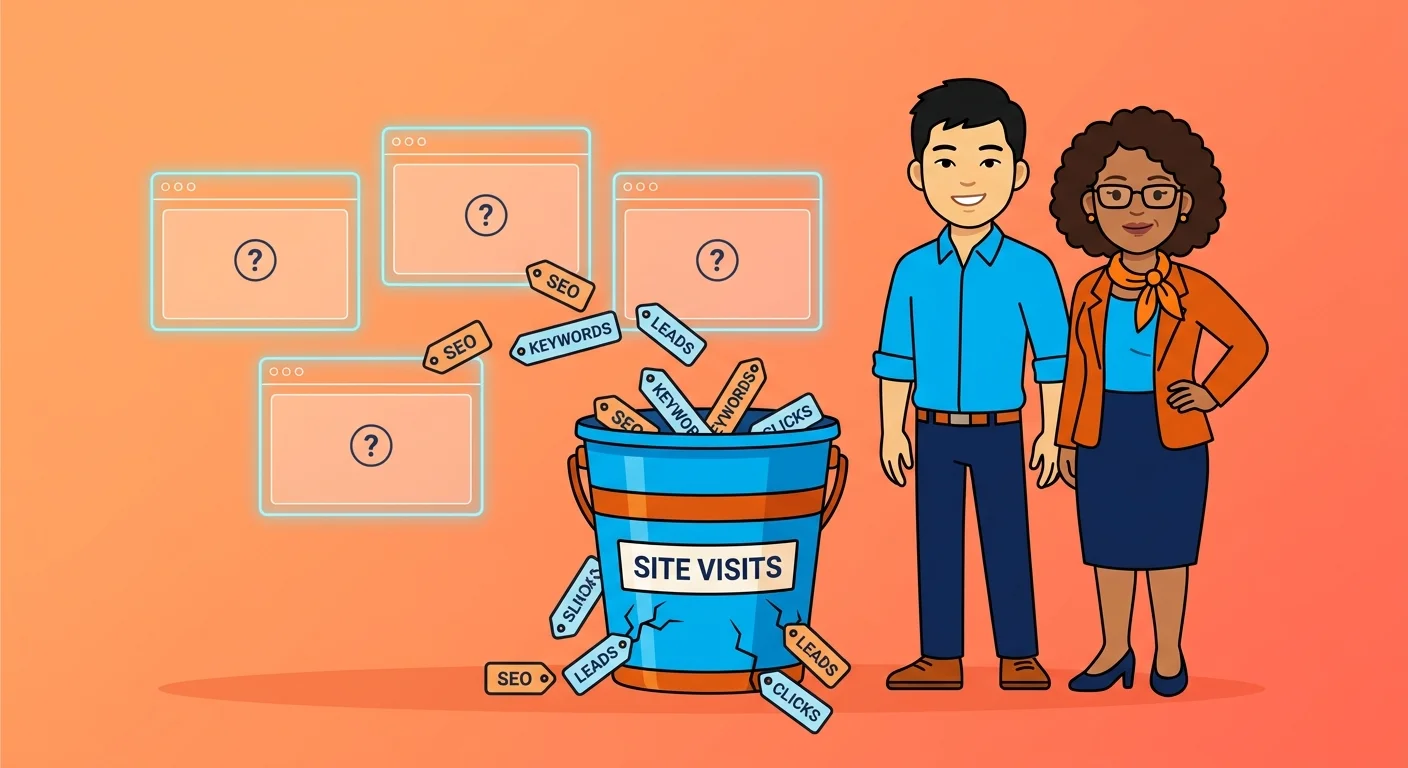
Keyword-first copywriting was never built to answer the question an AI engine is actually asking. It was built for a different one: does this page contain the phrase a human typed into the box?
And that mismatch is the whole problem. A phrase repeated across a page tells a machine classifier nothing about category, scope, audience, or geography. It just proves the phrase exists.
So the failure isn't stylistic. It's structural. Phrase-matching copy has no mechanism for stating What You Are, What You Do, Who You Serve, or Where You Operate — the four lines an AI engine needs are simply absent from the design.
That's exactly why why standard copywriting fails to register at all with these systems deserves its own diagnosis. The failure starts upstream, in the writing approach itself, long before any boundary line ever gets drawn.
How Keyword-First Copy Fails to Draw a Boundary
Here's how it plays out on the page. A keyword-dense paragraph about some service category will repeat that category term five or six times without ever stating the boundary around it.
It never says what falls outside that category. It never names the customer the service is built for. And it rarely fixes a firm geographic edge — it just orbits the keyword, hoping proximity implies meaning.
So an AI engine reading that page has to infer scope from repetition instead of reading it off a stated line. Inference is guesswork. And guesswork is exactly what a fenced, deeded boundary is built to remove.
What This Costs a Local Business in AI Referrals
That guesswork carries a direct cost, and it shows up in how trust gets assigned. Google's automated ranking systems weigh a mix of signals to judge whether content shows real experience, expertise, authoritativeness, and trustworthiness — and per Google's documentation, trust is the most important factor of all.
Keyword-dense copy does nothing to earn that trust. It repeats a term instead of proving the business genuinely occupies the category, service, audience, and geography it claims.
And that's the referral a local business loses. Not a click that never happened, but a mention an AI engine never made — because the page handed it a phrase to match instead of a boundary it could point to with confidence.
The Four Boundary Lines Every Local Service Business Must Define
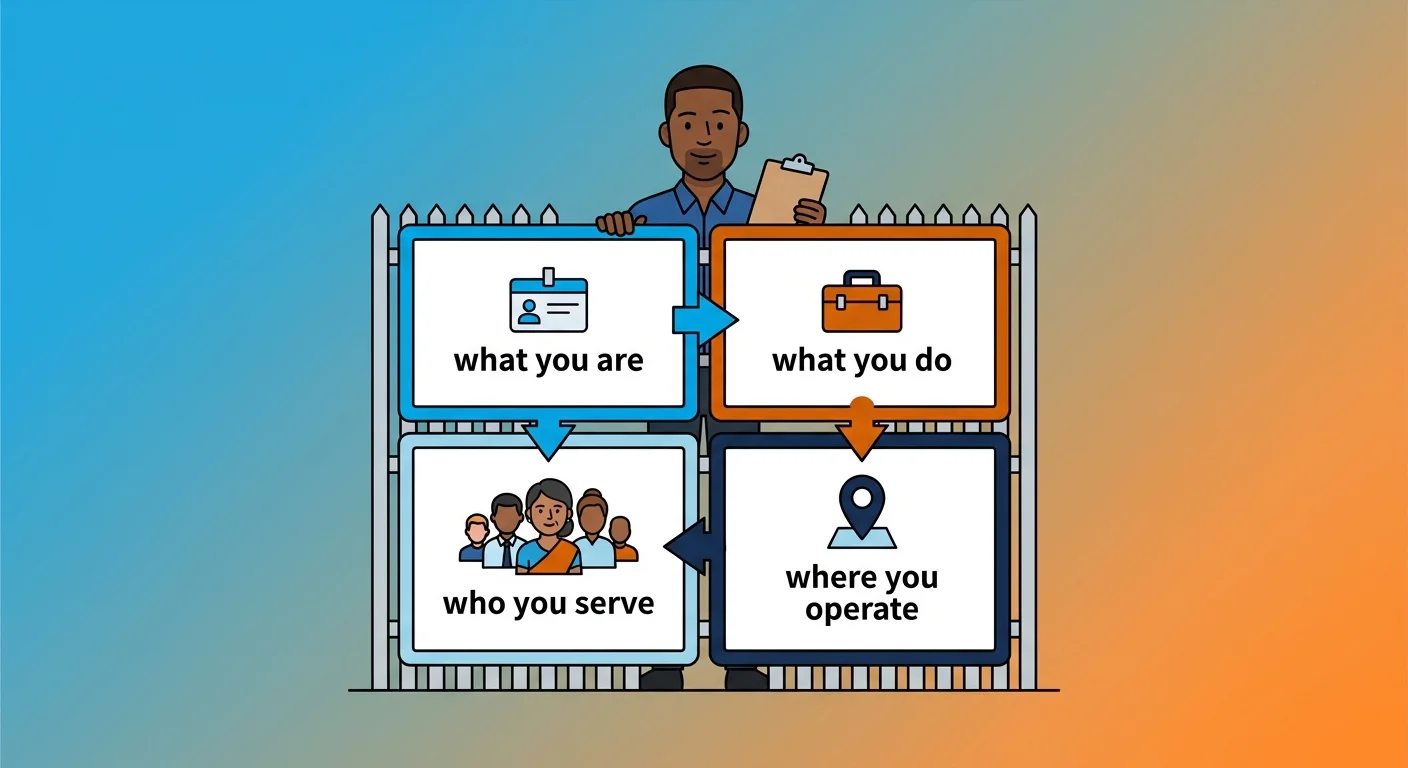
So what does a defined entity boundary actually hold? In AI-driven search, it's the clear, machine-readable perimeter that says exactly what a local business is, what it does, who it serves, and where it operates.
And that perimeter isn't one sentence. It's four separate lines, each settling one question an AI engine needs answered before it'll trust the page enough to quote it.
Here's the distinction worth holding onto: mapping your entity boundaries is less about conventional copywriting and more about drafting a structured, unambiguous blueprint of your business's operational reality. A blueprint has fixed lines. A marketing narrative doesn't.
| Boundary Line | Question It Answers | Where It Shows Up in Content | Risk if Left Undefined |
|---|---|---|---|
| What You Are | What category classification does this business belong to, stated in exact terms rather than approximate ones? | Category statements near the top of a page, entity descriptions, and any line that names the business type without hedging or vague framing. | An AI engine cannot confirm which classification the business belongs to, so it either omits the page from the answer set or pairs it with the wrong category entirely. |
| What You Do | What service scope is included, and just as importantly, what falls outside that scope? | Service description sections and any passage that names both what the business handles and what it explicitly does not. | The engine has no exclusion signal to check against, so it starts pairing the content with queries that sit outside the actual service scope. |
| Who You Serve | Who is the ideal customer this business is built to serve, as opposed to who it is theoretically willing to accept? | Audience-defining passages, ideal customer descriptions, and any language that draws a line around who the service is designed for. | Without an audience signal, the engine matches the content to whichever query looks closest on the surface, producing low-quality referrals that never should have been paired. |
| Where You Operate | What is the concrete geographic radius or coverage area, stated plainly rather than implied through a single mention? | Geographic scope statements, service area descriptions, and any passage that fixes a hard edge rather than gesturing at a location. | The engine has no geographic edge to verify a query against, so it either guesses at coverage or excludes the business from location-specific answers altogether. |
What You Are
What You Are is the category line. It has to be exact, not approximate.
A vague category invites an AI engine to guess which classification a business belongs to, and a guess is not a boundary. State the category in precise terms and you close that gap before it opens.
This is the fence post everything else gets nailed to. Get What You Are fuzzy, and the other three lines inherit that fuzziness no matter how sharp they are on their own.
What You Do
What You Do is the service scope line. And scope only works when it names both sides of the fence.
That means stating what falls inside the offering and stating, just as plainly, what falls outside it. An AI engine can't infer exclusion from silence.
Businesses that skip the exclusion half of this line are the ones showing up in the wrong answer sets. The engine was never told where the service stopped, so it stopped guessing correctly.
Who You Serve
Who You Serve is the ideal customer line. It kills any ambiguity about audience fit.
This line names who the business is built to serve, not who it's theoretically willing to accept. Those are different statements, and only one works as a boundary.
Look at what happens without it. An AI engine matching a query has no audience signal to check against, so it pairs your content with whatever query looks closest on the surface. That's exactly the low-quality referral this whole approach exists to prevent, a risk explored further in how standalone content stacks up against full-scale authority rebuilds this year.
Where You Operate
Where You Operate is the geographic line. It has to be concrete, not implied.
A concrete radius or coverage area hands an AI engine a hard edge to check a query against. An implied one, gestured at through a city name dropped once, gives it nothing to verify.
Four lines. One perimeter. Draw all four with the same precision, and the fence around the property finally has a deed attached to it.
Turning Boundary Lines Into Machine-Readable Signals
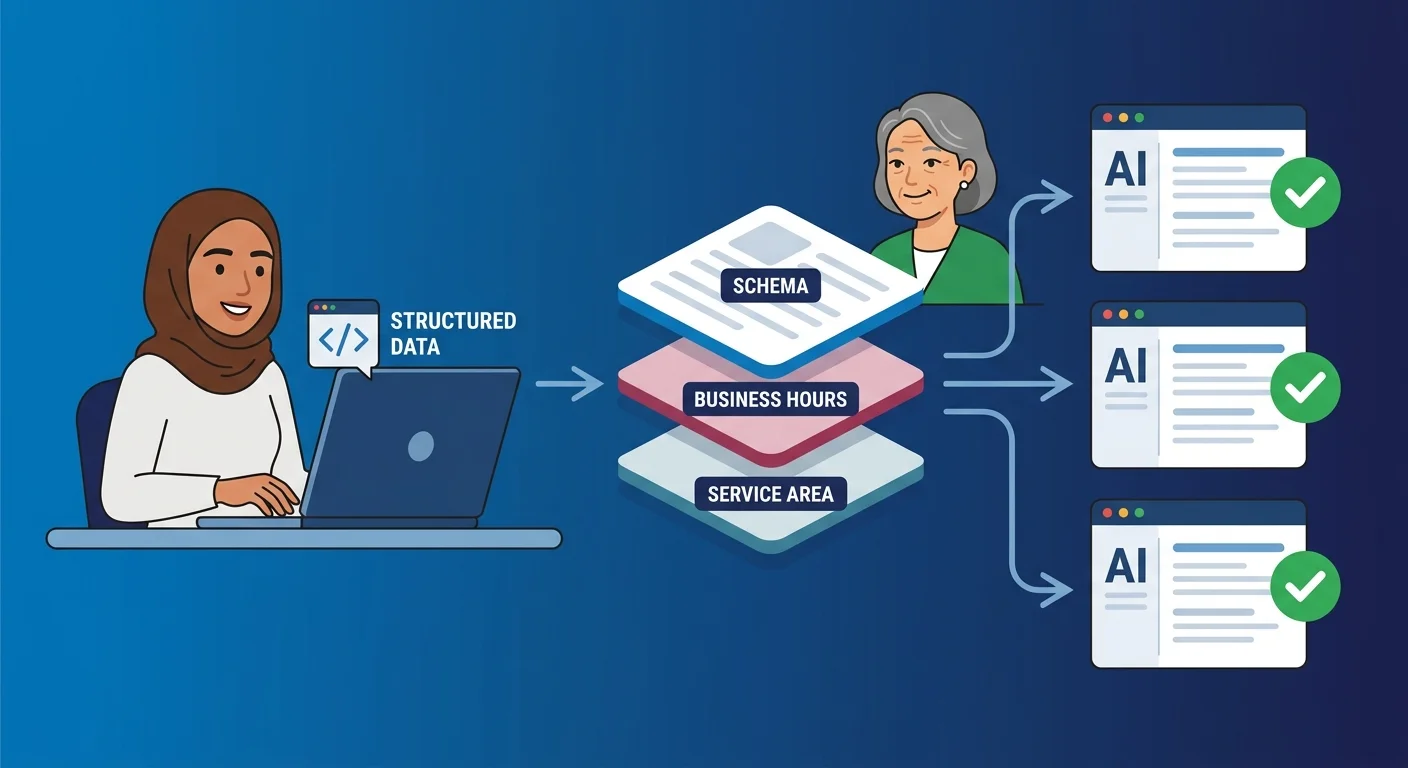
Defining the four lines conceptually is only half the job. Here's the part most standalone content skips entirely: those lines have to be encoded in a form a machine can parse without reading tone or inferring intent.
So the fence gets built in two places at once. Structured data carries the boundary in a format built for machines. Prose and third-party proof carry it in a format built for trust.
And neither one covers for the other. A page can state its four lines in flawless prose and still leave an engine guessing when the structured layer underneath is missing or thin.
| Signal Type | What It Communicates | Primary Mechanism |
|---|---|---|
| Structured Data Fields | What You Are and What You Do, stated in a format a crawler reads directly rather than infers | LocalBusiness schema markup covering category, service attributes, hours, and booking or reservation capabilities |
| Geographic Markup | Where You Operate, fixed as a concrete coverage line rather than a city name mentioned once in passing | Area served fields and location data attached to the same schema layer that carries category and service scope |
| Prose and Page Copy | What You Are, What You Do, and Who You Serve, framed for a human reader who needs context and trust before the boundary registers | Body content built around the four lines instead of a repeated keyword phrase |
| Third-Party Proof | Confirmation or contradiction of every line the business has already stated for itself | Reviews, photos, and citation data that either match the fenced boundary or expose it as inaccurate |
Where Structured Data Carries the Boundary
LocalBusiness schema is the clearest way to state What You Are and What You Do in a form a crawler reads straight off the page instead of inferring. With that markup, a business can tell Google's documentation about its hours, its departments, and its booking capabilities, plus review data wherever the site captures it.
That's not decoration sitting next to the content. It's the same four-line boundary, restated in a syntax built for parsing instead of reading.
Category fields answer What You Are. Service attributes answer What You Do. Area served fields answer Where You Operate — and each one closes a gap that prose alone leaves open to interpretation.
Here's what makes this urgent rather than optional: an AI engine pulling from structured fields has zero patience for ambiguity, because the field either holds the value or it doesn't. There's no partial credit for a category that's close enough, which is exactly why the boundary has to live in the markup and not just in the copy above it.
Where Prose and Proof Carry the Boundary
Structured data proves the boundary to a machine. Prose and third-party signals prove it to everyone else reading around the edges — including the engine cross-checking one against the other.
This is where the fence gets tested against outside evidence. When the details are wrong, the cost isn't abstract: Moz's research found that 52% of people will leave a negative review after finding false or incorrect information on assets like local business listings. That's a real customer punishing a broken boundary, not a hypothetical one.
Reviews, photos, and citation data all either confirm the fence line or contradict it. A deeper walk through that comparison, including how commodity content packages compare against engineering content around a defined structural spine, shows why the structured and the proven have to match exactly rather than approximately.
This Isn't for Businesses Chasing Every Possible Search Term
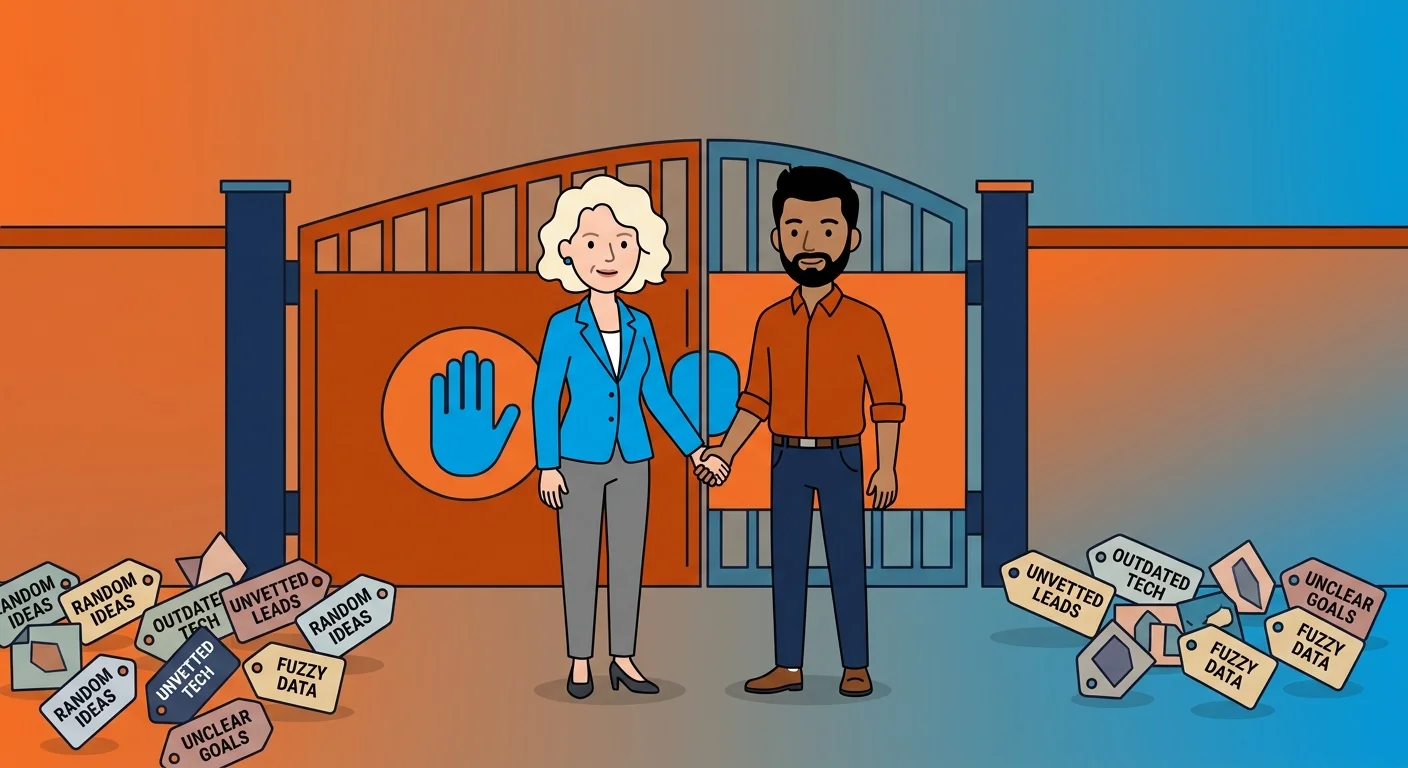
Look, this section's a filter, not an insult. If the goal is to show up for every search term a human might ever type, this approach was never built to do that — and it isn't pretending to.
So this isn't for businesses chasing every possible search term, or stretching their four lines wide enough to catch a little of everything. A boundary drawn to please every query isn't a boundary. It's the open field this whole structure exists to fence in.
Here's the mechanism behind that refusal. Without clear boundaries, AI engines are forced to guess — and that guesswork breeds low-quality referrals and a spot in answer sets that were never yours. Widen What You Are, What You Do, Who You Serve, and Where You Operate to chase volume, and you hand the engine that guesswork right back, plus every mismatched referral it spits out.
Proving the Boundary Holds Under Scrutiny
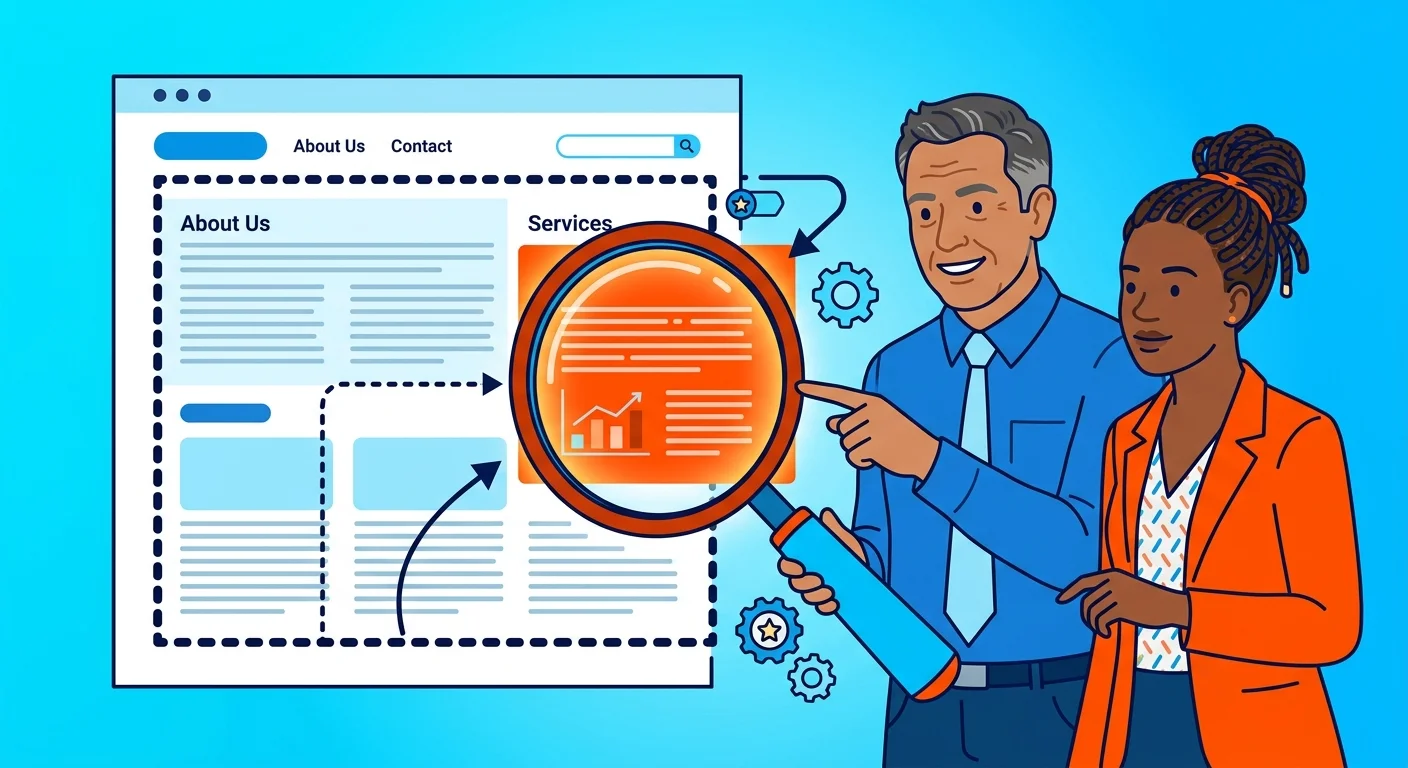
A fence line isn't a one-time survey. Boundaries drift the moment new pages, new services, or new hires start writing without checking the four lines already staked out.
So this part is about maintenance, not discovery. The work now is catching the sentence that quietly widens What You Do, or the paragraph that never mentions Where You Operate at all.
| Audit Step | What to Check | Signal of Drift |
|---|---|---|
| What You Are Check | Read the category classification stated on every page touching this service | Two pages describe the business using different or broader category language |
| What You Do Check | Confirm the service scope line still names what falls outside the offering, not just what falls inside it | A page lists a service the business does not actually perform, or drops the exclusion language entirely |
| Who You Serve Check | Compare the ideal customer profile line across every page against the original four-line map | One page describes a wider or different audience than the rest of the site claims to serve |
| Where You Operate Check | Verify the geographic line still names a concrete coverage area rather than an implied one | A city or region gets mentioned once with no coverage boundary attached to it |
| Structured Data Cross-Check | Match the LocalBusiness schema fields against the prose stating What You Are and What You Do | The markup and the visible copy describe the service or category in conflicting terms |
Auditing Your Existing Content Against Boundary Drift
Start by pulling every page that touches the service and reading it against the four lines, one at a time. Not for tone. Only for whether each line is still stated, still exact, and still matching what the other pages claim.
Look for the page that quietly stretches What You Do to cover a service the business doesn't actually offer, usually because a writer wanted to sound comprehensive. To an AI engine, that stretch doesn't read as ambition. It reads as a contradiction against every other page stating the narrower scope.
Watch Who You Serve just as closely. A single page describing a broader audience than the rest of the site trains the engine to treat the exception as the rule, and the rule as the exception.
Here's the payoff for doing this right. Every page that matches the fence line reinforces the property's deed instead of blurring its edges. That consistency is what turns a boundary from a claim into something an engine can actually verify.
Frequently Asked Questions
Here's where the four lines meet the edge cases every business eventually hits. These are the questions that surface once someone tries to draw their own fence instead of just reading about it.
How does defining an entity boundary differ from choosing a service area in Google Business Profile?
A service area setting just tells one platform where to show your listing. An entity boundary goes wider: it's the full set of category, scope, audience, and geography lines you state everywhere, in prose and in structured data alike.
Can a service business have multiple entity boundaries for different services?
Yes, but each service needs its own What You Do and Who You Serve lines, not one blended statement. Smear several services into a single boundary and you've recreated the exact guesswork this whole approach exists to kill.
What's the biggest mistake businesses make when writing content that's supposed to define their service entity?
Writing to sound comprehensive instead of exact. A page that hedges What You Do wide enough to cover every adjacent service isn't drawing a boundary. It's erasing one.
If my business name is too specific, does that permanently limit my entity boundary?
No. What You Are is a classification, not a life sentence, and you can restate and re-scope it as the business genuinely grows. The mistake is widening the claim before the reality behind it has actually changed.
How do customer reviews and photos affect the entity boundaries Google understands for my business?
They confirm or contradict the fence line from outside your own copy. A review or photo that matches your stated scope reinforces the boundary. One that contradicts it teaches the engine not to trust the deed.
Does my About Us page content influence how AI engines map my company's entity boundaries?
Yes, heavily. An About page is often the most direct statement of What You Are and Who You Serve on the whole site. So vague or aspirational language there weakens every other page's boundary by association.
Where This Leaves You
So here's where this leaves you. From a distance, an open field and a fenced, deeded property look the same, but only one gives an AI engine something it can point to with confidence. Keyword-centric copy builds the field; entity boundary mapping builds the deed.
Four lines drawn with precision beat forty pages hedged wide enough to catch every possible query. That's the whole thesis, said plain: What You Are, What You Do, Who You Serve, and Where You Operate — stated in prose, encoded in structured data — are what let an answer engine quote a business instead of guessing at it. Keep widening those four lines to chase volume, and you're choosing the open field on purpose.
Look, the fence doesn't build itself, and no engine's going to draw it for you. If you're ready to find out where your own four lines are blurred, thin, or missing entirely, start with an AI visibility check.