
Why Your Best Reviews Are Invisible to the Machines Reading Them
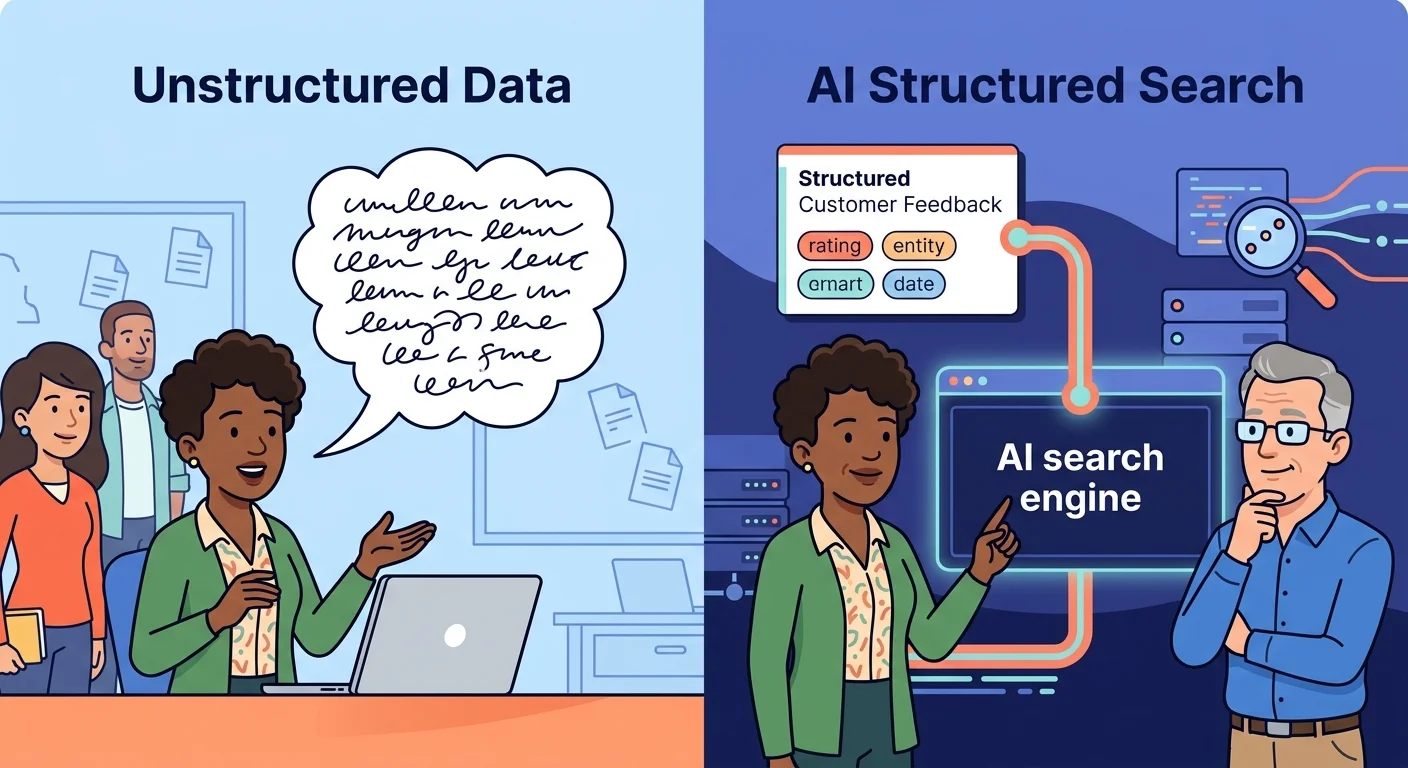
Here's the mismatch nobody says out loud. The testimonial format was built for human trust: warm words, a feeling, a story that hits you in the gut. And a machine can't check a feeling.
So the same review that closes a sale in a human reader's mind closes nothing in a generative model's. The arrival of generative AI search has fundamentally shifted the audience for your website's data. You are no longer writing just for people; you are writing for machines that need to verify, not just read.
That flip is the whole story. A traditional testimonial is just unstructured text, a story. To an AI, that's an unverifiable narrative with no explicit, machine-readable claims about the experience.
Look, this isn't a writing problem. Better adjectives don't fix a format the machine can't confirm. Before you touch another testimonial page, get why why Machine-Readable Proof Architecture is the future of AI citation.
What Changed When Search Stopped Being Just a List of Links
For years, search meant a list of links, and traditional search optimization was a game of matching words to queries. A human clicked, read, and decided for themselves what to trust.
That model is gone. Now the AI reads for the user, and it only repeats what it can confirm. No click-through, no persuasion, just parse, check, cite or ignore.
The Difference Between a Story and a Verifiable Claim
A story asks to be believed. A verifiable claim asks to be checked, and passes.
That difference is everything now. A testimonial says the service was excellent. A structured claim states who said it, about what entity, with what rating, on what date, and lets the machine confirm every piece before it repeats a single word.
The Old Playbook: Why Polished Prose Testimonials Get Skipped

For decades, landing a glowing paragraph was the whole job. You collected text testimonials as your cornerstone of social proof, slapped them on a page, and called the trust-building done.
And that made sense back when the only reader was a person scrolling a page, deciding by feel whether to call or click away.
But the reader changed, and the playbook didn't. A paragraph built to earn a feeling was never built to survive a verification check — and that gap is exactly where the old way quietly stopped working.
Why Collecting Text Reviews Stopped Being Enough
Here's the thing: more reviews was never the actual goal. Trust was the goal. Text was just the vehicle you had at the time.
So businesses kept polishing the vehicle. Warmer language, longer quotes, a few extra stars — all of it aimed at a human skimming for reassurance.
None of that touches the real problem. A generative engine doesn't skim for reassurance. It checks for confirmable facts, and a pretty paragraph hands it none.
The Verification Problem Hiding Inside Every Narrative Review
Every narrative review hides the same flaw, no matter how well it reads. It's a claim with no attached proof of who made it, about what, or when.
That's the story-shaped hole a machine can't fill. A traditional testimonial is text without structure — a claim an AI has no way to confirm, tie to an entity, or repeat with confidence.
Now compare that to a review built as a verifiable data point instead of a paragraph. The gap between unstructured praise sitting on a page and a structured trust record an AI can actually check is the entire difference between getting skipped and getting cited. Look, a business that keeps collecting only prose is stacking claims a machine will never trust enough to use.
How Entities, Not Stories, Earn a Citation
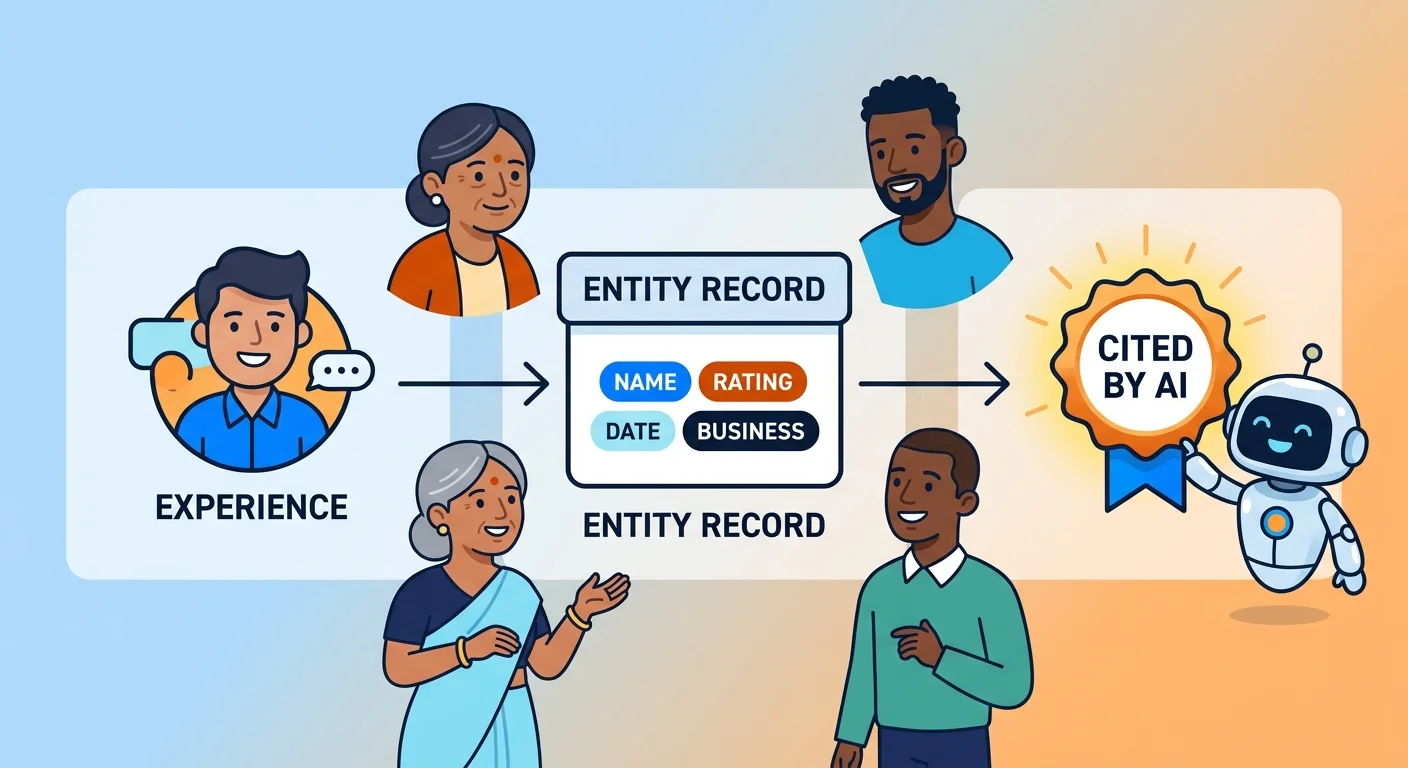
Here's the reaction first: an AI engine isn't reading your page. It's hunting for one specific thing to point to, and that thing is an entity, not a paragraph.
An entity is a nameable thing a machine can pin facts to: a business, a person, a product, a specific transaction. A story doesn't qualify, but a named, structured claim does.
So the question stops being what did the customer say. It becomes what can be confirmed about who said it, to whom, and when. That reframe is the whole architecture.
| Proof Format | What the Machine Reads | Verifiable by AI |
|---|---|---|
| Unstructured text testimonial | A block of prose with no tagged fields | No — the claim, the reviewer, and the entity are never explicitly connected |
| Star rating with no schema | A number floating near a page section | No — the machine cannot confirm which entity the rating belongs to |
| Structured review entity (schema markup) | Tagged fields for reviewer, entity, rating, and date | Yes — each field is a discrete, checkable claim tied to a known entity |
| Aggregated entity data across multiple documents | Repeated confirmations of the same entity across sources | Yes — cross-document agreement lets the machine treat the claim as confirmed rather than merely stated |
What an Entity Is and Why AI Systems Look for One
Web search has already gone this direction at the infrastructure level. Entity search spots matching entities by context patterns pulled from each document, then aggregates those signals across the whole collection to rank them. That's a real break from older retrieval, which just handed back whole pages.
And that distinction matters more than it sounds. Older retrieval found pages; entity search finds the fine-grained facts buried inside them, checked against everything the system already knows about that same entity, a mechanic laid out in published research data on how entity search parts ways with page retrieval.
Why Structured Proof Cuts Down on AI Guesswork
Guesswork is the real cost of unstructured proof, and it's a pricey one. Every time a model can't confirm a claim, it either drops it or gambles on repeating something unverified.
AI engines favor data that's structured, verifiable, and tied to a known entity, precisely because that structure cuts the risk of hallucinating or serving up something wrong. That's the mechanical reason a business eyeing a regulated field like healthcare should study structuring clinical outcome claims into schema an AI model can verify instead of treating it as a copywriting exercise.
Reading the Data Like a Machine Does
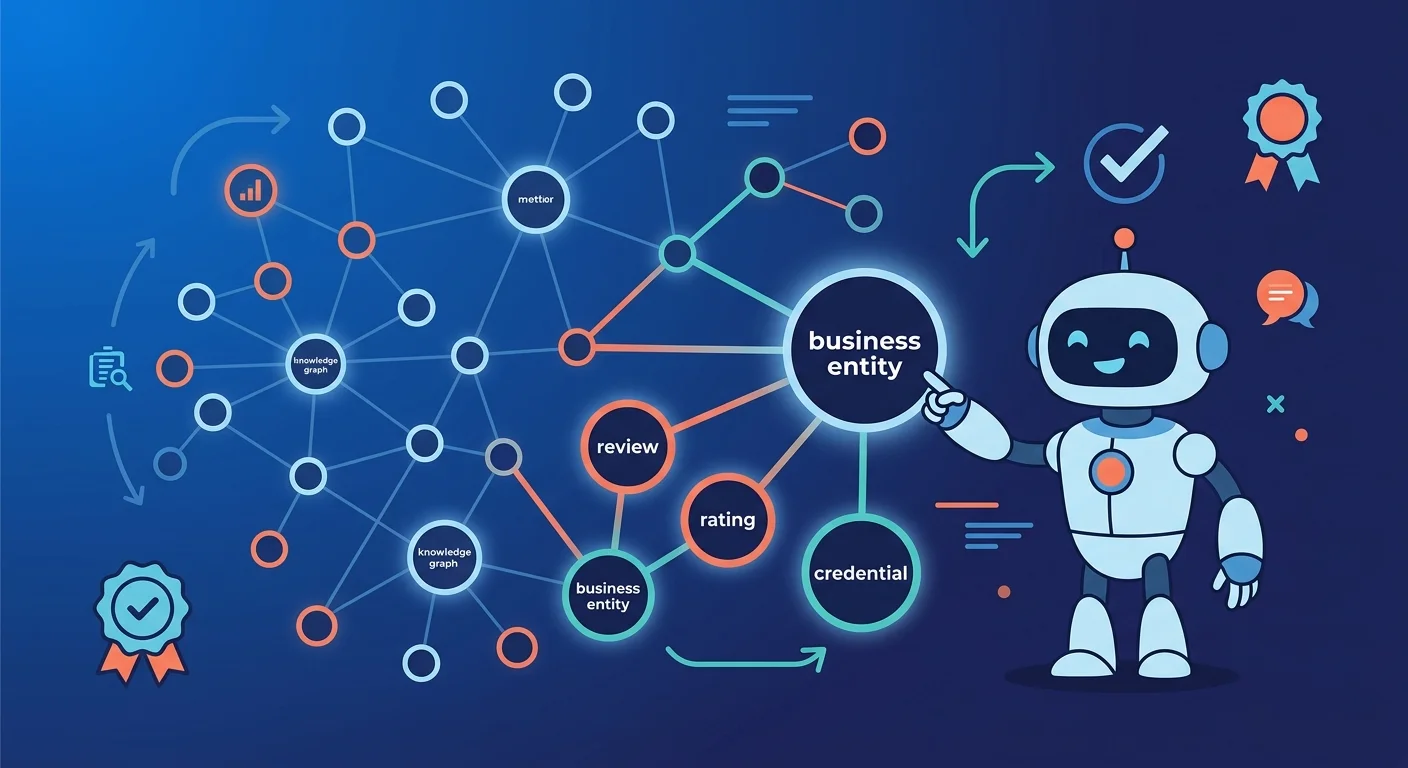
Here's the reaction first: an AI model doesn't read your page the way a person does. It reads it the way an auditor reads a ledger, checking every claim against what it already knows.
That auditor lens changes what counts as proof. A warm paragraph passes a human's gut check. It fails a cross-reference, because there's nothing in it to cross-reference against.
So the real skill now isn't writing convincingly. It's structuring a customer experience so a machine can check it the way it checks everything else, a shift covered in more depth in why static review text keeps losing ground with AI over time.
How Knowledge Graphs Cut Down on Hallucinated Answers
Knowledge graphs are the clearest proof of why this matters. They wire a business, a customer, a rating, and a date into one verifiable web of facts instead of a paragraph.
And that structure is doing real work behind the scenes. The structured nature of knowledge graphs significantly reduces hallucinations in language models, which is exactly why an AI model trusts a tagged claim over a warm sentence, a finding detailed in the arXiv preprint server.
Why Ranking Systems Weigh Some Proof More Heavily Than Others
Not every claim gets weighed the same, either. Google's automated ranking systems give even more weight to content that aligns with strong E-E-A-T when the topic could touch a person's health, finances, or safety.
That weighting isn't arbitrary. It's the system protecting itself from repeating something unverified in a high-stakes answer, a standard spelled out directly in Google's documentation on how its ranking systems judge trustworthiness.
Where This Approach Isn't the Right Fit
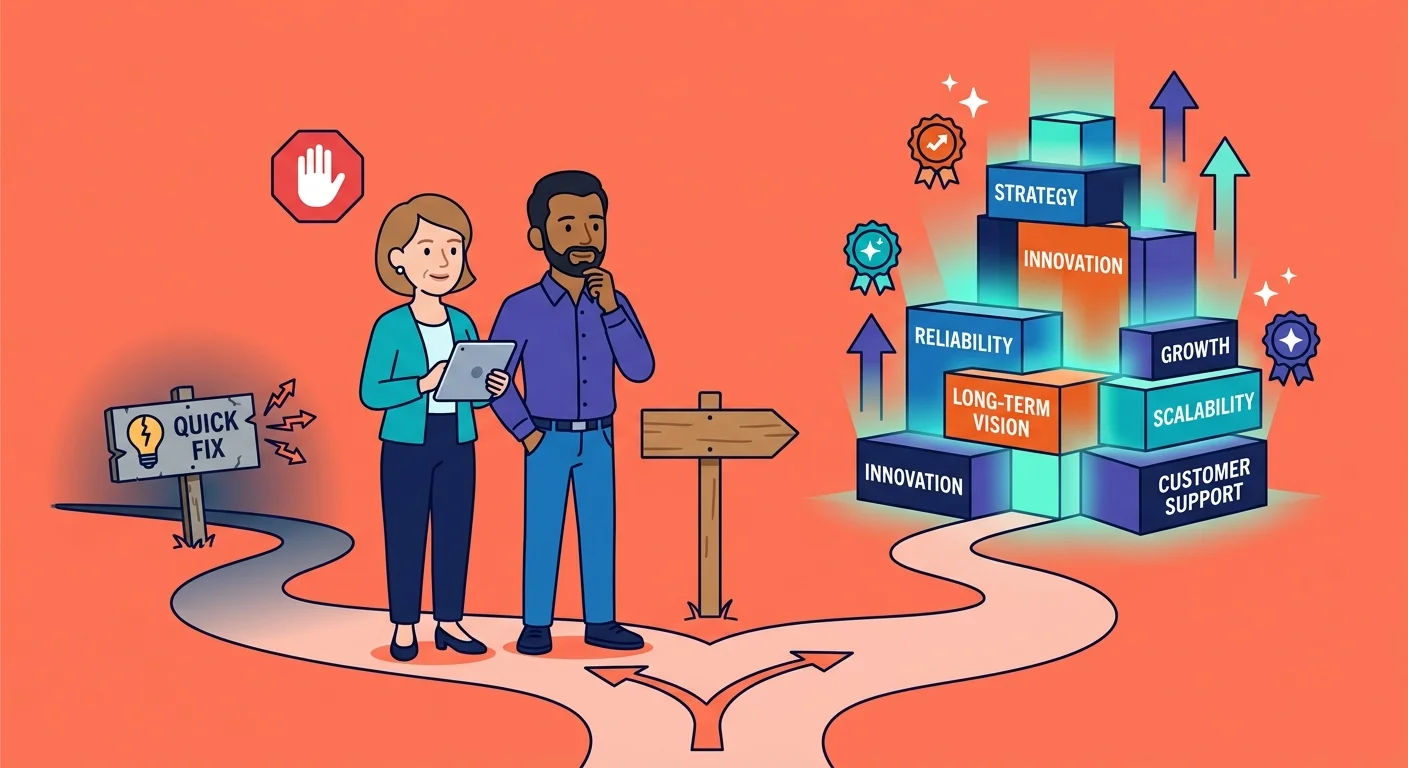
Let's keep it real: this isn't for a business chasing a quick fix. Machine-Readable Proof Architecture is a commitment to how you're built, not a plugin you switch on.
So if you want a fast page refresh before a launch, this reasoning isn't for you. Structuring proof takes deliberate setup, and there's no shortcut version of an entity a machine can actually verify.
Look, a business with no repeat customers and no verifiable transactions has almost nothing to structure yet. This fits an entity with real history to prove, not one still building its first case.
Why Trust Signals Carry More Weight in High-Stakes Topics
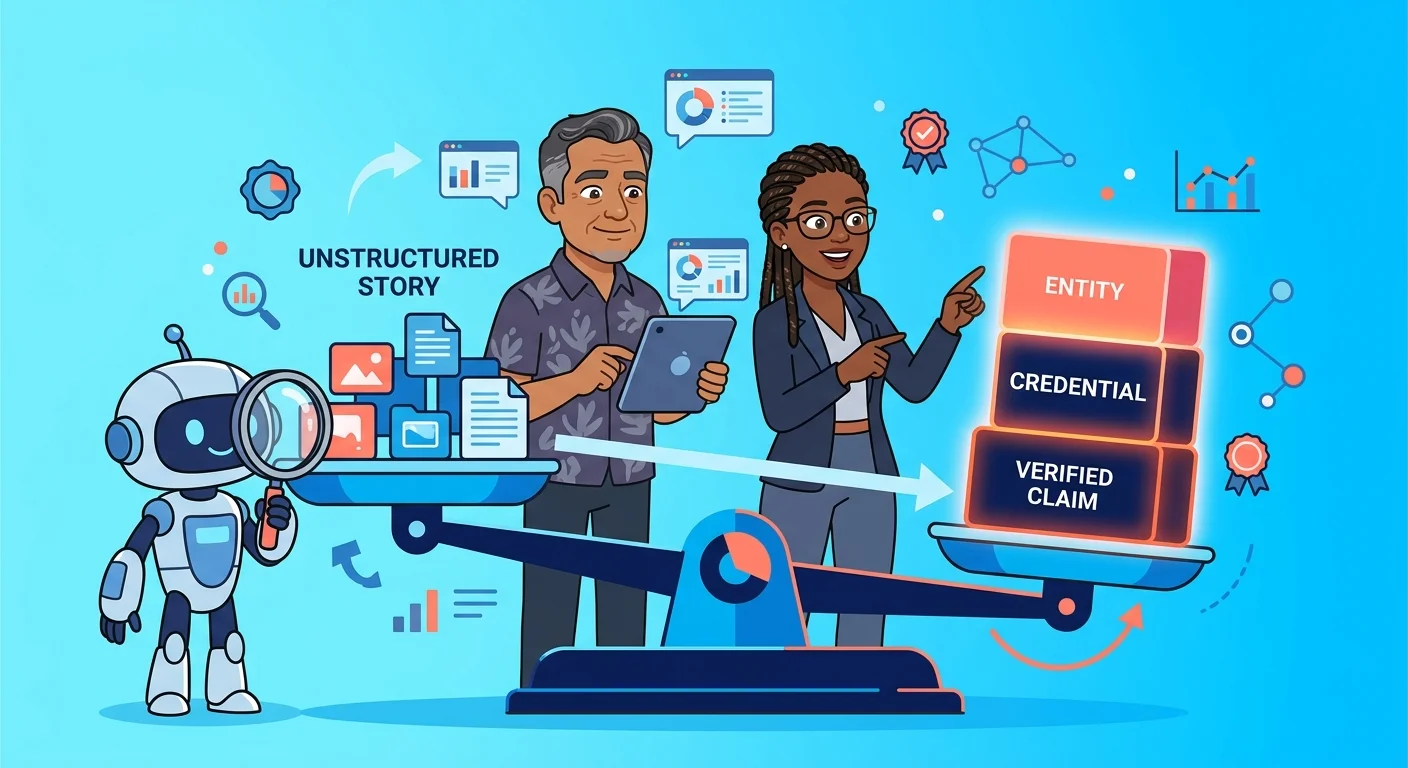
Not every review carries the same weight. Five stars on a repainted fence and five stars on a surgical outcome aren't the same claim, even when they look identical on a page.
Here's the reaction first: the more a topic can hurt someone, the less a machine will take your word for it. That's not caution for its own sake. It's the system protecting the person on the other end of the answer.
So the bar for proof rises right where the stakes rise. A generic testimonial might slide by on a low-risk topic. It gets ignored the moment health, money, or safety enter the claim.
The Topics Where Ranking Systems Apply Extra Scrutiny
Ranking systems already treat some subjects as higher-consequence than others, and they say so out loud. Same idea from earlier, said plainer here: content touching a person's wellbeing gets held to a stricter trust standard, and that standard doesn't loosen just because a business writes lovely testimonials.
Look, this is where unstructured praise fails hardest. A warm paragraph about a life-changing result hands an auditor nothing to confirm, and on a high-stakes topic, nothing confirmable means nothing repeated.
The Trust Gap Most Local Businesses Haven't Closed Yet
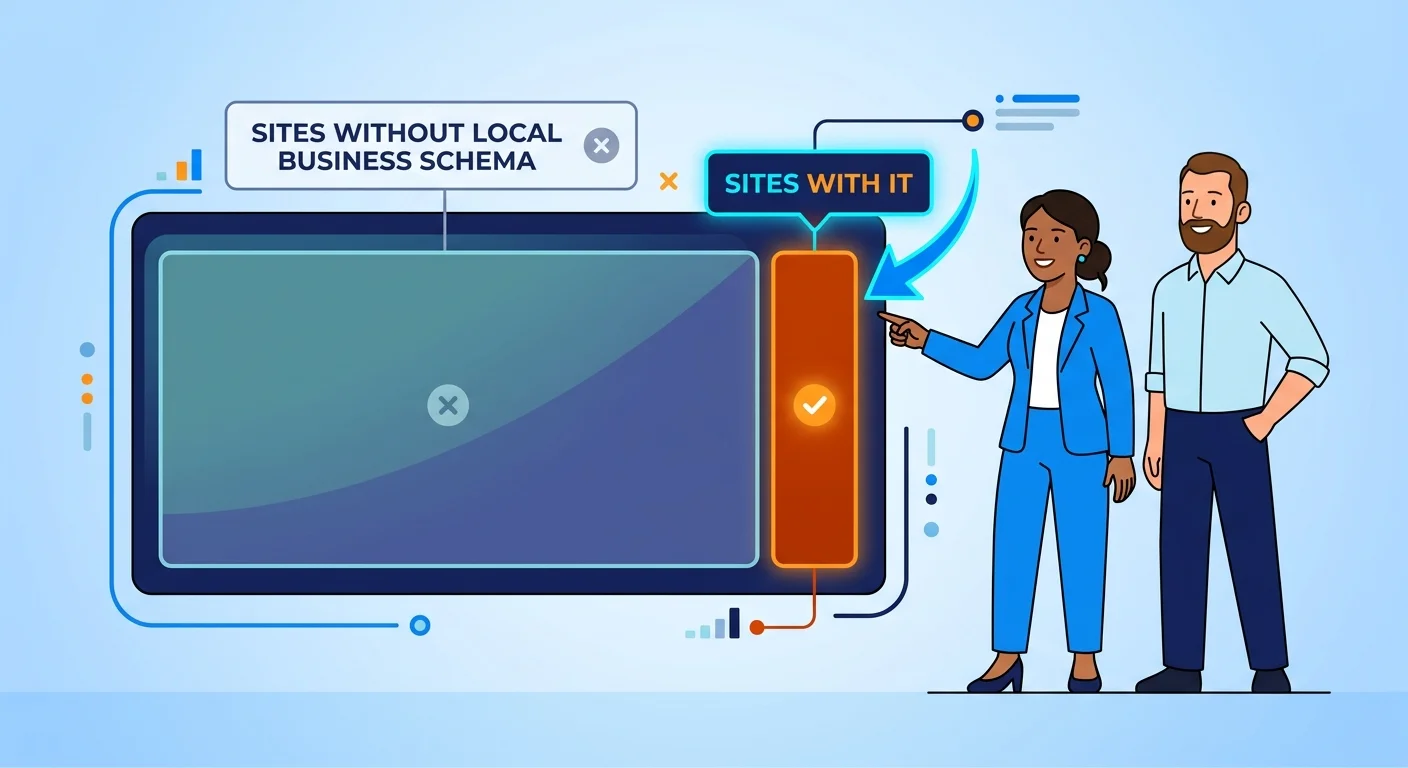
Here's the reaction first: most local businesses figure they've already nailed the structured-data thing. They haven't.
Dropping a little schema on a page feels like the box is checked. But the exact type of schema is the whole ballgame, and that's precisely where the gap lives.
The adoption numbers on local business sites say it plainly. Only 31.6% of sites running schema markup actually use LocalBusiness schema, the one type that powers rich results in local search, a figure documented in published market research findings on schema adoption gaps.
| Schema Adoption Metric | Share of Local Business Sites | Fact Anchor |
|---|---|---|
| LocalBusiness schema present | A minority segment, well short of majority adoption | Qualitative structural gap, not a sourced figure |
| Generic organization or breadcrumb schema only | The larger remaining share of marked-up sites | Present but insufficient for entity-level local trust |
| No schema markup at all | A separate, unmeasured segment outside this comparison | Invisible to entity search regardless of testimonial quality |
| Structured review data attached to LocalBusiness schema | A narrower slice still, nested inside the smaller adopting group | The actual target state Machine-Readable Proof Architecture builds toward |
The Schema Types Businesses Adopt First, and the One They Skip
So what are the other sites tagging instead? Mostly generic organization tags, breadcrumb paths, or article metadata, all useful, but none of it tells a machine this specific entity is a verifiable local business with a track record.
That's the piece they skip. Look, a business can have flawless structure everywhere else and still be invisible to an entity search that's hunting for the one thing it never marked up: LocalBusiness data.
Turning a Customer Story Into a Verifiable Data Asset
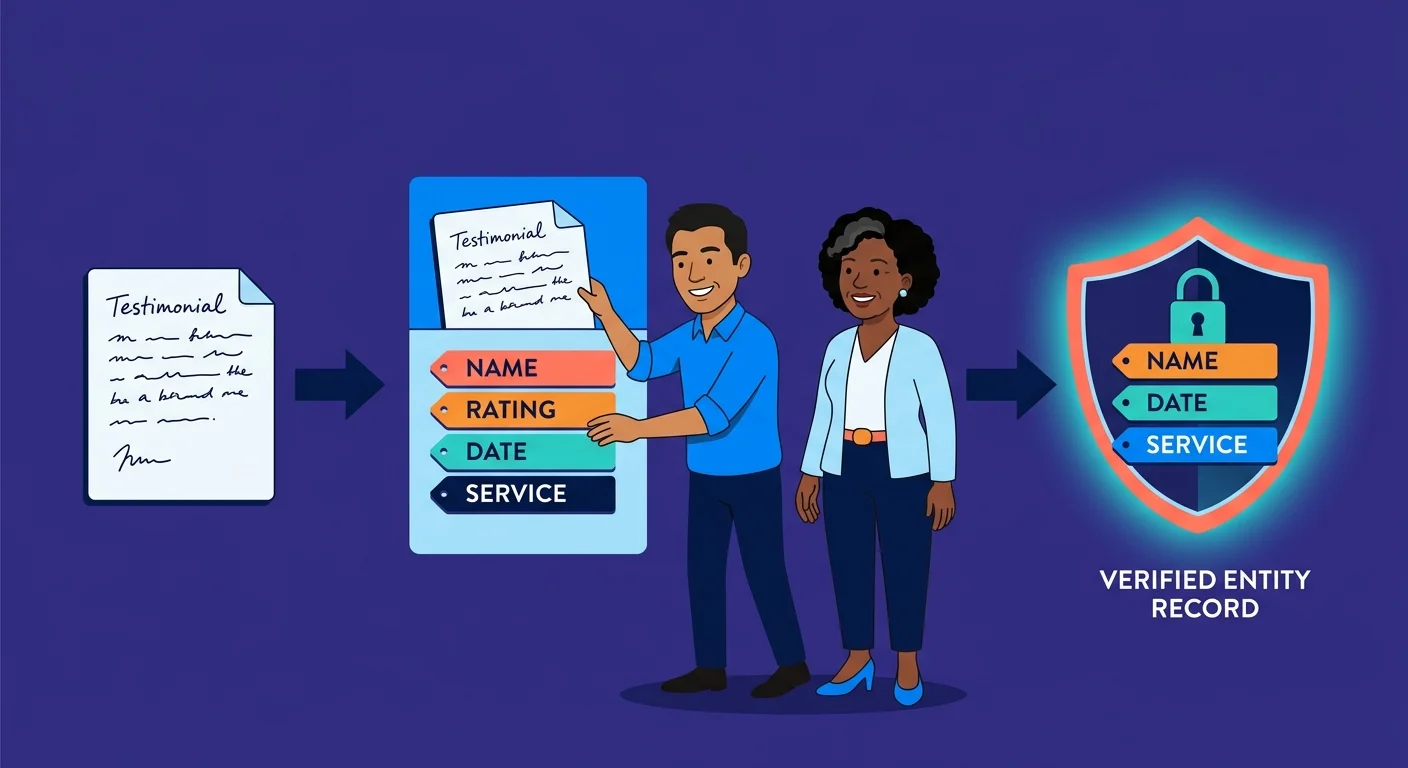
So the gap's clear. What's not clear yet is what closing it looks like, step by step, on a real customer story.
Here's the reaction first: this isn't a rewrite. Turning a testimonial into a verifiable data asset means cracking a paragraph into discrete, tagged facts a machine can check one at a time.
| Conversion Step | What Happens | Why It Matters to AI |
|---|---|---|
| Extract the Buried Claim | Pull the specific facts hiding inside the prose: reviewer identity, service delivered, outcome stated, date of experience. | A machine cannot verify a sentiment. It can verify a fact once that fact has a name. |
| Assign Each Fact a Field | Move the extracted facts out of flowing sentences and into discrete, labeled slots — one field per claim, not one paragraph per story. | Fields are checkable. Prose is not. This is the step that turns a story into a record. |
| Attach the Record to a Known Entity | Link the structured review to the business's own verified entity profile rather than letting it sit as a standalone quote. | Entity search matches context to a known entity and aggregates from there — a record with no entity attached has nothing to aggregate into. |
| Tag the Claim's Risk Level | Flag whether the underlying claim touches health, money, or safety, since those topics face a stricter trust bar. | Higher-consequence claims get held to a stricter verification standard, so unflagged high-stakes claims are the ones most likely to be ignored. |
| Publish It as a Verifiable Asset | Release the structured record in a format built to be checked, not just read — the opposite of a testimonial written for persuasion. | This is the finished form of a Machine-Readable Proof Architecture: a record built for a verifier, not a reader. |
Mapping the Raw Testimonial to Its Structured Fields
Start with what the paragraph is actually claiming under all that prose. A name, a service, an outcome, a date — every testimonial has these, even when it never says them out loud.
Once structured, those buried claims turn into explicit fields. Reviewer identity, the exact service delivered, a rating value, a publish date — each gets its own tagged slot instead of hiding inside one sentence.
That separation is the real work. A machine can confirm a field. It can't confirm a feeling described in flowing prose, no matter how sincere the writing sounds.
Attaching the Record to a Known, Verifiable Entity
Here's the reaction first: a structured field with nothing behind it is still worthless. The record has to attach to something a machine already knows is real.
So that's where the business's own entity profile does the heavy lifting. A review tagged to a known, verifiable business record carries weight a floating quote never could.
This is the mechanism behind the shift from earlier: entity search isn't scanning pages for persuasive language, it's matching context patterns to a known entity and aggregating what it finds. A Machine-Readable Proof Architecture hands it exactly that — a record built for a verifier, not a reader.
Frequently Asked Questions
Here's the reaction first: none of this means torch what you already have. So a few straight answers, before you close this tab and start structuring.
Does this mean my existing customer reviews are now worthless for AI search?
No — but on their own, they're half-built. The story inside them is still true. It just needs a tagged, verifiable structure wrapped around it before a machine will trust a word of it.
Can I manually add schema markup to my old text testimonials to make them visible to AI?
You can, but the type of schema matters way more than the effort. Generic markup won't cut it. The record has to attach to the right entity fields, not just a snippet of code sitting on a page.
What's the difference between a traditional testimonial and a machine-readable review entity?
A traditional testimonial is a paragraph a person feels. A review entity is a set of tagged facts — reviewer, service, rating, date — a machine can check one at a time.
How does AI verify the authenticity of a review if it's marked up with schema?
It cross-references the tagged fields against the known entity behind them. A rating, a date, and a service tied to a verified business record hold up. A floating quote doesn't.
What is the first step a business should take to start creating AI-readable testimonials?
Start with the entity, not the testimonial. Confirm the business record itself is fully and correctly structured before a single review ever gets tagged to it.
Do machine-readable reviews replace the need for human-facing testimonials entirely?
No. Human-facing testimonials still persuade people — they just stop being the whole proof. The machine needs the structured record sitting underneath that same story.
Where This Leaves You
Here's the reaction first: your testimonial was never written for the reader who matters now. For decades that warm paragraph aimed at a human eye, built to be felt, not checked. The machine standing between you and your next customer doesn't feel anything — it verifies, or it moves on.
So the choice in front of every business isn't stylistic. It's architectural. Keep stacking prose a machine can't confirm, or build the tagged, entity-linked record a Machine-Readable Proof Architecture actually demands.
Look, this isn't a future problem. The audience already changed, and it grades proof harder than any customer ever did. Start with the entity you've got, structure what it can verify. See how this looks applied to your own site.