
Patient-reported outcome measures (PROMs) are questionnaires that collect patients’ own views on their health. The data come only from patients and add up to a numerical score. The Care Response database holds information on tens of thousands of chiropractic patients internationally, and it has collected patient-reported outcomes and satisfaction information for more than 10 years. A 2025 scoping review found only one dedicated chiropractic clinical outcomes registry, Spine IQ. It launched in the US in 2016, with about 50 chiropractors sending in data on more than 2000 low back pain patients.
Why Patients’ AI Questions Make Published Proof Matter
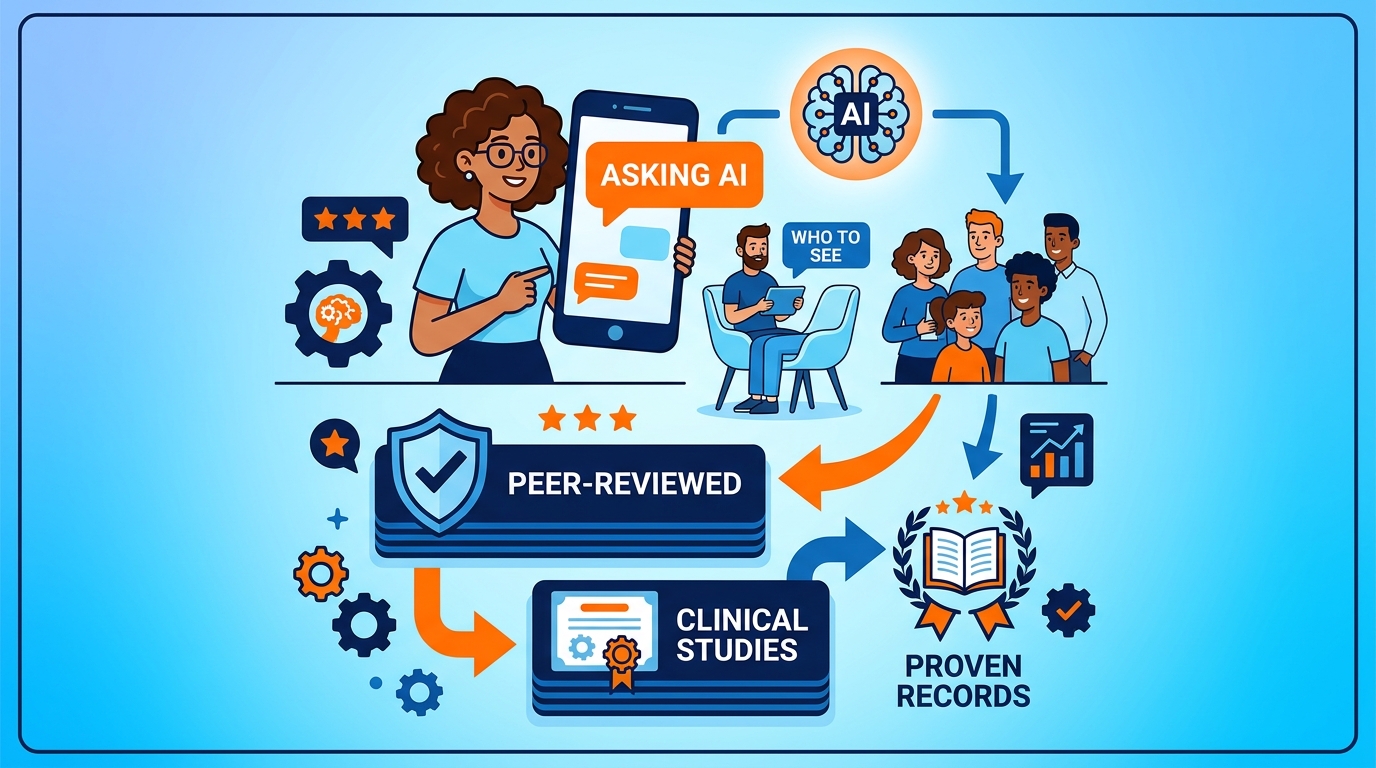
Patients now ask AI who to see.
So your proof of results has to sit in public, in a form a machine can read. The health records stay private.
Start with how people search.
The authors of one research paper say the fast uptake of generative AI search engines is fundamentally reshaping information retrieval. ChatGPT. Perplexity. Gemini.
Results are moving away from ranked lists. They’re moving toward synthesized answers backed by citations.
Health is one of the most common ways people use ChatGPT. OpenAI says so itself.
Over 230 million people around the world ask it health and wellness questions every week. That number comes from OpenAI’s own de-identified analysis of conversations.
Here’s what patients say drives their choice.
The rater8 2026 Patient Choice Report asked U.S. patients who had searched for a doctor in the past year what influenced them. More than a third (36%) named AI tools like ChatGPT and Claude. That beat Google search at about a third (34%). It beat doctor recommendations at nearly a third (32%).
The year before, the comparable response was worded as “conversational AI assistants.” It drew about one in six (17%).
Age shows up in the same report.
Adults 45 to 60 lead AI use for provider research, at nearly two-thirds (64%). Adults 18 to 29 sit at just over a quarter (28%).
The privacy rules have their own page: HIPAA-Safe Ways to Publish Chiropractic Outcome Data.
Here’s my view. The real work starts with what an AI engine can pick up about your practice.
A pile of star ratings is one kind of signal. A structured outcome profile is another. Star Ratings vs Structured Outcome Profiles: Which Convinces AI Engines? compares the two.
What Counts as Proof Instead: Patient-Reported Outcome Measures
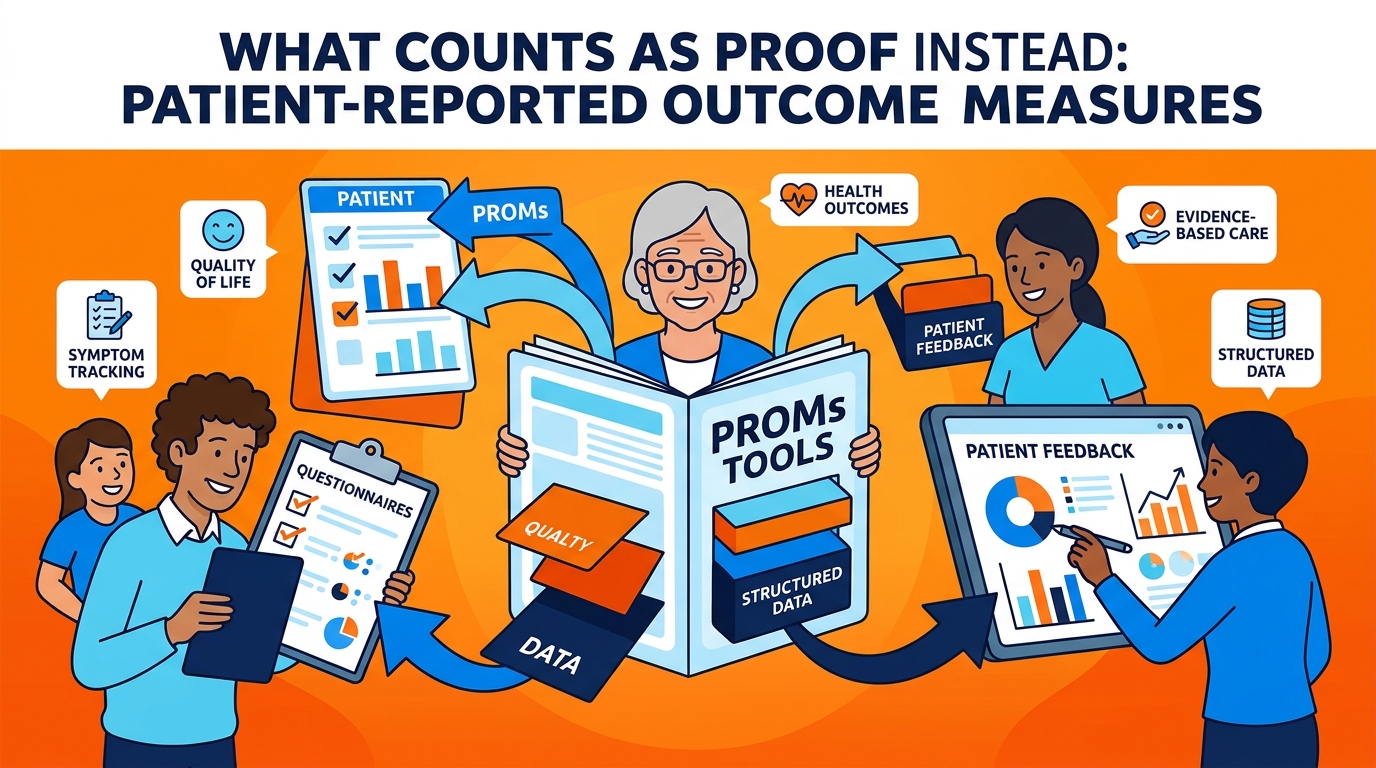
PROMs are tools and questionnaires. They collect what patients think about their own health.
The data come only from the patients. They arrive on paper, on an electronic device or in an interview. They end up as a numerical score.
That’s why PROMs can stand in for records.
A score captures the patient’s own view of their health as a number. It doesn’t hand over the patient’s file.
Answer engine optimization isn’t old-school search work with new labels. It’s a different discipline.
Chasing keywords and inbound links misses the point. The engine is trying to decide whether it can make sense of your practice and trust it.
To my mind, a PROM score is the kind of plain, structured fact that helps an engine decide that. A keyword pushed into a page isn’t.
The profession takes PROMs seriously.
Three reviews of trial evidence found that PROMs may improve the process and outcome of care. That included better communication between patient and clinician. It included better patient satisfaction too.
The authors of one survey go further. They state that PROM use is a marker of high-quality chiropractic care.
Not every number carries the same weight, though.
Pain Scale Ratings vs Range-of-Motion Data: Which Metric Builds Credibility? looks at which kind of metric earns more trust.
The Registries Already Doing This in Chiropractic
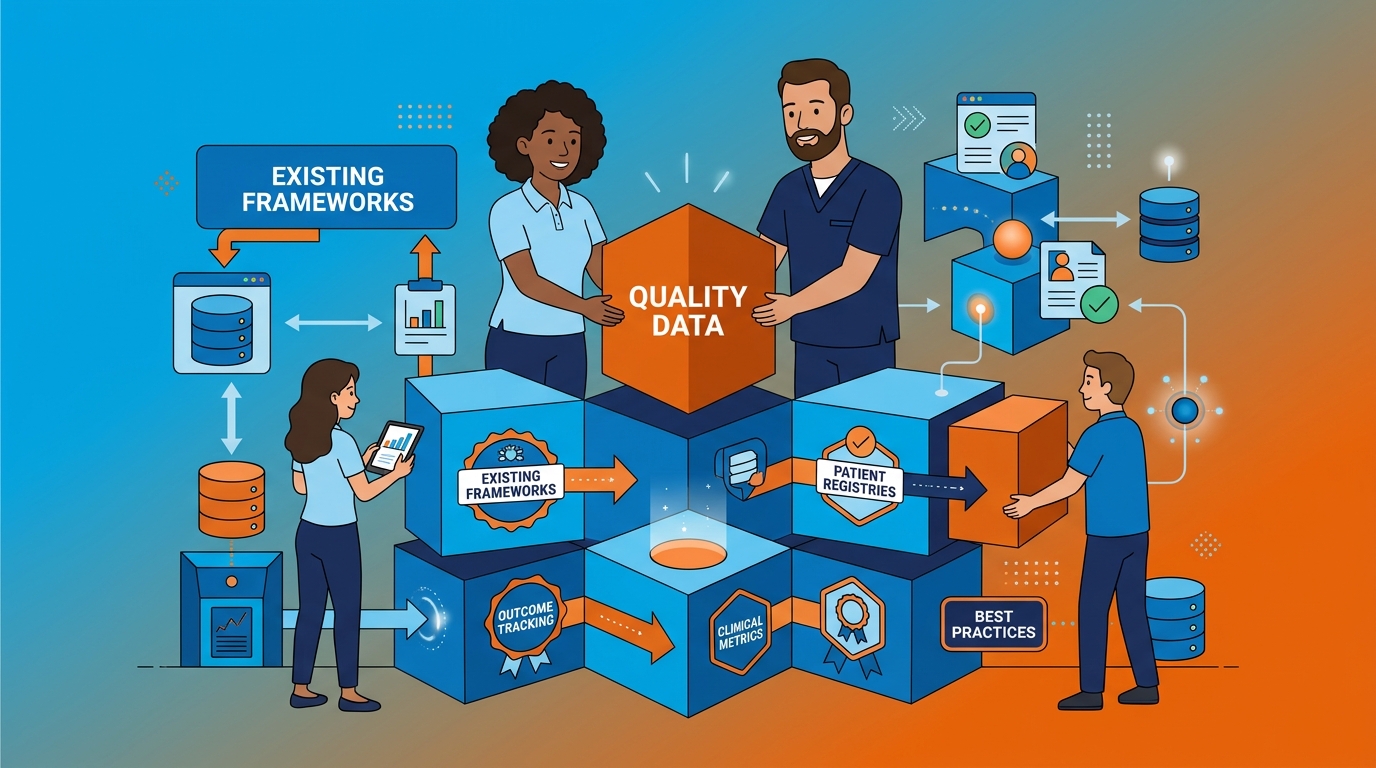
Some outcome infrastructure already exists.
It’s thin. But it can be a model.
A 2025 scoping review went looking for chiropractic clinical outcomes registries.
It found one dedicated registry. Spine IQ.
Spine IQ launched in the US in 2016. About 50 chiropractors sent in data on more than 2000 low back pain patients.
Spine IQ collected PROMs. The Oswestry Disability Index. The Bournemouth Questionnaire. The PROMIS physical function measure.
By 2018, it had finished its pilot phase. The plan was to expand to 100 clinics.
The review’s conclusion was plain.
The chiropractic profession worldwide has a significant gap in registry infrastructure. The full paper is Where are the chiropractic clinical outcomes registries? A scoping review.
The table below sets the Spine IQ registry next to the Care Response database.
It shows the source, the scale and what each one collects.
| Source | Scale | What It Collects |
|---|---|---|
| Spine IQ registry | About 50 chiropractors, data on over 2000 low back pain patients | PROMs including the Oswestry Disability Index, Bournemouth Questionnaire and PROMIS physical function measure |
| Care Response database | 218,770 patients registered as of September 2022 | PROMs available include the Bournemouth Questionnaire, MYMOP, EQ-5D, PGIC, numerical pain scale and PREM |
I see that gap as an opening.
I’d much rather your practice be the place an AI answer points back to. Not one more name in a directory.
A directory entry only says you exist. Outcome data kept in a registry-style pattern gives an engine something to cite.
Inside Care Response: A Working Model of De-Identified Outcome Data
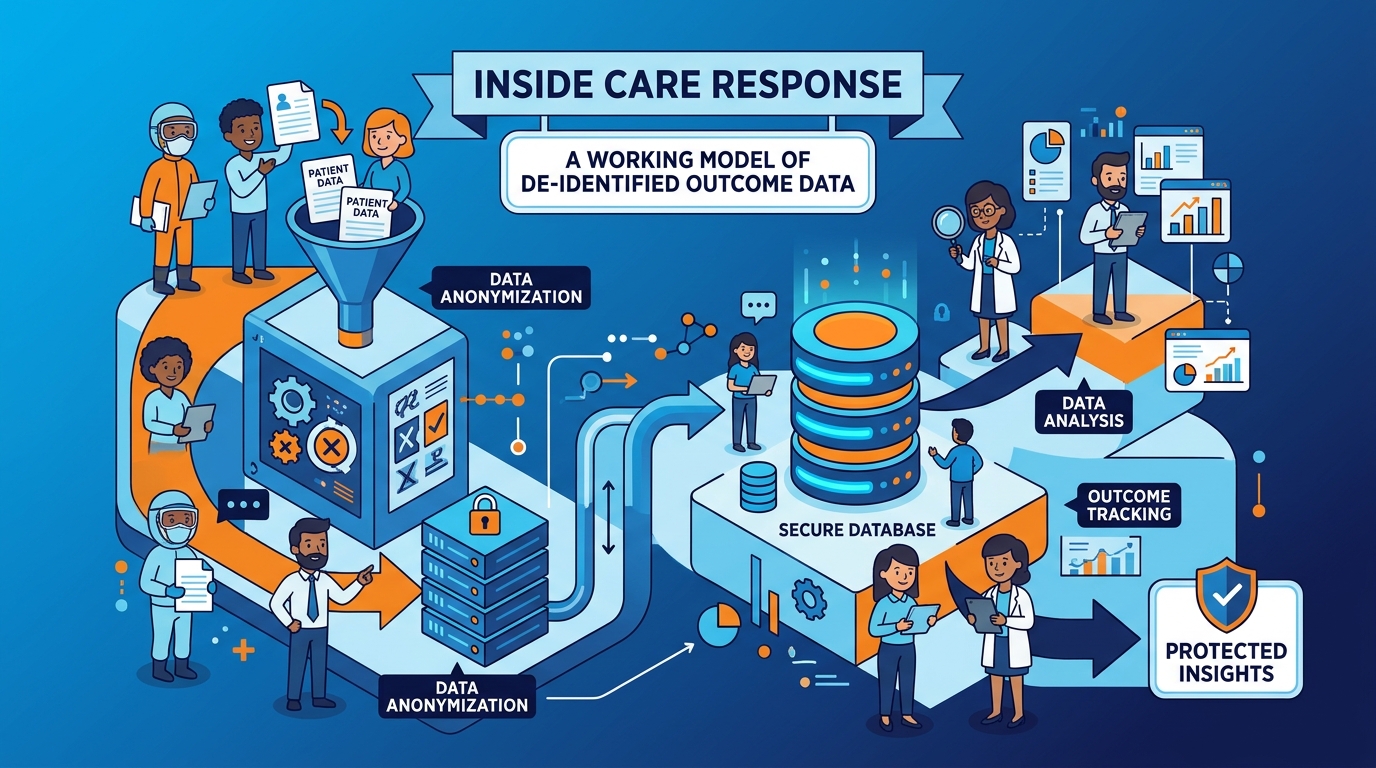
Care Response is one real, anonymised database. It gets outcomes straight from patients.
It holds information on tens of thousands of chiropractic patients internationally. It has collected patient-reported outcomes and satisfaction information for more than 10 years.
As of September 2022, nearly 219,000 patients (218,770) were registered.
Clinicians get it free of charge, through a web-based interface.
It collects information directly from patients. So clinicians don’t have to administer PROMs and PREMs themselves during consultations.
Here’s what’s on the system. The PROMs available include:
- the Bournemouth Questionnaire
- Measure Your own Medical Outcome Profile (MYMOP)
- EQ-5D
- patient global impression of change
- a numerical pain scale
- a Patient Reported Experience Measure (PREM)
Care Response invites patients to answer PREM questionnaires a month after their first appointment with a clinic.
The system is anonymised.
So there’s no current information on how many clinics or countries use it.
Here’s my view.
Outcome data your practice holds yourself keeps building in value over the years. Reviews parked on someone else’s platform last only as long as that platform’s rules allow.
Publishing takes care with identity. Anonymization Standards for Publishable Chiropractic Case Summaries covers that.
Public results can also draw pushback. How to Respond When a Patient Disputes a Published Outcome covers that.
What the Data Shows About Patient Experience
Researchers studied the free-text answers in Care Response.
The paper is Qualitative analysis of free-text patient satisfaction in Care Response.
Their data extract had about 21,700 rows (21,667). Each row was one patient. Entries ran from July 2012 to May 2022.
In the “good points” box, about 8,600 people (8624) wrote text. That’s four in ten (40%) of patients who entered any information in the system.
In the “improvement” box, about 3,200 people (3202) responded. That’s roughly one in seven (15%).
Patients often reported positive experiences with their chiropractors.
They said they had reduced pain. Improved function. They felt validated in their clinical condition.
The most important “good points” themes were satisfaction with care, being valued as a person, safety, comfort and professionalism.
The negative experiences were the opposite.
Patients described being rushed through treatment. Some felt the treatment wasn’t worth the cost. Some felt they weren’t treated professionally, with empathy or with respect as individuals.
Free-text answers have a use of their own.
They can give deeper insight into patient experiences. They can also find issues that closed-ended questions might miss.
How Practicing Chiropractors Actually Use PROM Data
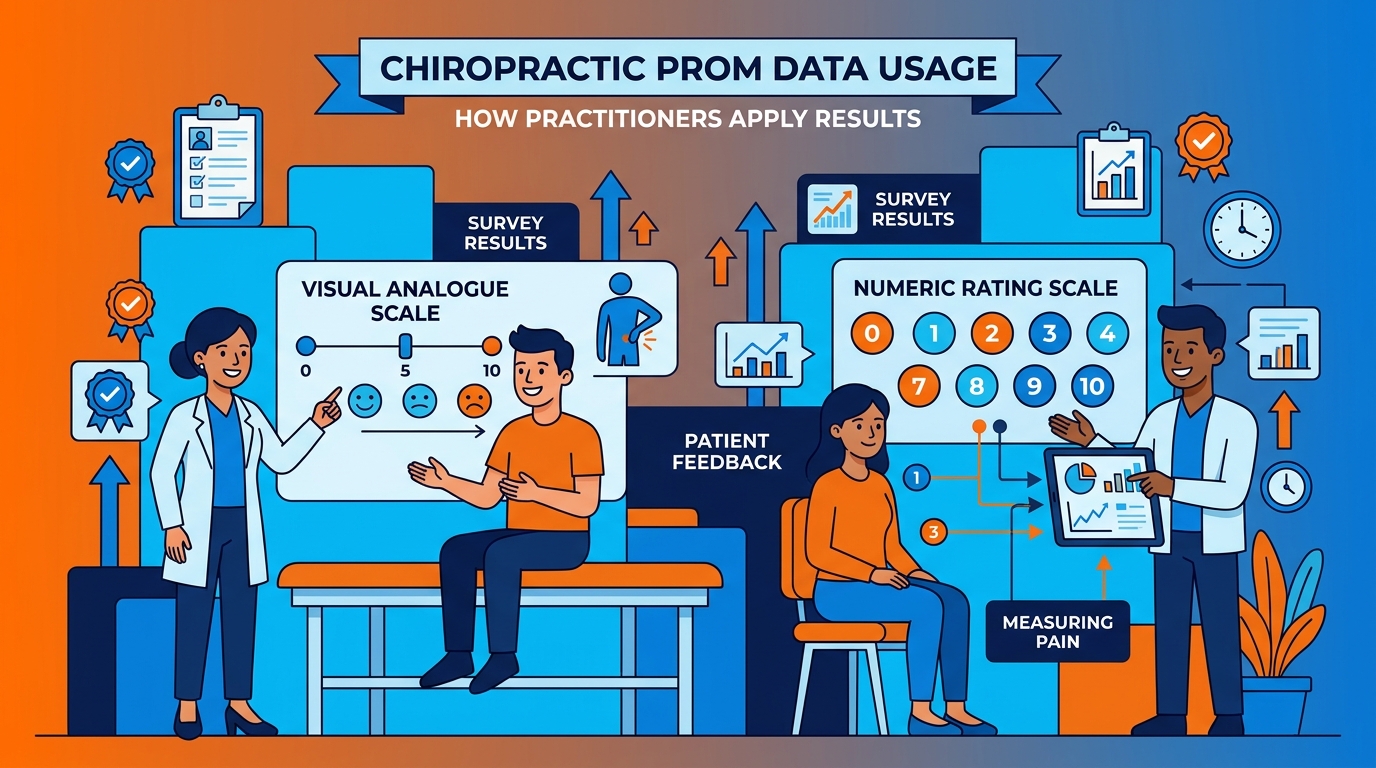
A survey of 62 chiropractors found that visual analogue scales and numeric rating scales are commonly used.
Condition-specific PROMs, like the Oswestry Questionnaire, were used only occasionally. So were general PROMs, like the SF-36.
An interview study spoke with eight chiropractors.
All eight had used PROMs at some point. Half used them routinely. Four rarely used them.
Many used the data for audits and feedback.
They wanted to understand their own and their clinic’s performance. They compared practitioners and practices. They used it to improve practice.
They also used PROMs at follow-up. To track patients and spot improvement. To identify patients who weren’t progressing.
Some worried their data were positively skewed. Many patients wouldn’t report feeling dissatisfied.
One chiropractor thought satisfied patients are more likely to complete PROMs and report a positive result.
Organisation mattered as well.
The chiropractors named busy practices, electronic systems and reception staff. Those either helped or got in the way.
My own read is simple.
An engine leans toward the practice whose facts it can follow. Sheer output doesn’t move it.
A handful of PROM scores, set out in a sensible order, tells an engine more than a flood of loose testimonials ever will.
The interview study is Chiropractors’ views on the use of PROMs in clinical practice.
Three more pieces help with the next step:
- What Separates a Credible Case Summary From Promotional Hearsay?
- Common Mistakes That Make Case Studies Look Fabricated to AI
- How Often Should You Refresh Published Outcome Data?
Adoption Gaps and Barriers to Know Before Publishing
Most chiropractors already use PROMs.
A survey of chiropractors in Australia found that nearly three-quarters (72%) reported using PROMs to manage low back pain.
The same survey looked at barriers.
About one in five (19%) said a lack of knowledge about PROMs prevented clinical implementation. About one in six (17%) named a different barrier. The time it takes to administer and score PROMs in a clinical setting.
From Collected Scores to Published Proof

Two features of Care Response show how outcome data can go public.
The first is group-level collation.
Care Response scores the PROM questionnaires. The clinician sees collated results for one patient or for a group of patients, in a table or a graph.
The data are available right away. They can be collated for longitudinal assessment.
The second is consent.
Care Response obtains consent from participants. That consent includes the option for third parties to use the data for research.
Each later step of the method has its own page:
- To build the profile itself, read Building an Anonymized Proof Profile: A Step-by-Step Walkthrough.
- To choose where to post it, read Should You Publish Outcome Data Across Multiple Platforms?
- To see where the profession’s own bodies stand, read What Credentialing Bodies Say About Publishing De-Identified Outcomes.
Frequently Asked Questions
Can a chiropractor show patient outcomes without releasing health records?
Yes. Care Response is one working model.
It scores the PROM questionnaires. It shows the clinician collated results for one patient or a group of patients. Those results can be collated for longitudinal assessment.
The system is also anonymised. That’s why there’s no current information on how many clinics or countries use it.
What is a patient-reported outcome measure (PROM)?
It’s a tool or questionnaire that collects a patient’s own views on their health.
The data come only from the patient. Usually on paper, on an electronic device or in an interview. They add up to a numerical score.
Are chiropractic outcomes registries common?
No. A 2025 scoping review found only one dedicated chiropractic clinical outcomes registry.
That’s Spine IQ. It launched in the US in 2016, with about 50 chiropractors sending in data on more than 2000 low back pain patients.
The review said the profession worldwide has a significant gap in registry infrastructure.
Do chiropractors already track outcomes like this?
Many do, at least some of the time.
In one interview study, all eight chiropractors had used PROMs at some point. Half used them routinely. Four rarely used them.
In a survey of chiropractors in Australia, nearly three-quarters (72%) reported using PROMs to manage low back pain.
Why do some chiropractors hesitate to rely on their own outcome data?
Two reasons. Skewed data, and barriers.
Some worry their data are positively skewed. Many patients wouldn’t report feeling dissatisfied. One chiropractor thought satisfied patients are more likely to complete PROMs.
Others face knowledge or time barriers. In a survey of chiropractors in Australia, about one in five (19%) said a lack of knowledge about PROMs prevented clinical implementation. About one in six (17%) named the time needed to administer and score them.
Turn De-Identified Outcome Data Into Proof AI Can Read
iTech Valet turns de-identified outcome data into proof AI engines can read. Without touching health records.
Our main service is the Local AI Authority Engine.
It’s a full-stack rebuild of a business’s authority infrastructure, plus ongoing monthly AEO content execution. It’s built for local service businesses, primarily chiropractors. We also work with dentists, attorneys, home service companies, coaches, consultants and other service providers.
Our AI Authority System is a data-first methodology. It’s built to make service businesses the recommended answer in ChatGPT, Gemini and Grok.
Gerek Allen, Founder, leads the work. Our record includes 20+ years of hands-on entrepreneurial experience. To see how the work is done, read about iTech Valet Service Plans & Pricing.
I’d rather let the evidence above do the persuading.
If you want to see where your practice stands today, Run My AI Visibility Check.