
Articles in this cluster
- Conversational AI Models Synthesize Healthcare — How Conversational AI Models Synthesize Healthcare Web Data into a Single Answer
- Recommended by AI: The Critical — Indexed by Google vs Recommended by AI: The Critical Difference for Clinics
- Chiropractic Practice Needs Zero-Click Search — Why Your Chiropractic Practice Needs Zero-Click Search Authority Infrastructure
- Verify If Your Practice Is — How to Verify If Your Practice Is Currently Visible to ChatGPT and Gemini
- Sunk Cost of Traditional Answer — The Sunk Cost of Traditional Answer Engine Optimization Retainers for Modern Healthcare Practices
- Authority Visibility Metrics Are Lying — Why Google Authority Visibility Metrics Are Lying to Your Chiropractic Practice
- AI Search Engines Cite Local — How AI Search Engines Cite Local Healthcare Providers: The Schema and Review Blueprint
- Chiropractic Answer Engine Optimization vs — Chiropractic Answer Engine Optimization vs AI Authority: Why Legacy Authority Infrastructure Providers Are Failing You
- Anatomy of a Zero-Click Citation — The Anatomy of a Zero-Click Citation Monopoly in Local Healthcare
- Optimize Condition-Specific Pages for AI — How to Optimize Condition-Specific Pages for AI Recommendation Engines
- AI Authority Engine and How — What Is an AI Authority Engine and How Does It Secure Zero-Click Patients in 2026?
What Counts as Answer Engine Optimization for Healthcare, and Why the Old Definition Stopped Working
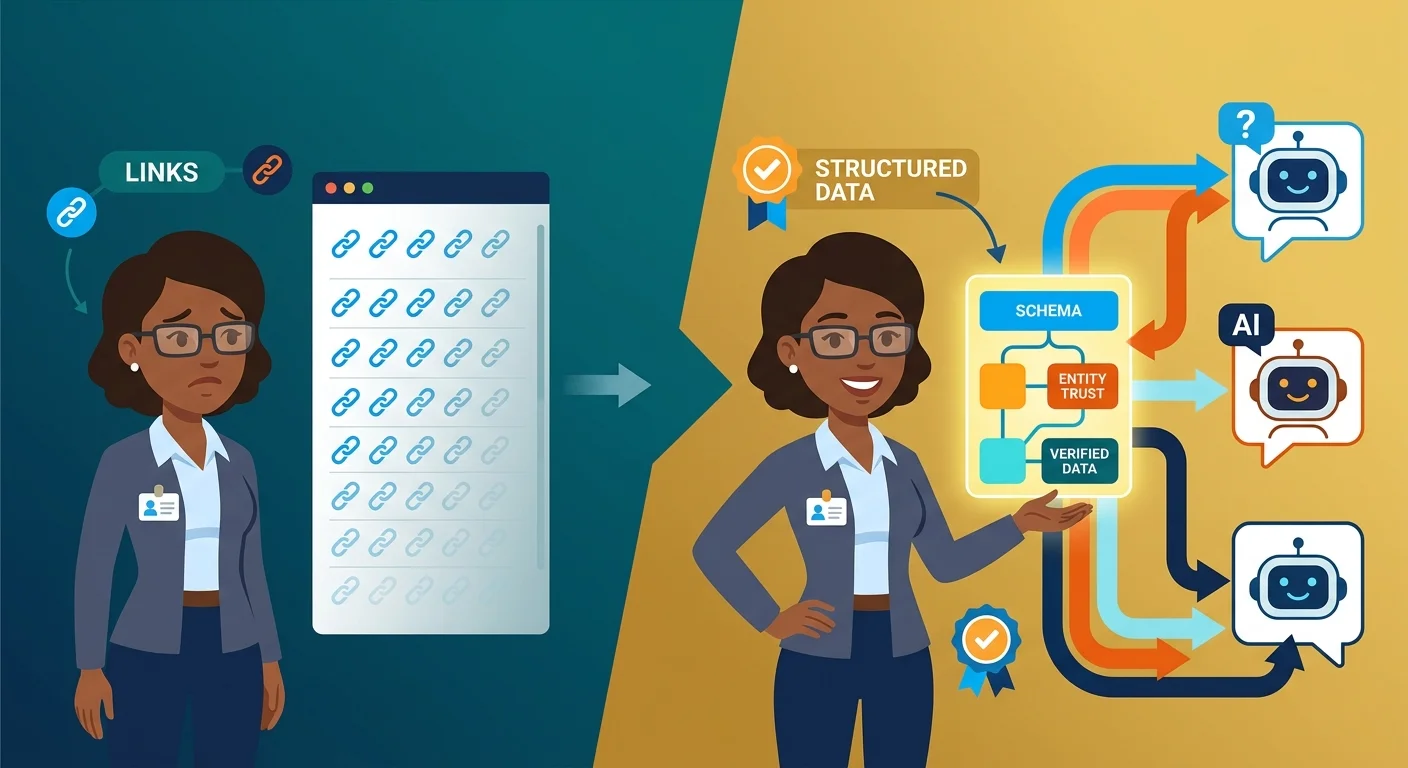
Answer Engine Optimization, or AEO, is the discipline of structuring information for direct extraction and citation by generative AI models. That definition matters because it names a mechanism, not a marketing category.
Search just went through its biggest shift in a decade. The results page used to be the storefront window. Now there's a separate room behind it, stocked only with structured, verifiable entity data, and most practices were never handed a key.
Here's the thing. Most healthcare vendors never updated their definition of the work to match that shift. They still describe AEO in the same language they used for traditional search optimization, just with the word answer swapped in for the word search.
Answer Engine Optimization Defined for Medical Entities
For a medical entity, AEO means the practice, the provider, and the claims on its pages exist as verifiable, structured objects, not as paragraphs written to satisfy keyword position tracking. An AI model has to confirm who's making a claim before it'll cite it.
That confirmation runs through structured data markup, consistent entity information across every listing, and credentials tied to specific claims rather than buried in an about page. No structure, no path to verification. So the model moves on.
Where the Boundary With Traditional Search Optimization Actually Falls
Rankings stopped predicting who gets cited the day answers replaced links as the default output of a search. A page can hold a strong position in traditional search optimization results and still carry none of the entity signals a generative model checks for.
Calling that same keyword-targeted work AEO doesn't change what the model is evaluating. The boundary sits at verification, not vocabulary. A practice that wants to be found where these signals get assembled can start with AI visibility services built around entity structure rather than phrase matching.
Why Keyword-Targeted Articles Stopped Earning AI Citations
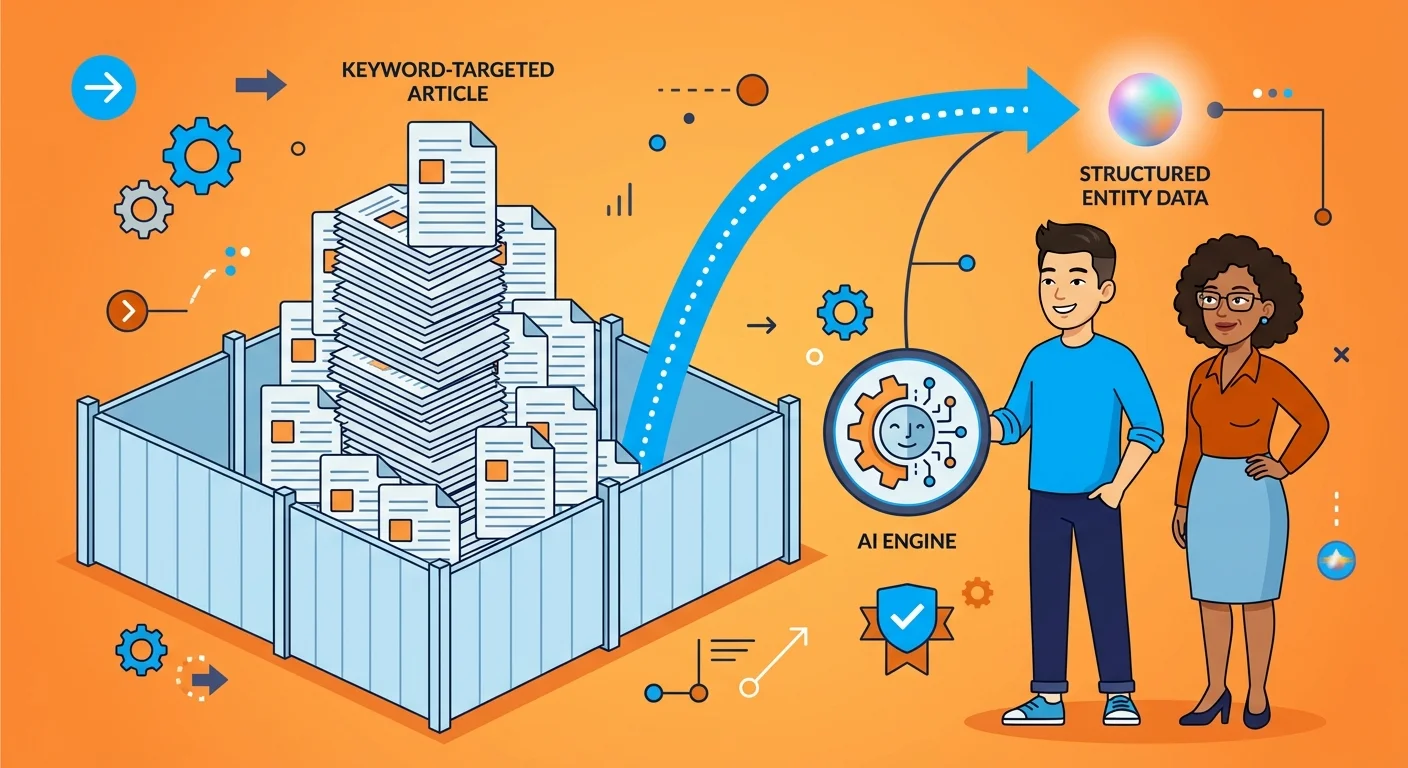
Keyword-targeted articles were built to match a phrase, not to answer the one question a generative model actually asks: can this claim be verified? That mismatch is the whole failure mode this section pulls apart.
And plenty of healthcare organizations are still pouring money into old versions of this tactic, never clocking that the goalposts already moved. They're optimizing for a system that stopped deciding what gets surfaced.
And healthcare raises the bar even higher. The standards for getting cited by an AI are far more stringent than they ever were for landing near the top of a results page. A model checking a medical claim wants a verifiable entity behind it, not a well-optimized paragraph.
Why Keyword Position Tracking Fails as a Signal Generative Engines Use
The link list quit deciding outcomes the moment a generated answer became the first thing a searcher reads. Keyword position tracking measured where a page sat in a list generative engines no longer consult the same way.
So a page can top every keyword position tracking benchmark a vendor reports and still add nothing to an AI-generated answer. The benchmark and the citation measure two different systems.
That gap is easy to miss, because keyword position tracking still spits out a number, and a number feels like progress. It just isn't the number a generative model checks before it cites a source, a question how a practice's overall citation standing gets evaluated gets into more deeply.
Why More Keyword-Targeted Articles Does Not Mean More Citations
Publishing more keyword-targeted articles doesn't close the gap. Volume was never the variable a generative model weighs.
Every new article written to the old model repeats the same failure: strong phrase matching, weak entity verification. Ten of these pages carry the same unverifiable structure as one.
What flips the outcome isn't another article aimed at keyword position tracking. It's restructuring the claims already on the page so a generative model can confirm who's making them.
How Generative Engines Actually Assemble a Healthcare Answer

An AI answer engine doesn't open one trusted page and read it top to bottom. It fires off a live search across a pile of sources at once.
It pulls passages from a bunch of pages, weighs them against each other, and stitches them into one answer with citations attached. And that's not one engine's quirk. It's how the major generative engines all work.
The practice a model quotes wins over the one it merely lists, the moment answers replace links as the interface. A page can rank high and still never get pulled into that assembly, and a page that never gets pulled adds nothing to what the reader actually sees.
| Retrieval Behavior | Traditional Search Optimization Model | Generative Answer Engine Model |
|---|---|---|
| Unit of retrieval | Whole page, ranked and returned as a link | Single passage, pulled and weighed against passages from other pages |
| Primary signal checked | Keyword position tracking and phrase matching against the query | Whether the claim can be verified against a clearly defined, structured entity |
| How multiple sources are handled | Sources compete for a slot in a ranked list; the reader clicks through | Sources are pulled together, compared, and synthesized into one answer with citations |
| What earns a citation | A well-optimized paragraph aimed at a search query | A passage tied to verifiable credentials and consistent entity information |
| Outcome for an unverifiable page | Can still rank and receive site visits despite weak entity structure | Gets routed around entirely, regardless of its position in traditional search optimization results |
Why Passage-Level Retrieval Bypasses Full Articles
Retrieval happens at the passage level, not the page level. A model won't credit a full article for being thorough.
It grabs the exact passage that answers the exact question, wherever that passage happens to sit. So a well-written page with one weak paragraph on the claim in question can lose the citation to a page that states that one claim more clearly.
That's a different competition than the one traditional search optimization trained operators to run. Comprehensiveness earned rankings. Verifiable specificity earns citations.
How Multiple Sources Get Weighed Into One Cited Answer
Weighing multiple sources into one answer is itself a form of entity recognition. The model isn't just matching keywords across the passages it pulled.
It's asking whether the entity behind each passage resolves to something confirmable. Research documented through the ACL Anthology tested exactly this, classifying tokens by submitting them with context to a search engine and comparing similar contexts in the results, and that context-checking improved recognition across news text, in-domain contexts, out-of-domain contexts, and web queries alike.
A generative engine builds a healthcare answer the same way: it runs a live search, pulls passages from many pages, weighs them, and writes one answer with citations, a process published industry reporting lays out in detail. No single authoritative site gets repeated. The passages that survive are the ones whose entities check out.
Why Chasing Keyword Position Tracking Fails as an AI Visibility Practice

Keyword position tracking measures a rank that no longer decides what an AI system surfaces. That one fact is the whole failure mode this section pulls apart.
AI Overviews now fire on 44.1% of medical queries, more than double the rate they show up across all keywords, per Ahrefs' research. Score keyword position tracking against that, and you're keeping tabs on a game that ended.
Agencies selling that same game didn't stop reporting it once generative answers took over medical search. They kept the scoreboard running because it still spits out a number clients recognize.
| Query Type | Share Triggering an AI Overview | What This Means for Ranking Tactics |
|---|---|---|
| Medical YMYL Queries | 44.1% trigger an AI Overview, more than double the rate across all keywords | Keyword position tracking measures a rank the AI Overview has already bypassed for these queries |
| All Keywords (Baseline Comparison) | Less than half the 44.1% share seen on medical queries | A vendor benchmarking against this lower baseline understates how dominant AI Overviews already are in medical search |
| Health-Related Citations Inside AI Overviews | 4.43% of all citations go to a single video platform, YouTube | A page's keyword position tracking score says nothing about whether its passages carry the entity structure that earns a citation share like this |
The Measurable Cost of Treating Placement in the Classic Ten Blue Links as the Goal
The cost of that scoreboard shows up in what gets cited, not what gets ranked. YouTube alone pulls 4.43% of every citation inside health-related AI Overviews, a figure documented in published industry reporting.
No hospital network, medical association, or academic institution comes close to that share. One video platform outperforms whole categories of credentialed medical publishers inside the room these answers get built from.
And that gap is the measurable cost. A practice holding a strong position in traditional search optimization results can still add zero citations to the answers patients actually read, while an unrelated video platform soaks up the visibility instead.
Why Agencies Selling a Game That Ended Still Report Rankings as Success
A rank turned into a trophy for a contest nobody watches anymore. An agency still leading with keyword position tracking is reporting the number that survived, not the one that matters.
Calling the work AEO while measuring it the old way changes nothing a generative model checks. Reporting rank movement is a method built for a system that already stopped deciding what gets cited.
How Structured Data Turns a Medical Entity Into a Citable Source

A page can list every credential in flowing prose and still hand a generative model nothing it can verify. Structure is what turns a claim from readable into checkable.
Here's the gap this section pulls apart: what actually happens between text sitting on a page and that same information becoming a citable entity record. The mechanism is markup, not more writing.
Authority built through structure behaves nothing like authority rented through position. Attention bought with a high search position expires the moment that position moves. A confirmed, structured entity record keeps checking out long after any single ranking shifts.
| Structured Data Layer | What It Verifies | Why an Engine Trusts It |
|---|---|---|
| MedicalEntity and MedicalOrganization markup | Confirms who is making a clinical claim and what organization stands behind it | An engine can resolve the claim to a named, checkable source instead of an anonymous paragraph |
| Physician and credential markup | Confirms the specific person tied to a claim actually holds the stated qualification | Credential resolution replaces trust in prose tone with a verifiable attribute the engine can check |
| MedicalCondition and MedicalTest markup | Confirms that a clinical term on the page maps to a recognized, standardized medical concept | Standardized mapping lets an engine cross-reference the same concept across multiple sources at once |
| Local business and location markup | Confirms the operational facts behind a provider entity, such as service area and practice details | Verified operational facts give an engine a stable anchor for matching a claim to a real-world entity |
| Review and rating markup | Confirms that reputation signals attached to a provider are structured rather than embedded in narrative text | Structured reputation data can be aggregated and weighed the same way across competing sources |
The Schema Layer AI Engines Actually Read
Schema.org's health and medical types exist to expose the structured information already sitting inside a page, so search and answer systems can read it straight instead of inferring it from paragraphs. That design goal gets stated plainly by the Schema.org vocabulary itself.
Applied to a practice's own pages, a provider, a condition treated, and a credential each become a labeled object. A model checks that object against other sources instead of guessing what a sentence implies.
Most practice websites carry none of this markup on the claims that matter most. The credentials are right there. They're just not exposed in a form a generative model can confirm.
Why Entity Recognition Replaced Keyword Matching
Keyword matching asks whether a phrase shows up somewhere on a page. Entity recognition asks something else entirely: can the thing behind that phrase be identified, confirmed, and cross-checked against other records.
And that same principle shows up well outside healthcare content. Research on enterprise question answering found a large language model scored an accuracy of 16% querying insurance SQL databases directly, a figure that jumped to 54% once those same questions ran against a Knowledge Graph representation of the database, according to a paper hosted on the arXiv preprint server.
A model performs better against structured, entity-linked data than against raw information every single time. That gap is exactly what separates a citable medical entity from a page full of unverifiable prose.
Why YouTube and Video Entities Dominate Health Citations
Video platforms outperform credentialed medical publishers inside health-related AI Overviews, and the reason traces to entity structure, not institutional weight. A video carries a defined creator, defined metadata, and a defined context a model resolves without ambiguity.
No hospital network, government health portal, or academic institution matches that same clarity of structure at scale. The lesson isn't that video outranks medicine. It's that structure outranks prose, wherever it shows up.
What an Operator Builds First When Assembling Zero-Click Search Authority
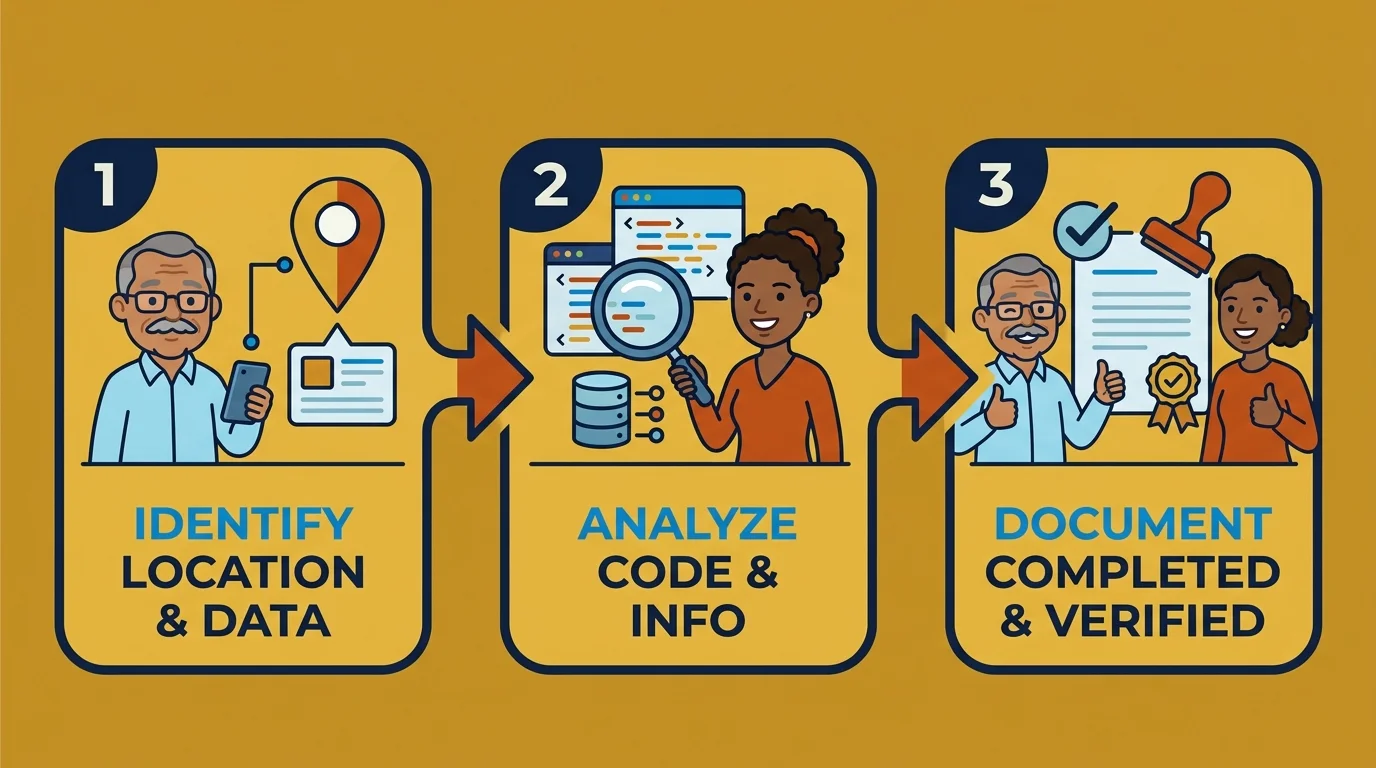
Once you get the mechanism, sequence beats scope. So an operator doesn't open by writing another page. The first move is structural: make the entity itself checkable before adding a single new claim.
Cheap retainers are a trap built for exactly this starting point. A low-cost package that ships more keyword-targeted articles skips the entity work completely, because entity work doesn't scale the way content production does.
And that's a property of how the retainer market prices its output, not a knock on any one agency. Volume is billable in a way structured verification isn't. So volume is what gets sold first.
| Implementation Step | What Gets Structured | What It Enables an Engine to Cite |
|---|---|---|
| Entity resolution | Provider name, credential, practice name, and address unified into one confirmed record across owned pages and listed profiles | A single, checkable identity instead of scattered mentions a model cannot reconcile |
| Structured markup deployment | Health and medical schema applied to specific claims, credentials, and conditions rather than left as unmarked prose | A labeled object a generative model can extract and compare against other sources |
| Pre-publication validation | Every machine-readable claim checked against the underlying credential or fact before it goes live | A citation source that resolves correctly instead of one that gives a model something false to verify |
| Cross-profile consistency audit | Practice listings, professional profiles, and on-site claims reconciled into matching, non-conflicting versions of the same entity | A stable reference point a model can return to across multiple queries without contradiction |
Structuring the Local and Practice-Level Entity Layer
Structuring the local and practice-level entity layer starts with one thing: the provider, the practice, and the location resolving as a single confirmed record. Not three separate mentions scattered across a site.
A name, a credential, and an address that stay consistent across a practice's own pages and its listed profiles give a generative model something fixed to check a claim against. Inconsistent versions of the same entity do the opposite.
This layer has nothing to do with keyword position tracking. It's the difference between a practice existing as text on a page and existing as an entity a model can resolve.
Validating Machine-Readable Accuracy Before Publication
Validating machine-readable accuracy before publication is the step most sequencing skips. Markup that misrepresents a credential or a claim is worse than no markup at all, because it hands a model something false to verify.
And that risk isn't hypothetical. A study evaluating nine large language models against 5,000 claims previously assessed by 174 professional fact-checking organizations across 47 languages, detailed in findings archived through PubMed Central, found smaller models carried high confidence despite lower accuracy, while larger models paired higher accuracy with lower confidence.
So a model's confidence in a citation isn't a reliable proxy for whether that citation is right. The earlier comparison of database querying against a Knowledge Graph representation showed the same pattern from a different angle: structure, checked before publication, is what moves accuracy. Confidence alone moves nothing.
Frequently Asked Questions
A handful of questions come up every single time this shift gets explained to someone working inside a practice. Here's a direct answer to each one. No hedging.
How is Answer Engine Optimization different from traditional search optimization for a medical practice?
Traditional search optimization chases a ranked spot for a phrase. Answer Engine Optimization structures a practice's entity data so a generative model can verify it and cite it straight — no ranking step sitting in the middle.
Why doesn't placing in the classic ten blue links guarantee inclusion in an AI-generated answer?
An AI answer engine builds its response from passages it can verify across a lot of sources, not from a ranked list. So a page holding a strong spot in the classic ten blue links can still add nothing to that answer if its entity data isn't structured for confirmation.
What structured data types matter most for AI visibility for healthcare providers?
Schema.org's health and medical types matter most. They expose a provider's credentials, conditions treated, and practice details as labeled data a model checks directly. Consistent entity records across a practice's own pages and listed profiles matter just as much.
Can a clinic's local business listing data be used inside an AI Overview?
Yes. Local business listing data works as a confirmable entity record. An AI Overview can pull from it when a provider, a location, and a credential resolve consistently across that listing and the practice's other pages.
If an AI engine answers the question directly, what becomes the goal of publishing healthcare content?
The goal moves from earning a site visit to earning the citation itself. Content still matters. But its job now is proving an entity is verifiable enough for a model to name it as the source.
How does an AI engine decide which sources to cite for a medical query?
It runs a verification pass across a bunch of pages, checking which claims resolve to confirmable, structured entity data — not which pages rank highest. A source gets cited because its claims check out, not because it got found first.
Where This Leaves the Practice Chasing Rankings in 2026
That old results page was a storefront window. And that window is shrinking. Behind it, generative answer engines built a separate room — stocked only with entities they can confirm, credentials they can check, and claims that resolve to something real.
A practice still optimizing for placement in that storefront is arranging furniture in a window fewer people stop to look through. Rankings never disappeared. They just stopped being the room where the answer gets written.
Zero-Click Search Authority is the key to that other room. It's the structural work of making a practice's entity checkable before a single new page gets written, and every piece of evidence here points the same way: structure earns citation, confidence without it earns nothing. Ready to find out where your practice stands in that room? see where your practice ranks with an AI visibility check.