
AI Visibility & Infrastructure
The data layers and entity signals that determine whether AI engines can read, trust, and verify your practice.
95 Articles
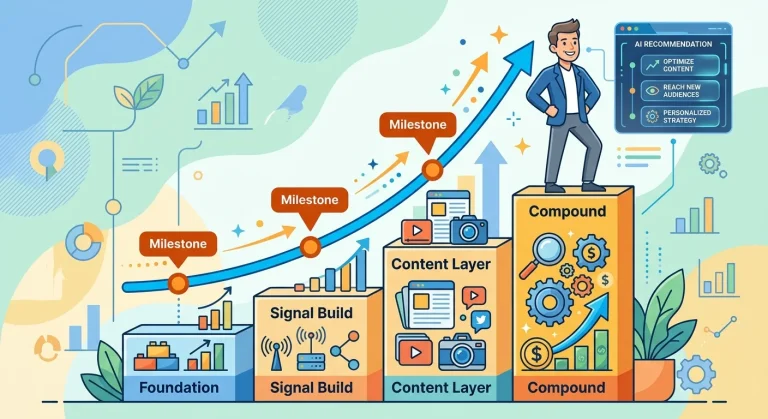
The First 3 Decisions to Make After Your AI Visibility Check
July 15, 2026 Three decisions determine everything after your AI Visibility Check: commit to entity trust before content, choose your authority signal stack, and lock in an execution cadence that compounds. Everything else – posting more, tweaking listings, refreshing old pages – is… Read More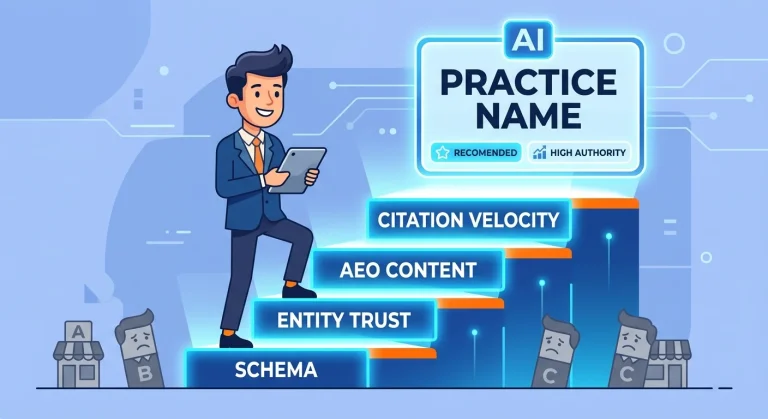
Is a Bad AI Visibility Score a Threat or an Opportunity for Your Practice?
July 14, 2026 An AI visibility score measures how confidently AI recommendation engines – ChatGPT, Gemini, and Grok – can identify, verify, and cite your practice when a patient asks who to trust. Three signal categories drive that score: whether your authority infrastructure… Read More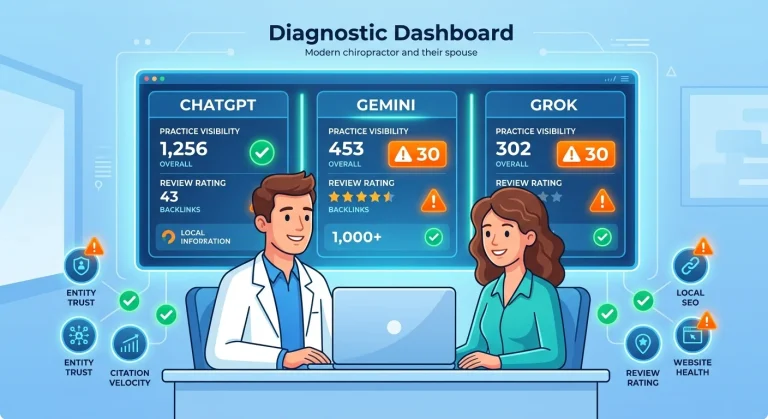
How to Explain Your AI Authority Snapshot to Your Spouse or Business Partner
July 14, 2026 An AI Authority Snapshot is a diagnostic report that captures exactly what ChatGPT, Gemini, and Grok say when someone asks for a chiropractor recommendation in a specific market – whether a given practice is named as the answer, or a… Read More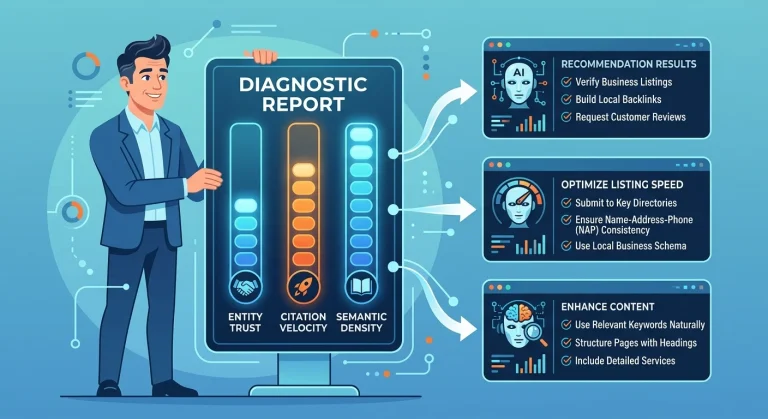
You Have Your AI Authority Snapshot. Now What? A Decision Framework
July 14, 2026 The AI Authority Snapshot shows you exactly where your business stands in the eyes of AI engines – what signals are missing, what infrastructure is broken, and what it would take to become the answer those engines recommend. But the… Read More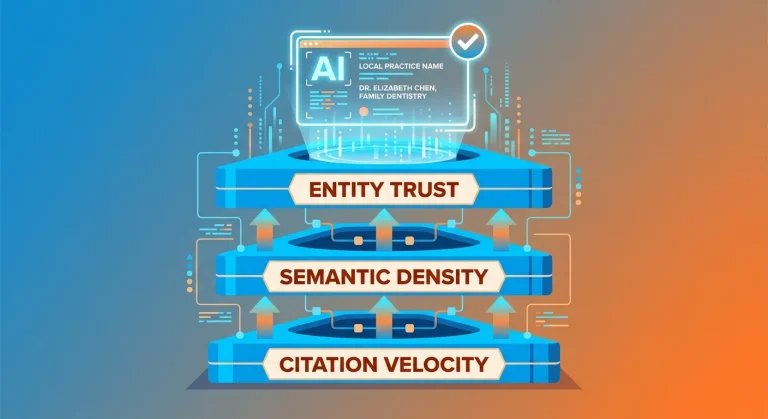
Beyond Authority Visibility: How to Measure Content Authority in the Age of AI
July 14, 2026 Content authority isn’t measured by clicks anymore. It’s measured by whether ChatGPT, Gemini, or Grok trusts you enough to say your name when someone asks who to call. Read More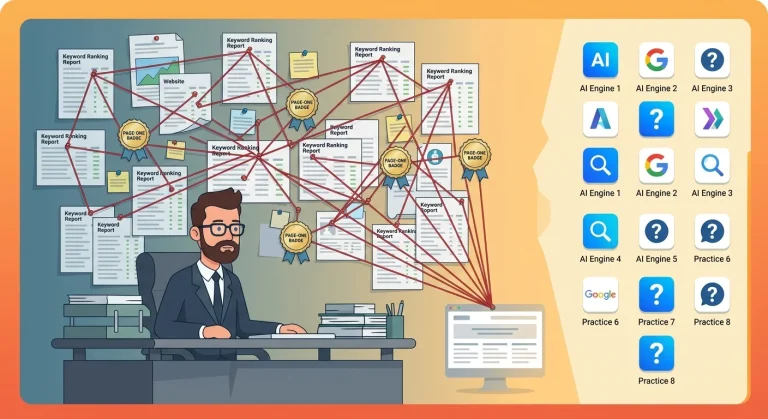
How AI Turns Your Authority Infrastructure From a Brochure Into a Compounding Asset
June 17, 2026 A brochure gets handed out and forgotten. It does not grow. It does not earn trust. It does not compound. Read More
Is Your Authority Infrastructure a Balance Sheet Asset or a Monthly Authority Asset Investment?
June 17, 2026 Authority infrastructure is either a permanent, compounding asset you own – or a monthly payment you make to rent visibility that disappears the moment you stop writing checks. Most businesses are renting. They just don’t know it yet. Read More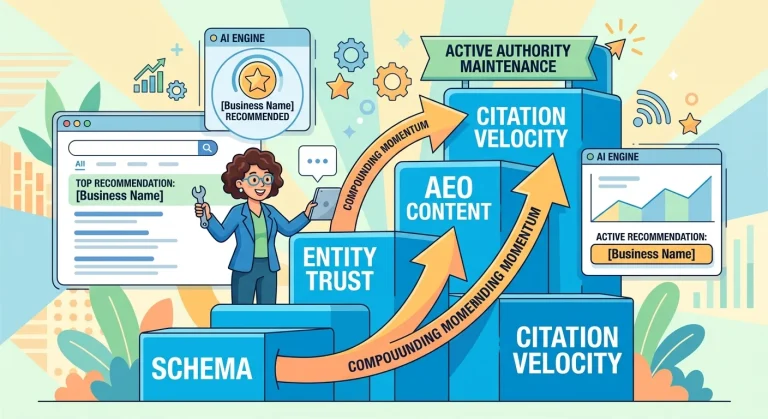
What Happens When You Stop Paying for Answer Engine Optimization? The Concept of Authority Decay
June 17, 2026 AI-powered search engines – ChatGPT, Gemini, Grok – build recommendations from continuous, compounding trust signals. The moment you stop feeding those signals, competitors who kept executing start absorbing the recommendation space your entity used to own. Read More
Beyond Leads: Shifting from Agency Retainers to an AI Authority Engine
June 12, 2026 Shifting from a traditional agency retainer to an AI Authority Engine means replacing a monthly expense that resets to zero with a compounding authority asset that builds machine-readable trust with ChatGPT, Gemini, and Grok every single month. Read More
Why Month-to-Month Contracts Are a Non-Negotiable When Choosing an Agency
June 12, 2026 A month-to-month contract is the structure that forces an agency to earn your business every single month. It is not a preference. It is the vetting standard – and for anyone hiring an agency for the first time, it is… Read More
How the White-Glove Authority Engine Process Works
June 8, 2026 The White-Glove Authority Engine process is a fully managed infrastructure build that restructures your digital presence to become the single answer AI engines trust and recommend. Not one of five options. The answer. iTech Valet handles everything-website architecture, entity trust… Read MoreNot sure where to start? The fastest way to see where your business stands is a free diagnostic. We ask ChatGPT, Gemini, Perplexity, Grok, and Claude about your practice — and send you exactly what AI says when patients ask for help.